



When people first hear the cost of full mouth dental implants, the number can be surprising. It’s common to wonder why replacing an entire smile costs so much more than replacing a single tooth.
The short answer is that full mouth implants are one of the most complex treatments in dentistry. You’re not simply replacing teeth, you’re rebuilding your smile, restoring your bite, and creating a stable foundation that can last for decades. The cost reflects the planning, surgical expertise, materials, technology, and custom restorations involved.
For many patients, understanding why the price is higher makes it easier to decide whether the long-term benefits justify the investment.
Don't let cost keep you waiting.
Find out which treatment is right for you and get honest answers about pricing, financing, and long-term value.
How Much Do Full Mouth Dental Implants Cost?
While every case is different, here’s a general idea of what patients can expect:
| Treatment | Typical Cost |
| Implant-Supported Bridge (One Arch) | $15,000–$30,000 |
| Full Mouth Implants (Upper & Lower Arches) | $30,000–$60,000+ |
| All-on-4 or All-on-X Treatment | Often falls within these ranges depending on complexity |
These estimates usually include the implants and the fixed restoration, but additional procedures may increase the total cost.
Why Are Full Mouth Implants So Expensive?
Several factors contribute to the overall investment.
You’re Replacing an Entire Smile
A single implant replaces one missing tooth.
Full mouth treatment restores an entire upper arch, lower arch, or both. That requires significantly more planning, materials, and laboratory work than replacing one or two teeth.
The goal isn’t simply filling empty spaces, it’s rebuilding a smile that looks natural, functions comfortably, and allows you to eat and speak with confidence.
Every Implant Must Be Precisely Planned
Implants can’t simply be placed wherever bone is available.
Your dentist carefully evaluates:
- Jawbone quality and density
- Bite alignment
- Facial structure
- Gum health
- Placement of nerves and sinuses
- Long-term chewing forces
Digital imaging and 3D treatment planning help determine the safest and most predictable implant positions.
That planning is one of the reasons implant treatment has such high long-term success rates.
The Restorations Are Custom-Made
Every full-arch restoration is designed specifically for the individual patient.
Your replacement teeth are customized for:
- Smile appearance
- Facial proportions
- Bite function
- Tooth shape
- Tooth color
- Speech
Creating a natural-looking smile requires significant laboratory craftsmanship and precision.
Higher-quality materials may also increase durability and aesthetics, especially for patients who place heavy chewing forces on their teeth.

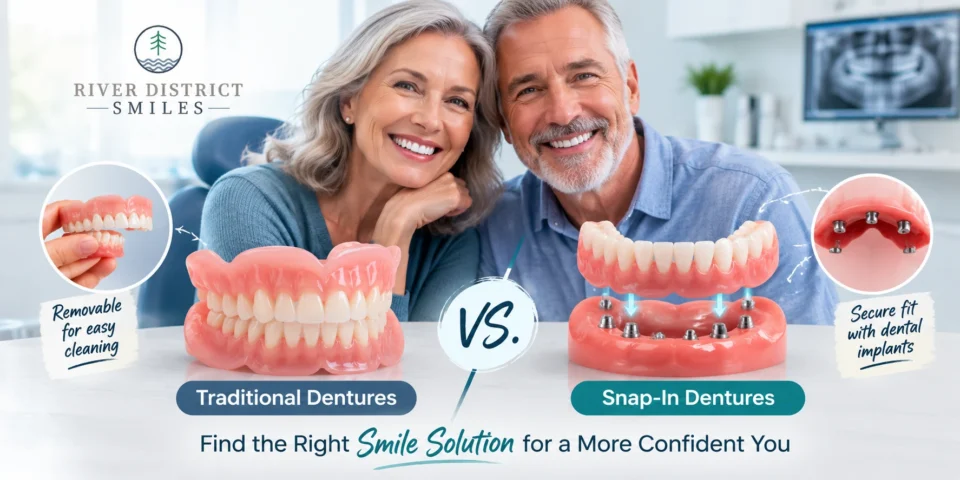
Dentures vs. Snap-In Dentures: What’s the Difference?
Traditional dentures and snap-in dentures both replace missing teeth, but they do not feel, function, or stay in place the…
Surgery Is More Complex
Full mouth implant treatment often involves several procedures rather than a single appointment.
Depending on your needs, treatment may include:
- Tooth extractions
- Bone grafting
- Sinus lifts
- Implant placement
- Healing appointments
- Placement of temporary teeth
- Delivery of the final custom restoration
Each additional step adds time, expertise, and materials.
Bone Grafting Can Increase the Cost
Many patients seeking full mouth implants have been missing teeth for years.
Without natural tooth roots stimulating the jawbone, bone gradually shrinks over time.
If there isn’t enough healthy bone to securely support implants, your dentist may recommend bone grafting before or during implant treatment.
While this adds to the cost, it also improves the long-term stability of the implants.
Advanced Technology Is Part of the Investment
Modern implant dentistry relies on technology that improves accuracy and predictability.
Many practices use:
- Digital impressions
- Cone beam CT (CBCT) scans
- 3D treatment planning software
- Surgical guides
- Digital smile design
These technologies help reduce guesswork and improve the fit of both the implants and the final restoration.
You’re Paying for Long-Term Function, Not Just Appearance
It’s easy to compare the price of implants with traditional dentures, but they solve different problems.
Traditional dentures sit on top of the gums and rely on suction or adhesives for stability.
Implants are anchored directly into the jawbone, allowing patients to:
- Chew more comfortably
- Speak with greater confidence
- Reduce slipping and movement
- Help preserve bone over time
- Enjoy a more natural feel
For many people, those functional improvements become just as valuable as the cosmetic ones.
Is the Higher Cost Worth It?
For many patients, full mouth implants provide benefits that traditional dentures cannot.
Patients often report improvements in:
- Comfort while eating
- Confidence in social situations
- Speech
- Bite strength
- Overall quality of life
However, they’re not automatically the right choice for everyone.
Traditional dentures or implant-supported overdentures may be better options if:
- Budget is the primary concern
- Surgery isn’t recommended because of certain health conditions
- A removable solution better fits your lifestyle
The best treatment is the one that aligns with your health, goals, and budget—not simply the most advanced option.
What Happens If You Delay Treatment?
Waiting isn’t always harmful, but prolonged tooth loss can make treatment more complex.
Over time, you may experience:
- Continued bone loss
- Changes in facial appearance
- Teeth shifting if some natural teeth remain
- More extensive bone grafting before implants become possible
An evaluation can help determine whether waiting is likely to affect your future treatment options.
Questions to Ask Before Choosing Full Mouth Implants
Before moving forward, consider asking:
- Which type of full mouth implant solution do you recommend, and why?
- What’s included in the treatment estimate?
- Will I need extractions or bone grafting?
- What type of restoration will I receive?
- How long is the complete treatment process?
- What maintenance will be required after treatment?
- Are financing options available?
These questions can help you compare providers based on more than price alone.
The Bottom Line
Full mouth dental implants cost more because they involve far more than replacing teeth. The treatment combines advanced diagnostics, detailed planning, skilled surgery, custom restorations, and long-term rehabilitation of your smile and bite.
For many patients, that investment provides lasting improvements in comfort, confidence, and oral function. For others, a different tooth replacement option may make more sense based on their health, goals, or budget.
The next step isn’t deciding whether full mouth implants are “too expensive.” It’s finding out which treatment options you’re a candidate for, what each one includes, and how they compare over the long term. A good consultation should leave you with a clear understanding of your choices and the confidence to make the decision that’s right for you.
Why do full mouth implants cost more?
Get a personalized treatment plan and transparent pricing. Call today to learn your options and restore your smile with confidence.