
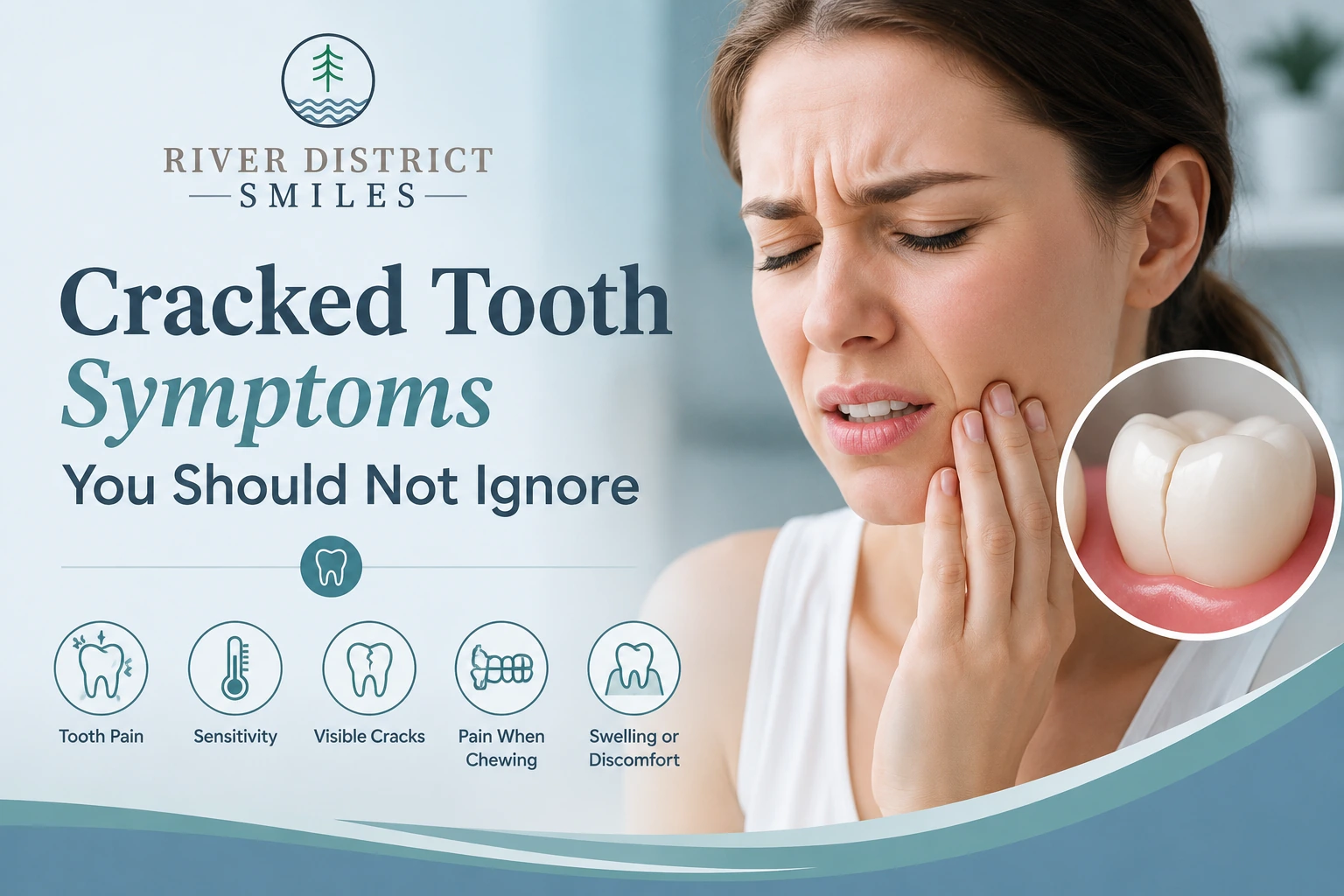


A cracked tooth does not always cause severe or constant pain. Sometimes the first sign is a quick sting when you bite something hard, sudden sensitivity to a cold drink, or an ache that disappears before you can identify which tooth caused it.
That inconsistency is one reason cracked teeth are easy to overlook.
A tooth may feel completely normal at one meal and become uncomfortable at the next. Because the symptoms come and go, it can be tempting to assume the problem has resolved.
Unfortunately, damaged tooth structure does not repair itself. Repeated chewing pressure can cause a crack to spread, weaken the tooth, or allow bacteria to reach deeper areas.
Recognizing the warning signs early gives your dentist a better chance to protect the tooth and determine whether conservative treatment is still possible.
Think You Cracked a Tooth?
Pain when chewing or sudden sensitivity deserves attention. Schedule an evaluation now and protect your tooth.
Sharp Pain When You Bite Down
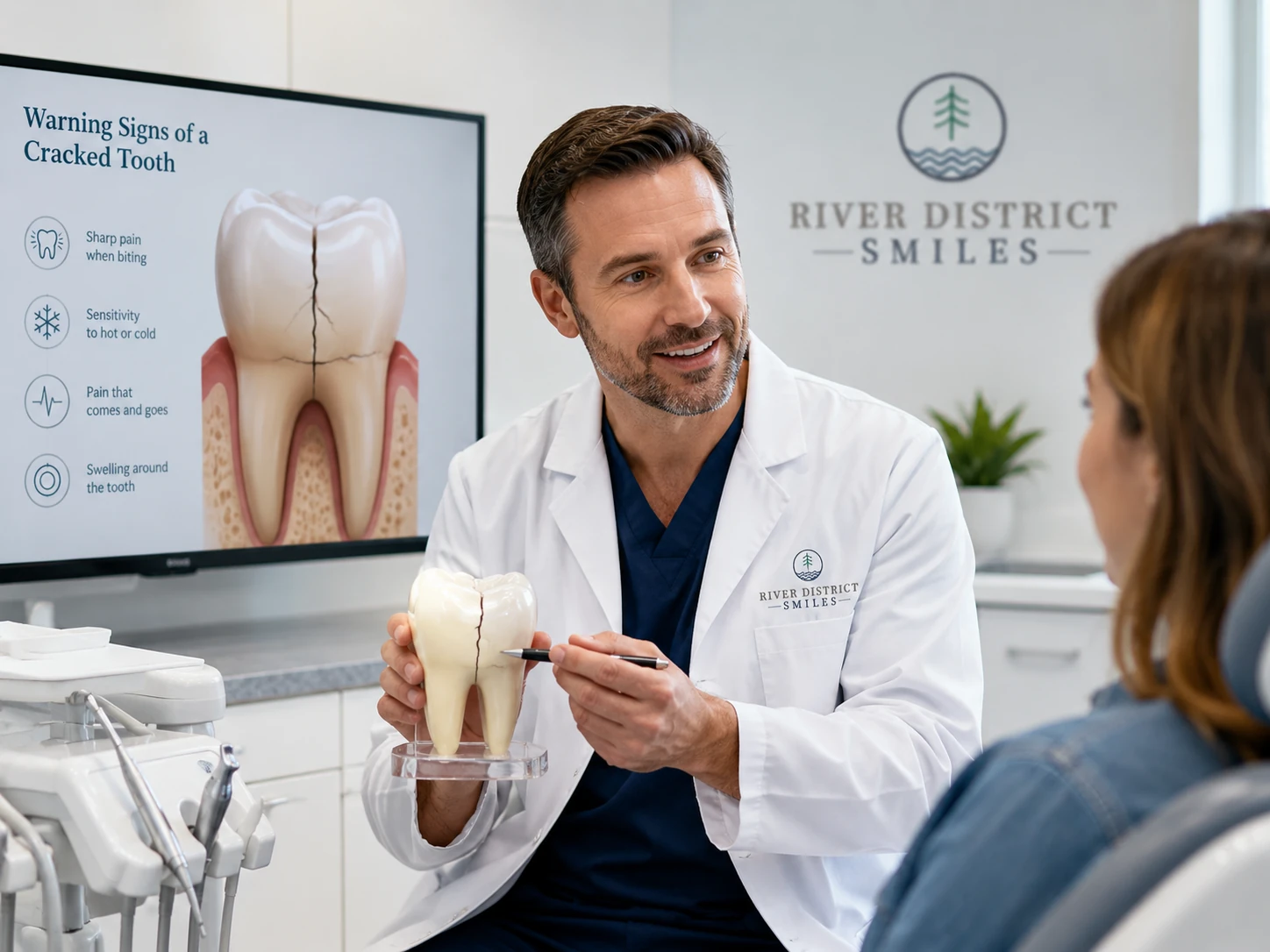
One of the most common signs of a cracked tooth is a sudden, sharp pain while chewing.
You may notice it when biting into:
- Nuts
- Ice
- Hard bread
- Candy
- Raw vegetables
- Popcorn kernels
The discomfort may only occur when pressure hits the tooth at a particular angle.
That is why someone can sometimes chew normally for several days and then suddenly feel a sharp jolt from one bite.
A cracked portion of the tooth can move slightly under chewing pressure. That movement may irritate sensitive tissues inside the tooth.
The pain may disappear almost immediately once you stop biting.
Because the discomfort is brief, it is easy to dismiss. Repeated pain during chewing, however, is a reason to have the tooth evaluated.
Pain When You Release Your Bite
Some cracked teeth hurt more when you stop biting than when you initially apply pressure.
You may bite down without much discomfort and then feel a sharp sensation as you release your bite.
This can happen because the damaged sections of the tooth flex under pressure and shift again as the pressure is removed.
That movement may irritate the pulp, which contains the tooth’s nerves and blood vessels.
A dentist may use specialized bite tests to determine which tooth, cusp, or section is producing the symptoms.
This type of evaluation can be especially useful because small cracks do not always appear clearly on routine dental X-rays.
If you repeatedly experience pain when releasing your bite, schedule a dental examination rather than waiting for the symptom to become constant.
Sensitivity to Hot and Cold
Temperature sensitivity can also occur when a tooth is cracked.
Cold water, ice cream, hot coffee, soup, or even cold air may trigger discomfort.
Sometimes the sensation disappears quickly. In other cases, it may continue after the hot or cold stimulus is gone.
A crack may create a pathway toward the more sensitive inner layers of the tooth. Even a narrow opening can allow temperature changes to reach areas that are normally protected by enamel.
Not every sensitive tooth is cracked.
Other possible causes include:
- Gum recession
- Worn enamel
- Tooth decay
- Recent whitening treatment
- Exposed tooth roots
- Damaged dental restorations
However, sudden sensitivity concentrated around one tooth, particularly when it occurs together with chewing pain, deserves professional evaluation.
Pain That Comes and Goes
A cracked tooth can be frustrating because symptoms are often inconsistent.
You may experience pain today and feel completely normal tomorrow.
That does not mean the tooth has healed.
Instead, the crack may only become irritated when certain foods, temperatures, or biting pressures affect it.
Intermittent symptoms can include:
- A dull ache after eating
- Random sharp pain
- Brief throbbing
- Sudden sensitivity
- Discomfort that seems to move between neighboring teeth
Because dental nerves are close together, it can also be difficult to identify exactly which tooth is responsible.
A professional examination can help distinguish a cracked tooth from other possible causes such as cavities, gum disease, grinding, sinus pressure, or problems with an existing filling or crown.
Difficulty Identifying the Painful Tooth
If you know something hurts but cannot determine which tooth is causing it, a crack may be one possibility.
Dental pain can sometimes be referred, meaning the discomfort feels as though it is coming from somewhere other than the actual source.
You may think an upper tooth is responsible one day and a nearby tooth the next.
This uncertainty can lead people to postpone care because they assume a serious dental problem should be easier to locate.
That is not always the case.
A dentist may use several methods to narrow down the source, including:
- Visual examination
- Magnification
- Bite testing
- Transillumination
- Dental X-rays
- Temperature testing
- Evaluation of existing restorations
- Checking the surrounding gums
Earlier identification may provide more options for protecting and restoring the tooth.
Swollen or Tender Gums Around One Tooth
A crack that reaches below the gumline can affect the surrounding tissues.
You may notice:
- Localized swelling
- Redness
- Tenderness
- A pimple-like bump on the gum
- Drainage
- Pressure around the tooth
These symptoms can indicate that bacteria have entered through damaged tooth structure and contributed to an infection.
Pay particular attention when swelling occurs with:
- A persistent bad taste
- Throbbing discomfort
- Drainage
- Fever
- Facial swelling
At that point, the concern may extend beyond the crack itself.
Dental infections can affect the tissues and bone surrounding a tooth and should be professionally evaluated.
The absence of severe pain does not make swelling harmless. Some infections produce surprisingly little discomfort at first.
A Rough Edge or Missing Piece of Tooth
Sometimes tooth damage is easy to see or feel.
You may notice:
- A rough edge
- A sharp corner
- A small chip
- A visible line across the enamel
- A piece of tooth that has broken away
Not every visible line indicates serious structural damage.
Teeth can develop small enamel lines known as craze lines. These are typically superficial and may not require treatment.
The challenge is that you cannot reliably determine the depth of a crack by looking at it in the mirror.
A line that appears minor may extend farther into the tooth than expected.
If a piece of your tooth breaks away, save it if you can and bring it to your appointment.
Avoid chewing on the affected side until the tooth has been evaluated.
Pain After Eating Something Sweet
Sweet foods may trigger discomfort when damaged tooth structure has exposed sensitive areas.
You may notice pain after consuming:
- Candy
- Soda
- Desserts
- Sweetened coffee
- Sugary snacks
The sugar itself is not necessarily the direct cause of the pain.
Liquids and dissolved sugars can enter small openings and irritate exposed dentin or other sensitive tissue.
Cavities can cause similar symptoms, so an examination is needed to determine whether decay, a crack, or another problem is responsible.
Either way, repeated pain when eating sweets suggests that the protective structure of the tooth may have been compromised.

Implants vs. Bridges: How to Replace One Missing Tooth
Losing a tooth can be stressful, and one of the first questions patients ask is: “Should I get a dental…
A Tooth That Feels Different When You Chew
Not every cracked tooth causes obvious pain.
Sometimes the tooth simply feels different.
You might notice:
- Your bite feels uneven
- One tooth feels slightly taller
- Pressure feels unusual
- You avoid chewing on one side
- The tooth feels weak or unstable
People often adjust to dental problems without realizing it.
You may begin chewing primarily on the opposite side of your mouth to avoid discomfort.
That may reduce symptoms temporarily, but it can place additional pressure on other teeth and jaw muscles.
If your bite suddenly feels different, have it checked.
A cracked tooth is only one possibility. A loose crown, damaged filling, broken cusp, or shifting tooth can create similar sensations.
Bad Breath or a Bad Taste
Bad Breath or a Bad Taste
Persistent bad breath or an unusual taste can occasionally be associated with a damaged tooth.
When bacteria enter a deep crack, they may collect in areas that are difficult to reach with ordinary brushing and flossing.
If an infection develops, drainage can create a foul or unpleasant taste.
Bad breath has many other possible causes, including:
- Dry mouth
- Gum disease
- Tongue bacteria
- Food debris
- Dietary habits
- Tobacco use
However, an unpleasant taste that consistently seems to come from one specific tooth or area deserves attention, especially when it occurs with pain, swelling, or drainage.
Mouthwash may temporarily improve the smell or taste, but it cannot repair a damaged tooth or resolve an underlying dental infection.
Why Teeth Crack in the First Place
Teeth are extremely strong, but they are not indestructible.
Common causes of cracked teeth include:
- Biting hard foods
- Chewing ice
- Grinding or clenching
- Large fillings
- Dental trauma
- Sudden temperature changes
- Normal wear over time
- Using teeth to open packages or objects
Large existing restorations can sometimes leave less natural tooth structure available to handle chewing forces.
Grinding and clenching also repeatedly place pressure on the teeth, which may gradually contribute to fractures.
Using your teeth as tools can create unnecessary stress as well.
Teeth are designed for chewing food, not opening packaging, cutting materials, or loosening bottle caps.
Can a Cracked Tooth Heal on Its Own?
No. A cracked tooth cannot repair itself.
Your body can heal many types of tissue, including skin, gum tissue, and bone under appropriate conditions.
Tooth enamel does not regenerate in a way that closes a structural fracture.
A crack may stay relatively stable for some time, but repeated pressure can also cause it to become larger.
There is no reliable way to predict how quickly a particular crack will progress.
Treatment depends on factors such as:
- The location of the crack
- How deep it extends
- How much healthy tooth structure remains
- Whether the tooth is painful
- Whether infection is present
- Whether the crack reaches below the gumline
- How much chewing pressure the tooth receives
Possible treatment options may include:
- Dental bonding
- A tooth-colored filling
- A dental crown
- Tooth extraction when the tooth cannot be predictably restored
- Referral to an appropriate dental provider when additional care is required
A minor fracture affecting a limited part of the tooth may be treated conservatively.
A deep split extending far below the gumline or into the root can make preserving the tooth much more difficult.
That is why timing matters.
What Happens If You Ignore a Cracked Tooth?
Ignoring the symptoms of a cracked tooth can allow the damage to progress.
A fracture may become larger, bacteria may enter deeper areas, and the tooth may become increasingly difficult to restore.
Possible complications include:
- Increasing pain
- Tooth sensitivity
- Dental infection
- Abscess formation
- Gum swelling
- Bone loss around the affected tooth
- A larger fracture
- Loss of additional tooth structure
- Tooth extraction
- Tooth loss
What begins as a relatively small structural problem can eventually require more extensive restorative care.
One of the difficulties with cracked teeth is that symptoms may become quieter even while the underlying problem worsens.
A decrease in pain does not necessarily mean the tooth has recovered.
If a tooth that was previously painful suddenly changes or becomes less responsive, it should still be evaluated.
What Should You Do Until Your Appointment?
If you think you have cracked a tooth, avoid chewing on that side of your mouth.
Choose softer foods and avoid anything extremely:
- Hard
- Sticky
- Hot
- Cold
- Crunchy
Continue gently brushing and cleaning between your teeth so plaque and food do not accumulate around the damaged area.
You can also:
- Rinse gently with warm salt water
- Avoid chewing ice
- Wear your night guard if one has already been prescribed
- Use an over-the-counter pain reliever as directed when appropriate
- Contact your dentist promptly
Do not place aspirin directly against the tooth or gum.
Aspirin can irritate or damage soft oral tissues when applied directly.
You should also avoid attempting to glue, file, reshape, or repair a damaged tooth yourself.
At-home repairs can make the damage worse and interfere with proper dental treatment.
When Is a Cracked Tooth an Emergency?
Contact a dentist promptly if a cracked or broken tooth is accompanied by:
- Severe pain
- Significant swelling
- Fever
- Drainage
- Facial swelling
- Significant bleeding
- Dental trauma
- A loose or displaced tooth
Swelling that interferes with breathing or swallowing requires urgent medical attention.
Dental infections can sometimes spread beyond the tooth into surrounding tissues, so breathing or swallowing difficulties should never be treated as ordinary dental discomfort.
For milder symptoms, schedule a dental examination rather than waiting until the pain becomes severe.
Earlier treatment is often more conservative and predictable than treatment after a crack has progressed.
Listen Before the Tooth Starts Shouting
A cracked tooth rarely improves simply because you wait.
The warning signs can be subtle, inconsistent, and easy to dismiss.
Sharp pain while chewing, temperature sensitivity, tenderness around one tooth, swelling, bite changes, or a tooth that simply feels different may all suggest structural damage.
You do not need to wait until the pain becomes constant before scheduling an evaluation.
Dental problems often begin with relatively mild symptoms.
By the time a tooth causes severe and persistent pain, the damage may be more extensive and the available treatment options may be more limited.
Stop the Crack Before It Changes Your Smile at River District Smiles
A cracked tooth can be difficult to identify without a professional examination.
At River District Smiles, our team can evaluate your symptoms, examine the affected tooth, assess existing dental work, and determine how extensive the damage appears to be.
Depending on the condition of the tooth, available care may include bonding, fillings, crowns, extraction when a tooth cannot be predictably restored, or referral to another appropriate dental provider when additional treatment is necessary.
Do not keep changing the way you eat, avoiding one side of your mouth, or hoping intermittent pain will disappear permanently.
Schedule an appointment with River District Smiles to have the tooth evaluated before a small crack has an opportunity to develop into a more complicated dental problem.
Don’t Ignore a Cracked Tooth
A small crack can become a larger dental problem when it is repeatedly exposed to chewing pressure.
If you are experiencing pain when biting, sudden sensitivity, swelling, or a tooth that simply feels different, schedule an evaluation and find out what is causing the problem.
Don’t Ignore a Cracked Tooth
A small crack can quickly become a bigger dental problem. Call now to have your tooth checked and treated early.