
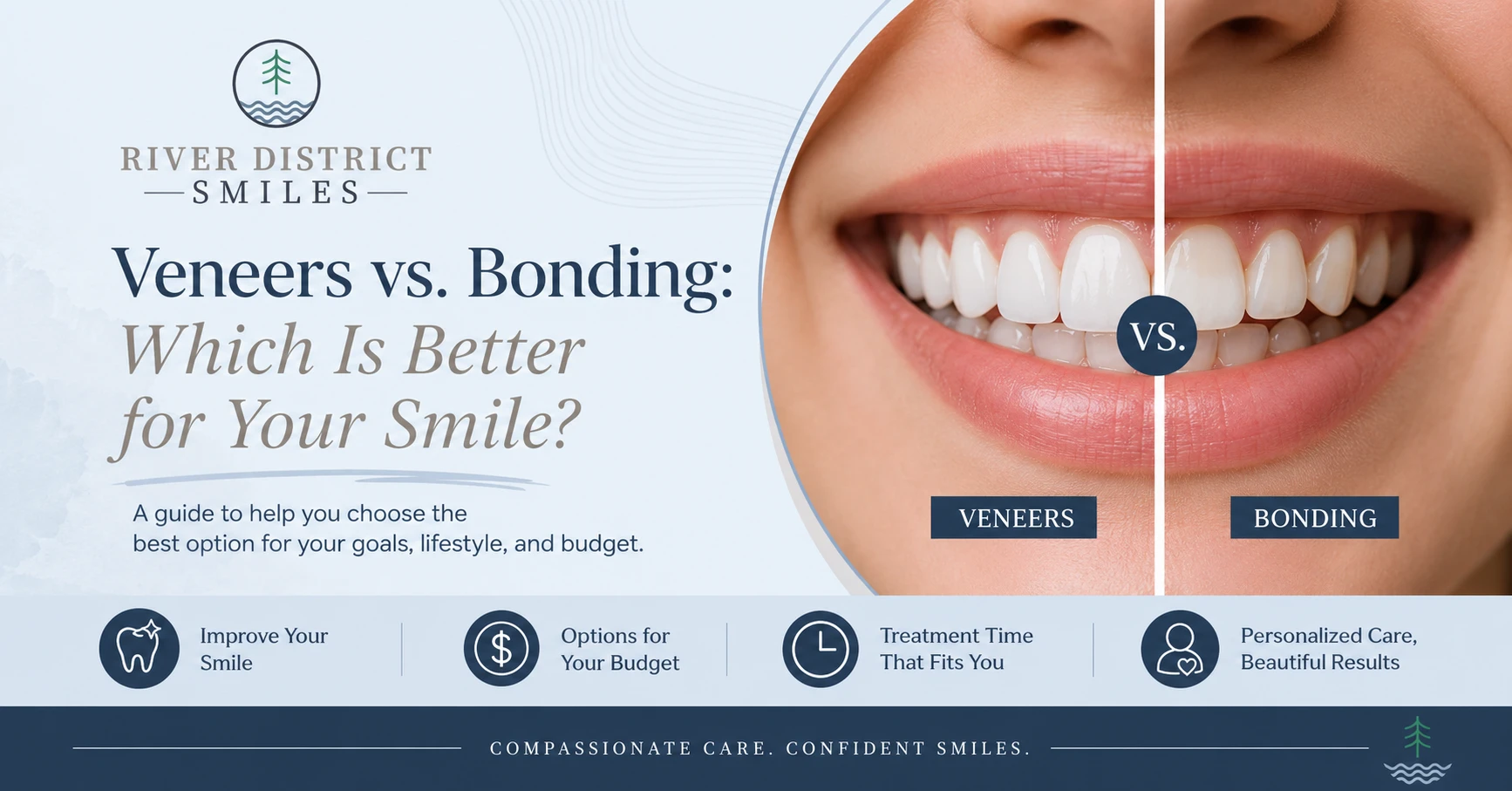


If you are considering cosmetic improvements to your teeth, you may be wondering whether veneers or bonding is the right choice. The short answer is: veneers are generally more durable and longer-lasting, while bonding is less invasive and less expensive. The best choice depends on your goals, budget, and the condition of your teeth.
Upgrade Your Smile With the Right Treatment
Whether you need veneers or bonding, our team can help you choose the best option. Call now.
What Dental Bonding Does
Bonding uses a tooth-colored resin to repair chips, close small gaps, or improve minor discoloration. The material is applied directly to the tooth and shaped before being hardened with a special light.
Bonding may be ideal if:
- You want to fix small chips or cracks
- You need to close minor gaps
- You are on a tighter budget
- You want a single-visit procedure
Advantages of Bonding
- Less expensive ($250–$600 per tooth)
- Quick procedure, often completed in one visit
- Minimally invasive; little to no enamel removal
- Can be repaired easily if damaged
Limitations of Bonding
- Less durable than veneers, typically lasting 3–10 years
- Can stain more easily than porcelain
- Not ideal for large shape or color changes
What Veneers Do
Veneers are thin porcelain shells bonded to the front surface of teeth to improve shape, color, and alignment. They provide a more permanent, uniform appearance.
Veneers may be ideal if:
- You want long-lasting cosmetic results
- You have discolored, worn, or uneven teeth
- You want larger changes in shape or size
- You are looking for a more stain-resistant solution
Advantages of Veneers
- Highly durable (10–20 years or longer with proper care)
- Resistant to staining
- Can achieve significant cosmetic changes in color, shape, and alignment
- Natural-looking and customized to your smile
Limitations of Veneers
- More expensive ($800–$2,500 per tooth)
- Requires enamel removal, making it irreversible
- Usually takes two visits, unless using same-day technology
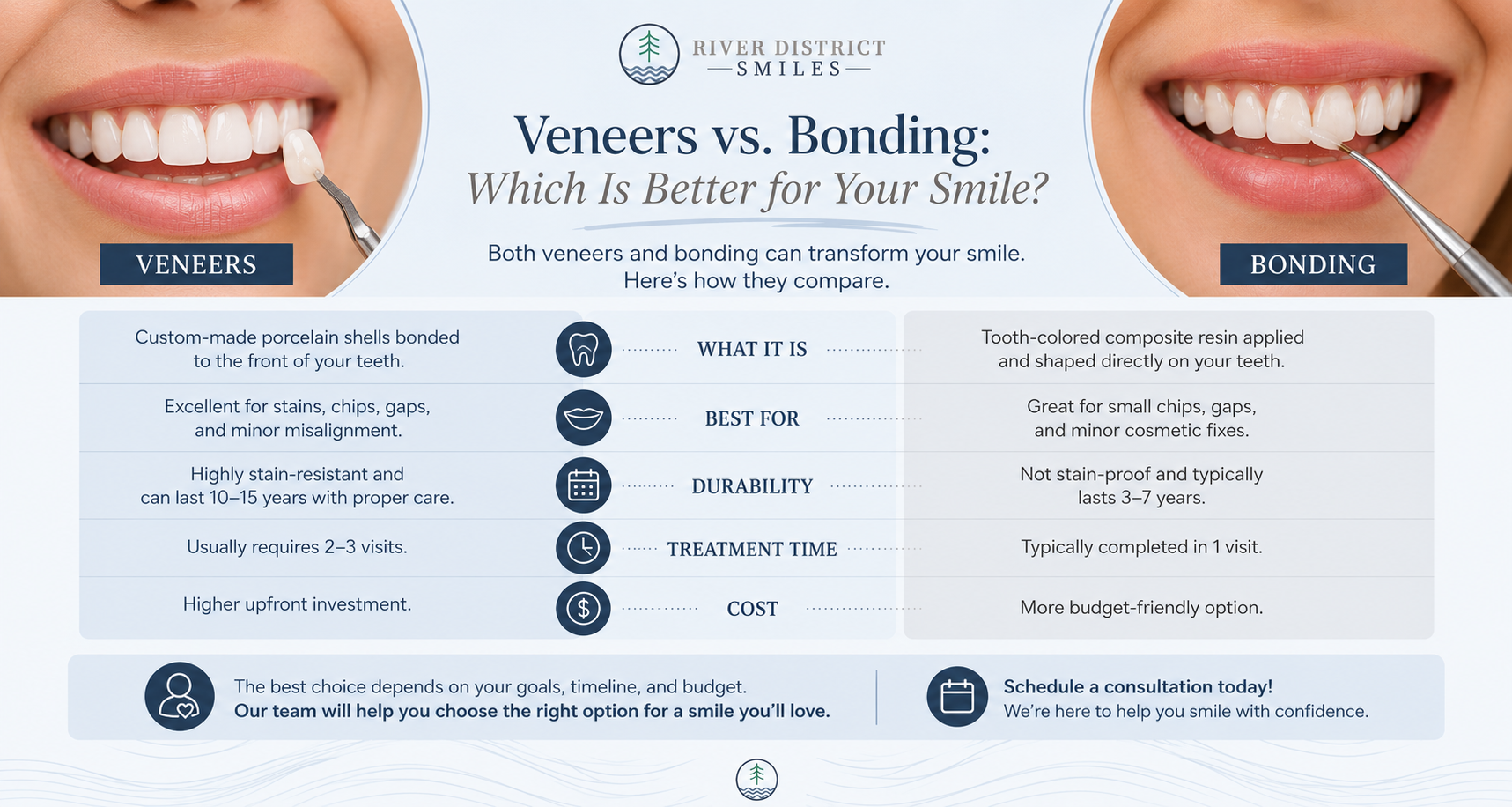
Veneers vs. Bonding: A Quick Comparison
| Feature | Bonding | Veneers |
|---|---|---|
| Cost per tooth | $250–$600 | $800–$2,500 |
| Durability | 3–10 years | 10–20+ years |
| Stain resistance | Moderate | High |
| Tooth preparation | Minimal | Enamel removal required |
| Procedure time | One visit | One or two visits |
| Ideal for | Small chips, gaps, minor color changes | Major cosmetic improvements, discoloration, shape corrections |
| Repairability | Easy to repair | Harder to repair, may need replacement |
How to Decide
Budget: If cost is a primary concern and changes are minor, bonding is often sufficient.
Longevity: If you want a long-lasting, stain-resistant solution, veneers are usually better.
Cosmetic goals: For subtle adjustments, bonding works; for major transformations, veneers are preferred. If you are comparing options for a broader smile upgrade, cosmetic dentistry can help address color, shape, spacing, and overall smile balance.
Tooth condition: Weaker, chipped, or worn teeth may benefit more from veneers for strength and protection. If your main concern is a damaged tooth, treatment for chipped teeth may also be part of the conversation.
Bottom Line
Bonding and veneers both improve the appearance of your smile, but they serve different needs. Bonding is quick, less expensive, and reversible, while veneers offer durability, stain resistance, and broader cosmetic impact.
The next step is a consultation to evaluate your teeth and discuss which option aligns with your goals, budget, and long-term expectations.
At River District Smiles, we focus on creating a natural, balanced smile while explaining the trade-offs of each option, so you can make an informed decision.
Not Sure If Veneers or Bonding Is Best?
Get expert guidance for a brighter, more confident smile. Book your appointment now.