


If you’re replacing multiple missing teeth, one of the biggest decisions isn’t just which treatment costs less today, it’s which one is likely to cost less over the next 10, 20, or even 30 years.
The short answer is that traditional dentures usually cost less upfront, while dental implants often cost less over the long term for many patients. That’s because dentures typically need periodic adjustments, relines, repairs, and eventual replacement. Implants require a larger initial investment, but they can last for decades with proper care.
That doesn’t mean implants are automatically the better choice. The right option depends on your oral health, budget, lifestyle, and long-term goals.
Still Comparing Dentures and Implants?
Get honest guidance on long-term costs and find the right solution for your smile. Call today to schedule your consultation.
Upfront Cost: Dentures vs. Implants
For many patients, dentures are the more affordable way to replace missing teeth initially.
Here’s a general comparison:
| Treatment | Typical Cost |
| Complete Traditional Dentures | $1,500–$4,000 per arch |
| Implant-Supported Dentures | $8,000–$20,000 per arch |
| Full-Arch All-on-X Implants | $15,000–$36,000+ per arch |
Prices vary depending on the materials used, whether teeth need to be extracted, the number of implants required, and whether additional procedures like bone grafting are needed.
If your primary concern is minimizing the initial expense, traditional dentures are often the least expensive option.
Why Dentures May Cost More Over Time
Many people assume dentures are a one-time purchase. In reality, they’re designed to be maintained and eventually replaced.
Over the years, you may need:
- Adjustments as your gums change
- Relines to improve the fit
- Repairs if the denture cracks or breaks
- Replacement when the denture wears out
- Adhesives and cleaning products
One of the biggest reasons dentures require maintenance is that your jawbone naturally shrinks after teeth are lost.
Without tooth roots stimulating the bone, the shape of your mouth gradually changes. As that happens, dentures can become loose and less comfortable.
Why Implants Can Offer Better Long-Term Value
Dental implants replace the tooth roots as well as the visible teeth.
That helps preserve the jawbone, reducing the bone loss that often causes dentures to loosen over time.
Although implants require a much larger upfront investment, many patients appreciate benefits such as:
- Greater stability while eating
- No slipping during conversation
- Better chewing ability
- A more natural feel
- Reduced need for future adjustments
- Long-lasting durability
With good oral hygiene and regular dental care, the implants themselves can often last for decades. The attached restoration may eventually need maintenance or replacement, but usually less frequently than traditional dentures.
Maintenance Costs to Consider
When comparing treatment options, don’t focus only on the initial estimate.
Think about the ongoing costs as well.
Traditional Dentures
You may need to budget for:
- Relines every few years
- Occasional repairs
- Replacement every 5 to 10 years, depending on wear
- Denture adhesive
- Professional cleanings and adjustments
Dental Implants
Ongoing costs may include:
- Regular dental cleanings and exams
- Replacement of small components if they wear over time
- Professional maintenance for implant-supported restorations
- Good home care products
While implants are not maintenance-free, they generally require fewer major replacements than traditional dentures.
Comfort and Function Matter Too
Cost is important, but it’s only one part of the decision.
Many patients choose implants because they improve everyday life.
Compared with traditional dentures, implants often provide:
- More confidence when speaking
- Better chewing efficiency
- Less irritation to the gums
- No need for adhesive
- Improved stability during meals
For someone who enjoys eating a wide variety of foods or wants a fixed solution that feels more like natural teeth, those benefits may justify the higher upfront cost.

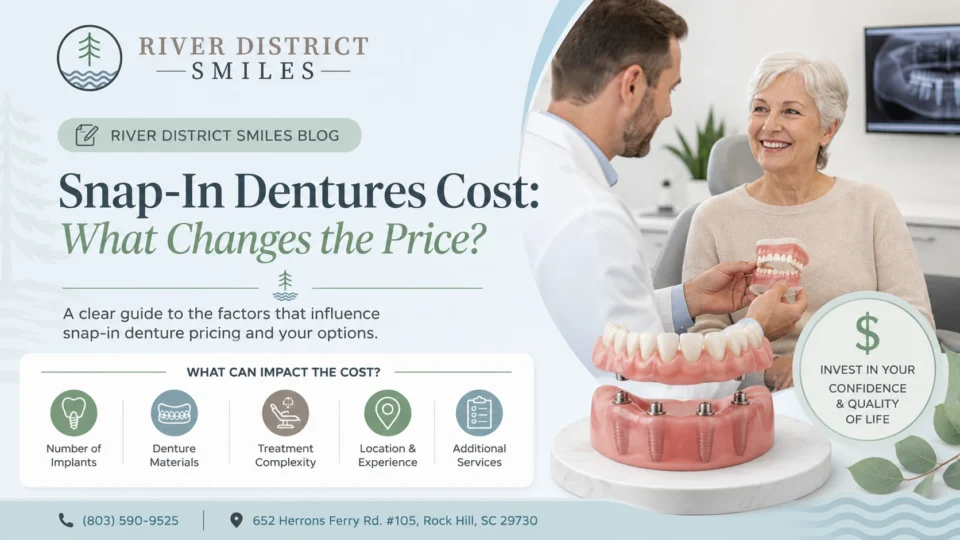
Snap-In Dentures Cost: What Changes the Price?
Missing teeth can affect far more than your smile. They can make eating uncomfortable, change the way you speak, and…
When Dentures May Be the Better Choice
Traditional dentures are still an excellent solution for many patients.
They may be a good fit if you:
- Need the most affordable tooth replacement option
- Prefer to avoid oral surgery
- Have medical conditions that make implant surgery less predictable
- Want a removable appliance
Modern dentures are more natural-looking and comfortable than many people expect, especially when they’re properly fitted and maintained.
When Implants May Be Worth the Investment
Dental implants may make more sense if you:
- Want the closest replacement to natural teeth
- Are looking for a long-term solution
- Have adequate bone or are a candidate for bone grafting
- Want to avoid slipping dentures
- Value improved chewing comfort and confidence
For many patients, the higher initial investment pays off through greater comfort, function, and fewer replacements over time.
What If You’re Not Ready for Full Implants?
Not everyone has to choose between traditional dentures and full-arch implants.
Some patients find that implant-supported overdentures, sometimes called snap-in dentures, provide a good middle ground.
These dentures attach securely to a small number of implants but can still be removed for cleaning.
They typically cost less than a fixed All-on-X restoration while providing significantly more stability than traditional dentures.
Questions to Ask Before Choosing
Before making a decision, ask your dentist:
- Which option best fits my oral health?
- How long should I expect each treatment to last?
- What maintenance costs should I expect over the next 10 years?
- Will I need bone grafting if I choose implants?
- What financing options are available?
- What happens if my needs change in the future?
Looking beyond the initial price can help you make a decision you’ll be happy with for years to come.
The Bottom Line
Traditional dentures almost always cost less upfront, making them an excellent option for many patients. Dental implants require a much larger initial investment, but they often provide better long-term value through greater durability, fewer replacements, improved stability, and preservation of the jawbone.
The best choice isn’t simply the least expensive or the most advanced. It’s the one that fits your health, your budget, and the way you want to live. A good dental consultation should help you compare the total cost of ownership not just the first bill so you can make an informed decision with confidence.
Choose the Option That Saves More Over Time
Discover whether dentures or dental implants offer the best long-term value. Speak with a dental professional today.