


Losing a tooth affects more than the appearance of your smile. It can change how you chew, speak, and feel in everyday situations.
For many patients, the next question is straightforward: what is the best way to replace missing teeth?
When comparing dental implants, bridges, and dentures, the right choice depends on several factors, including how many teeth are missing, your oral health, bone condition, budget, comfort preferences, and long-term goals.
Each option has advantages and trade-offs. Understanding those differences can help you make a more informed decision about which type of tooth replacement fits your needs.
Which Lasts Longer, Dental Implants or Bridges?
Dental implants generally have the advantage when long-term durability is the main priority.
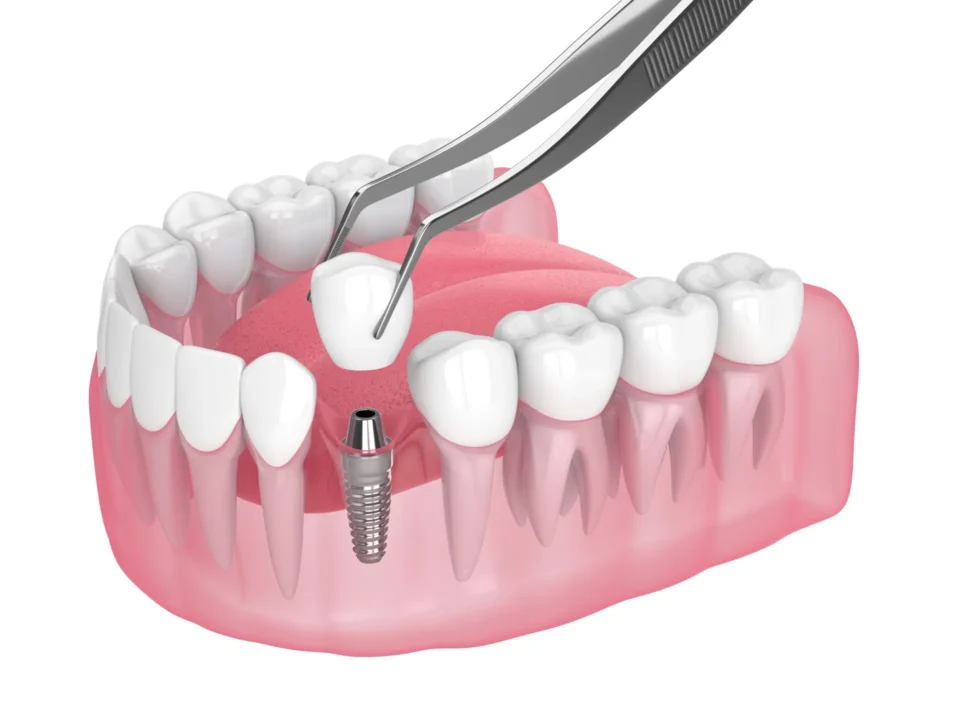
A properly maintained implant may remain functional for decades. The implant itself is placed in the jawbone and acts as a foundation for the replacement tooth.
Dental bridges can also provide many years of reliable service, but their lifespan depends heavily on the health of the teeth supporting them.
Why Can Implants Last Longer?
Dental implants offer several structural advantages:
- They are anchored directly into the jawbone
- They do not depend on neighboring teeth for support
- They remain fixed in place
- They help stimulate the surrounding bone
- They function independently
- They can support individual crowns, bridges, or larger restorations
- They are made from durable materials designed for long-term use
A traditional bridge relies on the teeth beside the missing space.
If one of those supporting teeth develops significant decay, fractures, or becomes structurally compromised, the entire bridge may eventually need attention.
That does not mean bridges are unreliable. They remain a useful and established tooth-replacement option.
However, patients who prioritize independence from neighboring teeth and long-term stability may find dental implants appealing.
Are Dentures Uncomfortable Compared to Implants?
Comfort is one of the biggest differences patients notice when comparing dentures and implants.
Traditional dentures rest on the gums. Because they are removable rather than anchored directly into the jawbone, there may be an adjustment period.
Some patients initially experience:
- Mild gum irritation
- Pressure points
- Movement while eating
- Difficulty chewing certain foods
- Speech changes
- Gum soreness
- A feeling of fullness in the mouth
Most patients become more comfortable with dentures as they adapt and as appropriate adjustments are made.
Modern dentures can be designed to fit closely and look natural. However, changes in the gums and jawbone over time may affect the fit.
Dental implants offer a different experience because they are anchored into the jawbone.
Implant-supported replacement teeth generally feel more stable during chewing and speaking because they are not simply resting on the gums.
For patients who want increased stability but still prefer a removable restoration, implant-supported dentures may provide a middle ground between traditional dentures and fully fixed implant restorations.
What Is the Most Affordable Way to Replace Missing Teeth?
Traditional dentures usually have the lowest upfront cost when several or all teeth need replacement.
They can replace multiple missing teeth without requiring an implant for every tooth.
Bridges generally fall somewhere in the middle, while dental implant treatment often involves the highest initial investment.
General Cost Pattern
- Dentures: Usually the lowest initial cost
- Dental bridges: Moderate initial cost
- Dental implants: Usually the highest upfront investment
Upfront price, however, is only one part of the financial picture.
Dentures may need relining, adjustment, repair, or replacement as the mouth changes.
Bridges may eventually need replacement if the restoration wears, supporting teeth develop problems, or the bridge no longer fits properly.
Dental implants typically involve a larger initial investment but may offer long-term value because of their durability and independence from neighboring teeth.
When comparing treatment costs, consider:
- Initial treatment
- Maintenance
- Expected lifespan
- Repairs
- Replacement costs
- Insurance benefits
- Financing options
- Effects on neighboring teeth
- Additional procedures that may be necessary
The least expensive option today is not automatically the least expensive option over many years.
Your dentist can provide an individualized treatment estimate after evaluating your mouth and determining which options are appropriate.
Do Dental Implants Look More Natural Than Dentures?
Modern dental implants are designed to closely resemble natural teeth.
For a single-tooth implant, the visible crown can be customized according to the size, shape, and color of the neighboring teeth.
Because the restoration emerges from the gum area and remains fixed in place, it can closely reproduce the appearance and function of a natural tooth.
Why Implants Can Look Natural
Implant restorations can offer several aesthetic advantages:
- Customized tooth shape
- Shade matching
- Fixed positioning
- No visible clasps
- Natural-looking gum transitions in appropriate cases
- Stable tooth position
- Support for facial and dental proportions
Modern dentures can also look highly natural.
Dentures are customized to the patient’s mouth, facial features, tooth proportions, and desired appearance.
The main difference is that traditional dentures rest on the gums, while implant restorations are anchored more securely.
Appearance depends on much more than the treatment category.
The quality of planning, restorative design, gum health, bone structure, materials, and individual anatomy all influence the final result.
Can You Switch From Dentures to Implants Later?
Yes. Many patients begin with traditional dentures and later consider implant-supported treatment.
The ability to transition depends on the condition of the jawbone, gums, overall health, and other clinical factors.
Factors Your Dentist May Evaluate
Before recommending implants, the dentist may consider:
- Available bone volume
- Bone density
- Gum health
- Number of implants needed
- Medical history
- Smoking or tobacco use
- Medications
- Bite forces
- Existing denture condition
- Overall treatment goals
People who have worn dentures for many years may experience bone loss because the jawbone no longer receives the same stimulation provided by natural tooth roots.
That does not automatically rule out implants.
Some patients may still have enough bone for implant placement, while others may require bone grafting or another preparatory procedure.
Implant-Supported Dentures
Moving from traditional dentures to implants does not necessarily mean replacing every missing tooth with an individual implant.
A smaller number of strategically positioned implants can sometimes be used to stabilize a removable denture.
This may improve:
- Stability
- Chewing confidence
- Retention
- Comfort
- Speech
- Everyday function
Other patients may qualify for a fixed full-arch implant restoration.
A dental examination and 3D imaging can help determine which options are realistic based on your anatomy.
Are Bridges Damaging to Surrounding Teeth?
Traditional dental bridges require preparation of the teeth beside the missing space.
Those teeth are reshaped so crowns can fit over them and support the replacement tooth positioned between them.
This means some natural enamel must be removed from the supporting teeth.
Potential Concerns Include:
- Decay developing around supporting teeth
- Added biting stress on neighboring teeth
- Structural weakening when supporting teeth are already heavily restored
- Difficulty cleaning underneath the bridge
- Gum irritation
- Damage to one supporting tooth affecting the entire restoration
- Eventual need for repair or replacement
- More extensive dental treatment if a supporting tooth later develops a significant problem
This does not mean dental bridges are harmful.
They can be a predictable and effective treatment when the supporting teeth are healthy enough to carry the restoration.
A bridge may be particularly practical when neighboring teeth already need crowns. In that situation, preparing them as bridge supports may make more sense than altering completely untouched teeth.
Dental implants avoid preparing adjacent teeth because the implant stands independently in the missing-tooth space.
That makes implants an appealing option when preserving healthy neighboring tooth structure is a major priority.
How Do I Choose Between Implants and Dentures?
Choosing between implants and dentures depends on what matters most to you.
Ask yourself:
- What is my budget?
- How many teeth am I replacing?
- Do I want a fixed or removable solution?
- How important is chewing stability?
- Am I comfortable undergoing implant surgery?
- How healthy is my jawbone?
- What level of maintenance am I comfortable with?
- Do I want to avoid denture adhesives?
- How important is long-term durability?
- Do I have health conditions that may affect healing?
If stability and a fixed feel are priorities, implant-supported treatment may be attractive.
If affordability and avoiding surgery are more important, traditional dentures may be more practical.
For some patients, an implant-supported removable denture provides a useful compromise.
There is no single tooth-replacement option that is best for everyone.
Your dentist needs to evaluate your mouth before recommending treatment because factors such as bone loss, gum disease, remaining teeth, bite forces, and medical history can significantly affect the decision.
What About Dental Bridges?
Bridges are sometimes overlooked when patients compare implants with dentures, but they remain an important option.
A bridge may be appropriate when:
- One tooth is missing
- Several neighboring teeth are missing
- The teeth beside the space are strong enough for support
- Adjacent teeth already require crowns
- The patient wants a fixed restoration
- Implant treatment is not preferred
- Bone conditions make implant placement more complicated
- A patient wants to avoid implant surgery
Unlike a removable denture, a fixed bridge stays in the mouth.
Unlike a dental implant, however, a traditional bridge depends on neighboring teeth for support.
The right choice depends heavily on the condition of those supporting teeth.
How Do the Three Options Compare?
| Feature | Dental Implants | Dental Bridges | Dentures |
| Fixed or removable | Usually fixed | Fixed | Usually removable |
| Uses neighboring teeth | No | Usually yes | No |
| Requires surgery | Yes | Usually no | No |
| Initial cost | Generally higher | Moderate | Generally lower |
| Stability | High | High | Varies |
| Bone stimulation | Yes | No | No |
| Cleaning | Similar to teeth, depending on restoration | Requires cleaning underneath | Removed and cleaned separately |
| Replaces one tooth | Yes | Yes | Possible, usually as a partial denture |
| Replaces many teeth | Yes | In selected cases | Yes |
| Long-term maintenance | Regular dental care | Regular dental care and bridge cleaning | Adjustments, cleaning, possible relines |
| Effect on adjacent teeth | Usually none | Teeth are prepared for support | Usually none |
This comparison is only a general guide.
Your mouth may have specific conditions that make one option more appropriate than another.
What Happens If Missing Teeth Are Not Replaced?
Not every missing tooth automatically requires replacement.
However, leaving a space untreated can sometimes create additional changes in the mouth.
Possible effects include:
- Neighboring teeth shifting
- Opposing teeth moving into the empty space
- Changes in bite alignment
- Difficulty chewing
- Food becoming trapped
- Changes in speech
- Bone loss in the missing-tooth area
- Increased pressure on remaining teeth
- Cosmetic concerns
The consequences depend on which tooth is missing, how many teeth are absent, and the condition of the rest of the mouth.
For example, losing a back molar may affect chewing differently than losing a front tooth.
Your dentist can explain whether replacement is recommended and what may happen if you choose to leave the space untreated.
What If Several Teeth Are Missing?
When multiple teeth are missing, treatment does not always require one implant for every missing tooth.
Options may include:
Implant-Supported Bridge
Two or more implants may support several replacement teeth.
This can reduce the number of implants required while still providing a fixed restoration.
Partial Denture
A removable partial denture can replace several missing teeth while using the remaining teeth for support.
It is generally more affordable than implant-supported treatment.
Implant-Supported Denture
Implants can help secure a removable denture and reduce movement.
Full-Arch Implant Restoration
Patients missing most or all teeth in an arch may be candidates for a fixed implant-supported restoration using multiple strategically placed implants.
Your dentist can determine which approach provides an appropriate balance of stability, maintenance, cost, and long-term predictability.
What If I Have Bone Loss?
Bone loss is common after teeth have been missing for an extended period.
Natural tooth roots stimulate the jawbone during chewing.
When a tooth is removed and not replaced with an implant, the bone in that area may gradually shrink.
Bone loss does not automatically mean implants are impossible.
A dentist may use 3D imaging to assess:
- Bone height
- Bone width
- Bone density
- Sinus location
- Nerve position
- Available implant sites
Some patients may need bone grafting before or during implant placement.
Others may still qualify for implant treatment without extensive grafting.
If implants are not practical or desired, bridges and dentures can still provide functional tooth replacement.
Which Option Is Easier to Maintain?
Every tooth-replacement option requires ongoing care.
Dental Implants
Individual implant crowns are generally brushed and cleaned much like natural teeth.
Implant bridges and full-arch restorations may require specialized floss, interdental brushes, or water flossers to clean underneath them.
Dental Bridges
Bridges require cleaning around the supporting teeth and underneath the replacement tooth.
Floss threaders, interdental brushes, or water flossers may be recommended.
Dentures
Dentures should be removed and cleaned regularly.
Patients also need to clean their gums, tongue, remaining teeth, and other oral tissues.
Dentures may occasionally require professional adjustment, relining, or replacement as the shape of the mouth changes.
Regardless of which option you choose, regular dental appointments remain important.
Which Option Is Best for You?
There is no universal winner when comparing dental implants, bridges, and dentures.
Dental implants may be a strong choice when you want:
- Long-term stability
- Independent tooth replacement
- A fixed restoration
- Preservation of neighboring teeth
- Bone stimulation
A dental bridge may be suitable when you want:
- A fixed replacement
- No implant surgery
- Treatment for one or several adjacent missing teeth
- To use neighboring teeth that already need crowns
Dentures may be a good option when you want:
- Lower upfront cost
- Replacement of several or all missing teeth
- A non-surgical solution
- A removable restoration
- The possibility of transitioning to implants later
Your decision should be based on more than which option sounds best online.
A clinical examination can identify factors you cannot easily evaluate yourself, including bone availability, gum health, bite forces, remaining tooth strength, and the condition of neighboring teeth.
Final Thoughts
Replacing missing teeth is an important decision, but you have several options.
Dental implants offer stability, independence from neighboring teeth, and long-term potential.
Dental bridges provide a fixed solution without implant surgery and can be particularly practical when adjacent teeth already need restoration.
Dentures offer affordability, flexibility, and the ability to replace many missing teeth at once.
None of these options is automatically right for every patient.
The best treatment is the one that fits your oral health, budget, lifestyle, anatomy, and long-term goals.
Take the time to understand the advantages and limitations of each option before making your decision.
Restore Your Smile With Confidence
Choosing between dental implants, bridges, and dentures can raise a lot of questions.
At River District Smiles Dentistry, we evaluate your remaining teeth, gums, bone structure, bite, and individual goals before recommending a tooth-replacement plan.
Depending on your needs, your options may include dental implants, implant-supported restorations, crowns and bridges, partial dentures, traditional dentures, or another appropriate approach.
Our goal is to help you understand the differences clearly so you can choose a solution that makes sense for your health, comfort, lifestyle, and budget.
Schedule a consultation with River District Smiles Dentistry to discuss your missing teeth and learn which replacement options may be appropriate for your smile.