


How Each Option Actually Works
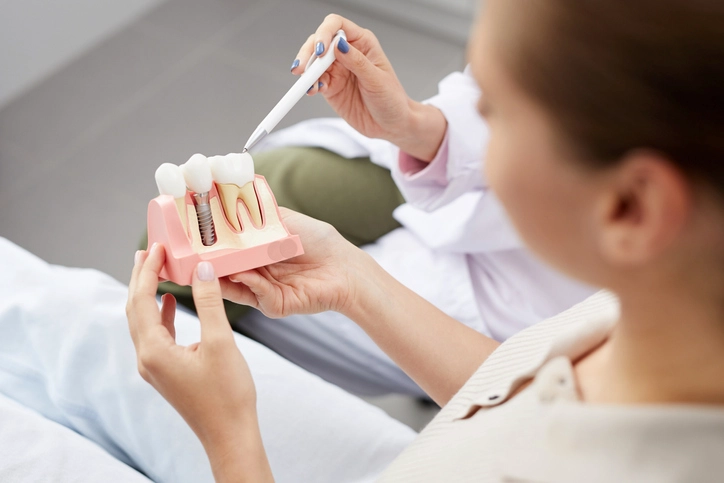
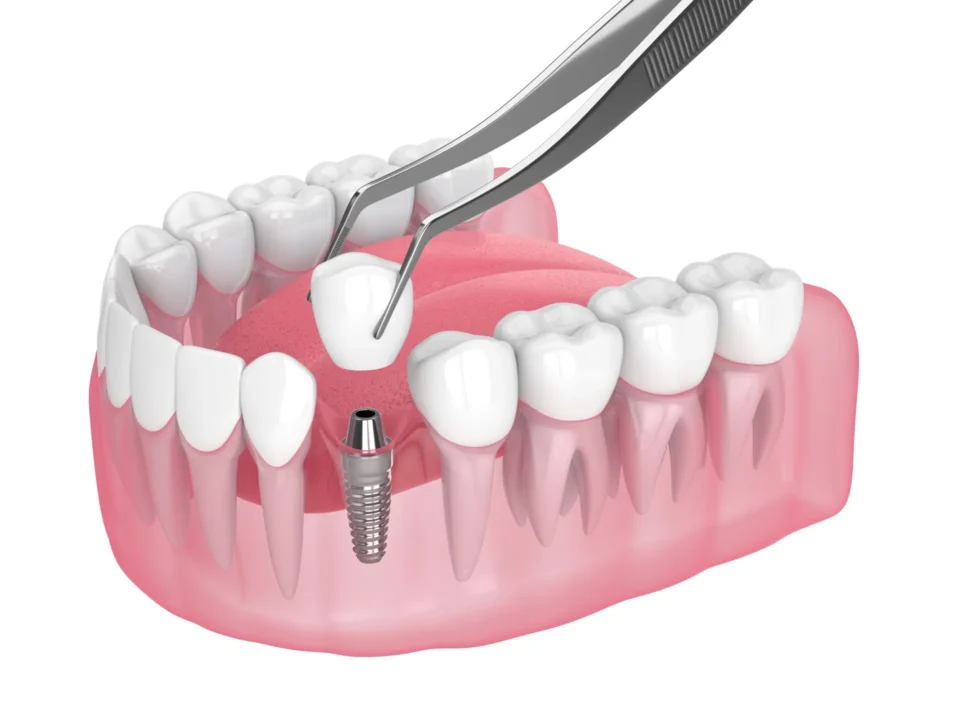
A dental implant is a small titanium post placed directly into the jawbone, where it fuses to the bone over a period of weeks to a few months — a process called osseointegration. Once that healing is complete, a connector piece (an abutment) and a custom crown, bridge, or denture are attached on top. The result is anchored the way a natural tooth root is anchored, not resting on the gum.
A denture is a removable prosthetic, full or partial, usually made from acrylic resin, sometimes combined with a metal framework for partials. Full dentures rest on the gum ridge and are held in place by suction and the shape of your mouth; partial dentures also clip onto any remaining natural teeth. Nothing is surgically placed, though extractions are sometimes needed first (with immediate dentures available the same day extractions happen, so you’re not without teeth during healing).
Some patients end up combining the two: implant-supported (snap-in) dentures use a small number of implants to anchor a removable denture more securely. If stability is your main concern but a full set of individual implants isn’t the right fit, ask your dentist whether snap-in dentures make sense for your situation.
Missing Teeth? Find Your Best Solution!
Compare dental implants and dentures with expert guidance. Call now to restore your smile and confidence!
Who Tends to Be a Good Candidate for Which
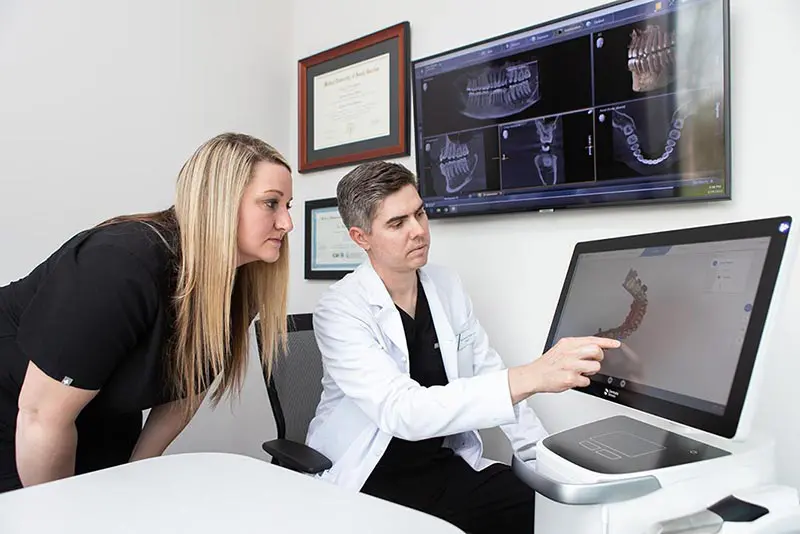
Implants generally require healthy gums and enough jawbone density to support the post, though bone grafting can sometimes make implants possible even when bone has already been lost. Certain factors raise the risk of an implant not fusing properly, including uncontrolled diabetes and smoking, so your dentist will review your health history carefully before recommending this route. Being older, by itself, doesn’t rule someone out — many patients get implants well into their senior years if their bone and overall health support it.
Dentures tend to be a better starting point for patients who’ve lost significant bone, who want to avoid oral surgery, who need a faster turnaround, or who are working with a tighter budget up front. They’re also a reasonable option when a patient’s health makes implant surgery riskier.
Neither option is “better” in the abstract — it depends on your bone volume, health history, budget, and how much you value not having anything removable. This is a conversation worth having directly with your dentist rather than deciding from a blog post, and our team at River District Smiles’ dental implant services or denture services can walk through what your mouth specifically needs.
Durability and Long-Term Considerations
Implants are designed to be a long-term solution, when properly placed and maintained, they can function for many years, and published surgical outcome data puts overall implant success at up to 95%. The crown or restoration attached to the implant may eventually need adjustment or replacement, but the implant post itself is meant to last.
Dentures have a shorter typical lifespan. Research reviewing denture longevity found complete dentures last an average of about 10 years, with most lasting at least 5.But that’s an average across a wide range, and many patients need relines, adjustments, or a full remake well before that, especially as the jawbone continues to change shape underneath a denture over time.
On cost: implants generally represent a larger up-front investment (imaging, the surgical placement itself, and the restoration), while dentures cost less initially but can mean recurring costs for adjustments, relines, and eventual replacement.
Check out our post about the cost here: dentures vs. implants cost over time goes deeper on that specific question.
What Happens to Your Jawbone Over Time
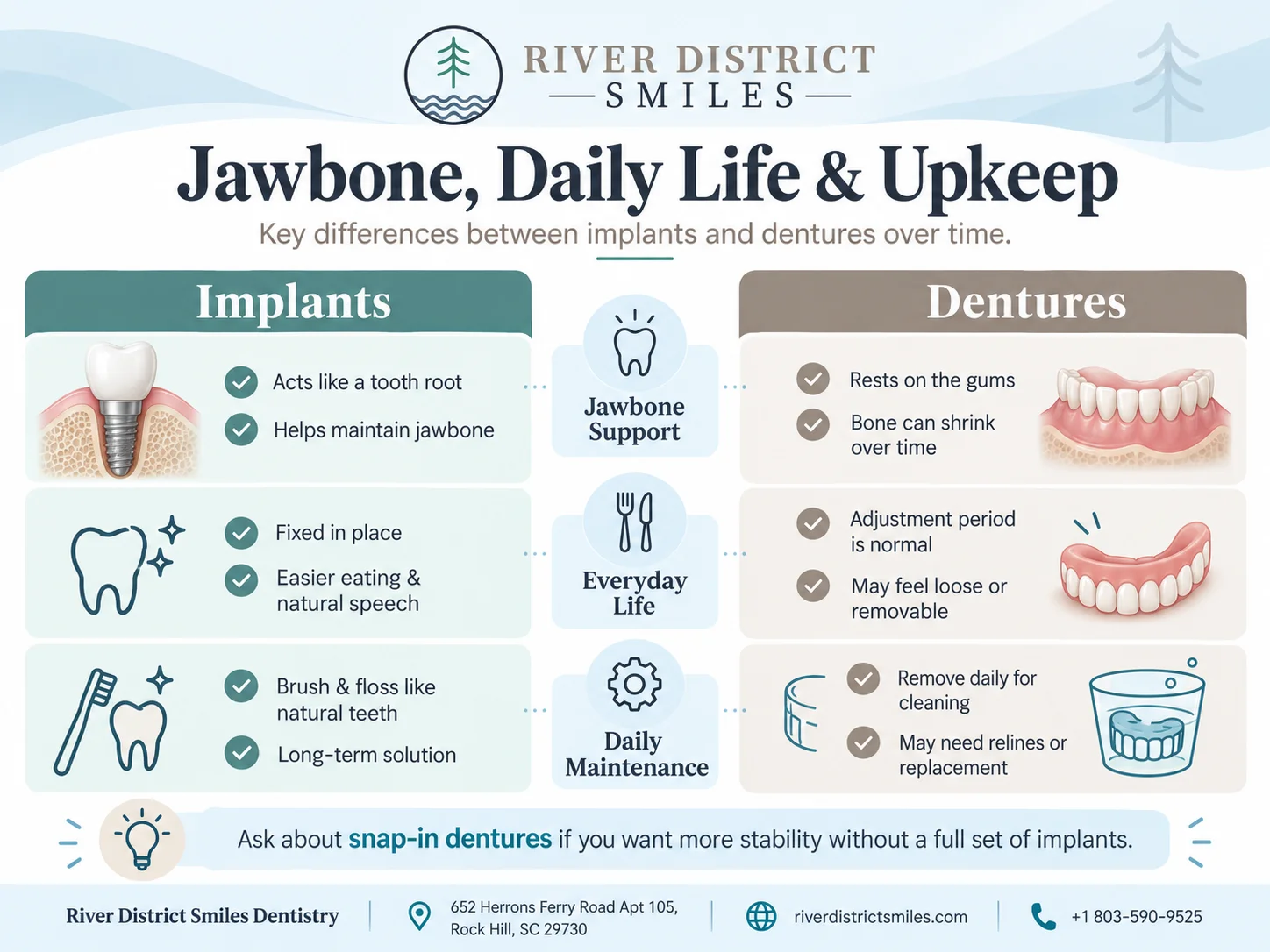
This is one of the most overlooked differences between the two options. An implant acts similarly to a natural tooth root — it transmits chewing forces into the jawbone, which helps signal the body to maintain that bone. A denture rests on top of the gum and bone rather than inside it, so it doesn’t provide that same stimulation. Over years, the jawbone under a denture can continue to shrink, which is part of why dentures sometimes need to be relined or remade — the fit changes as the underlying bone does. If you’ve already lost teeth and are noticing changes in fit or facial shape, our post on what happens if you wait too long to replace missing teeth covers that timeline in more detail.
Daily Life: Eating, Speaking, and Maintenance
Because implants are fixed and anchored in bone, most patients find they can eat a wider range of foods without much adjustment — sticky, hard, or chewy foods that some denture wearers learn to avoid usually aren’t an issue. Speech also tends to feel more natural since there’s no plate covering the palate and no risk of movement while talking.
New dentures typically involve an adjustment period — it’s common for them to feel a little awkward or loose for the first several weeks while your mouth adapts, and follow-up visits to check the fit are a normal part of that process, not a sign anything went wrong. Once adjusted, dentures do restore the ability to eat and speak far better than missing teeth would allow — they just involve more day-to-day upkeep than an implant does.
Maintenance also looks different day to day. Implants are cared for like natural teeth: brushing, flossing (including around the implant), and regular dental visits. Dentures need to come out daily for cleaning with a non-abrasive cleanser and a soft brush, and are typically stored in water or a soaking solution overnight rather than worn to bed.
Frequently Asked Questions
Q: Can I start with dentures now and switch to implants later?
Often, yes. Many patients who start with a denture later move to individual implants or an implant-supported (snap-in) denture once they’re ready for the additional investment or once their bone and health situation is evaluated. It’s worth mentioning this as a long-term goal at your first visit so your dentist can plan around it.
Q: Is getting a dental implant painful?
Implant placement is a surgical procedure done with local anesthesia (and sedation options are often available), so most patients report the procedure itself isn’t painful, with some soreness during the healing period that’s typically managed with over-the-counter pain relief. Ask your dentist what to expect for your specific case.
Q: How long does the entire implant process take, from start to finish?
It varies by patient, largely depending on healing time and whether bone grafting is needed first. Straightforward cases can be completed in a few months; cases needing grafting or extended healing can take longer. Your dentist can give you a realistic timeline once they’ve evaluated your bone and gum health.
Q: Will implants or dentures look like my natural teeth?
Both can look very natural — the outcome has more to do with the skill of the design and the quality of the lab work (tooth shape, shade matching, gum-line detail) than with which option you choose.
Q: What if I don’t have enough jawbone left for an implant?
This is common after teeth have been missing for a while, since the bone that used to support them gradually resorbs. Bone grafting or ridge augmentation can often rebuild enough bone to make implants possible — ask your dentist whether that’s a realistic path for you, or whether a denture makes more sense given your bone volume.
Sources:
- https://myoms.org/what-we-do/dental-implant-surgery/are-dental-implants-permanent/
- https://myoms.org/what-we-do/extractions-and-dentoalveolar-surgery/preserving-bone-for-dental-implants-and-oral-health/
- https://www.mouthhealthy.org/all-topics-a-z/dentures
- https://www.ncbi.nlm.nih.gov/books/NBK596306/
Ready to Smile With Confidence Again?
Discover whether dental implants or dentures are right for you. Call today to schedule your consultation!