
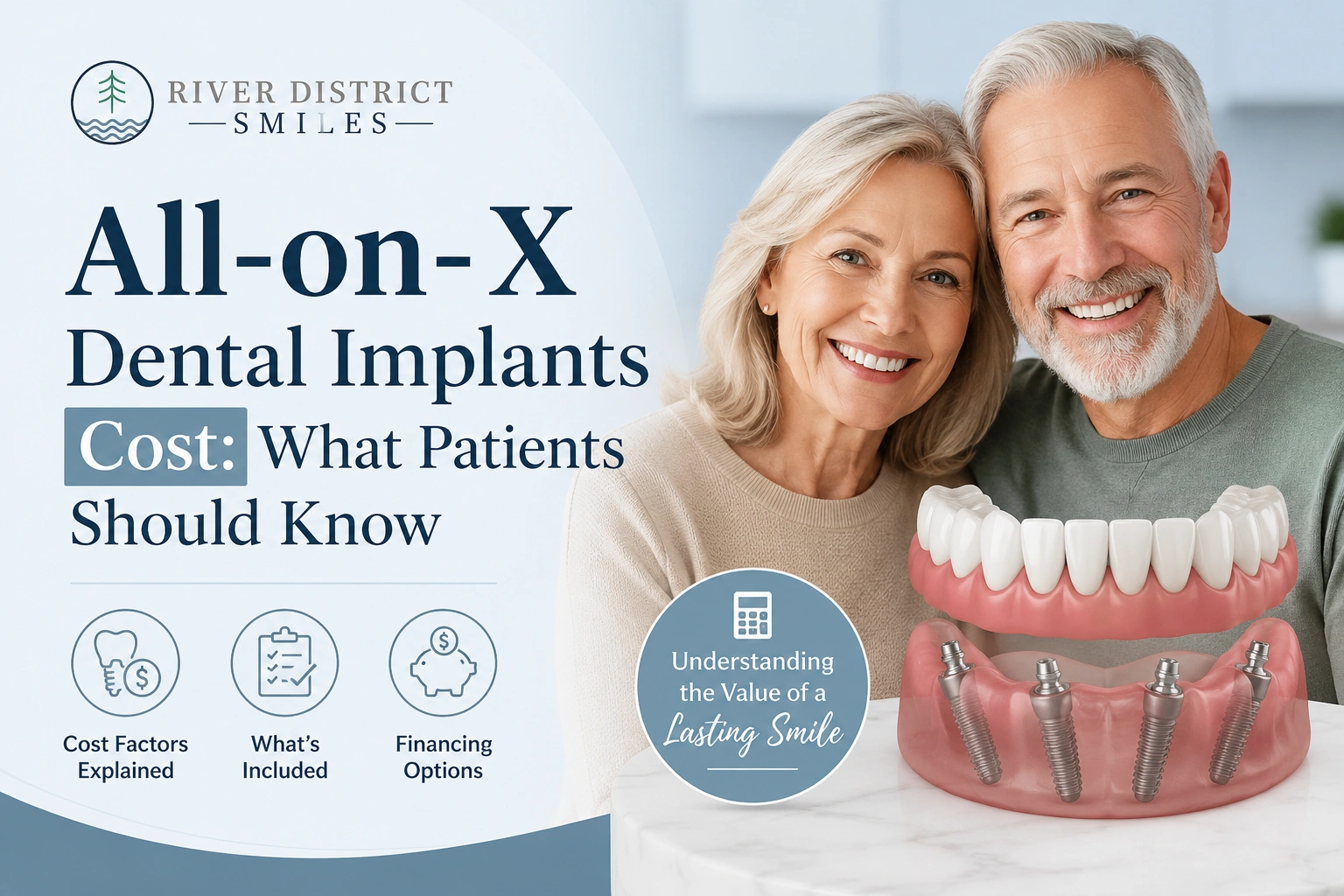


Most people look into All-on-X dental implants because they are tired of missing teeth, failing teeth, or dentures that move when they eat or talk. The biggest question is usually simple: “What does this actually cost?”
The short answer is that All-on-X dental implants commonly cost about $15,000 to $36,000 per arch, meaning either the upper or lower teeth. For both arches, the total can often range from $30,000 to $70,000 or more, depending on the number of implants, the final teeth material, whether extractions or bone grafting are needed, and what is included in the quote.
Don't Let Missing Teeth Hold You Back
Explore affordable All-on-X solutions designed for your smile. Speak with our dental team today.
What Does “All-on-X” Mean?
“All-on-X” means a full arch of replacement teeth is supported by a small number of dental implants. The “X” simply means the exact number can vary.
Some patients may need four implants. Others may need five, six, or more depending on bone quality, bite strength, and the design of the final restoration.
In plain terms, All-on-X is meant to give patients a fixed set of teeth that does not come in and out like a traditional denture.
Typical All-on-X Cost Breakdown
| Treatment Type | Common Cost Range |
| One arch, acrylic or PMMA teeth | $15,000–$25,000 |
| One arch, zirconia teeth | $25,000–$38,000 |
| Upper and lower arches | $30,000–$70,000+ |
Zirconia usually costs more because it is stronger, more durable, and requires more advanced lab work. Acrylic or PMMA may cost less upfront, but it may need more maintenance or replacement over time.
What Is Usually Included?
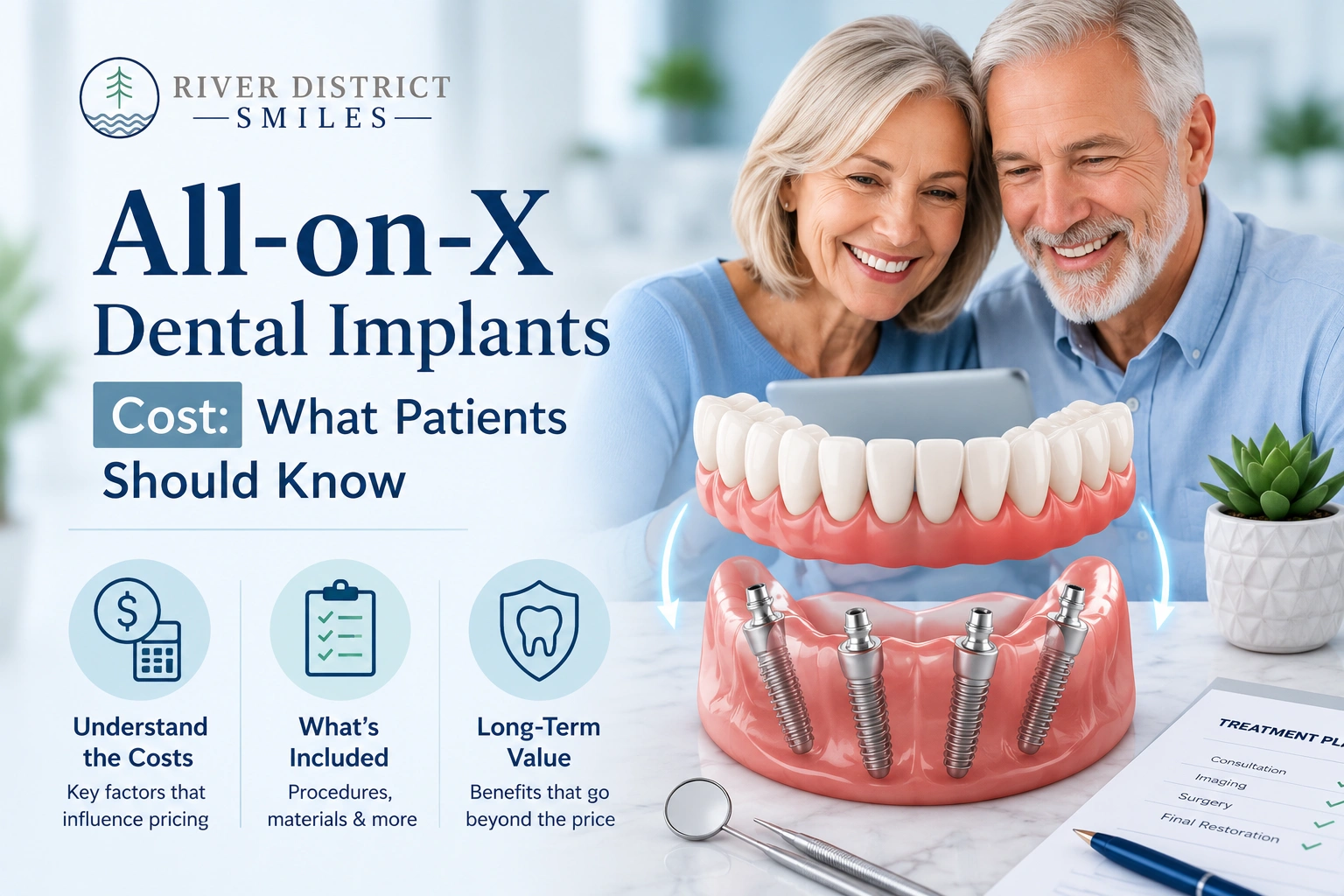
A complete All-on-X estimate may include:
- Consultation and exam
- 3D imaging or digital scans
- Tooth extractions
- Implant placement
- Temporary teeth
- Final fixed bridge
- Follow-up visits
This is where patients need to be careful. Some advertised prices are “starting at” fees and may not include extractions, sedation, bone grafting, or the final bridge. Always ask what is included before comparing one quote to another.
What Makes All-on-X More Expensive?
The biggest cost factors are:
- Number of implants: More implants may add cost but can improve support in certain cases.
- Bone quality: Bone loss may require grafting or change the treatment plan.
- Extractions: Removing failing teeth adds time and cost.
- Material choice: Zirconia generally costs more than acrylic.
- Sedation needs: Some patients need or prefer sedation for longer appointments.
- Case complexity: A full-mouth reconstruction requires careful planning of bite, speech, appearance, and long-term function.
You are not just paying for replacement teeth. You are paying for surgery, planning, materials, lab work, and a restoration designed to handle daily chewing forces.

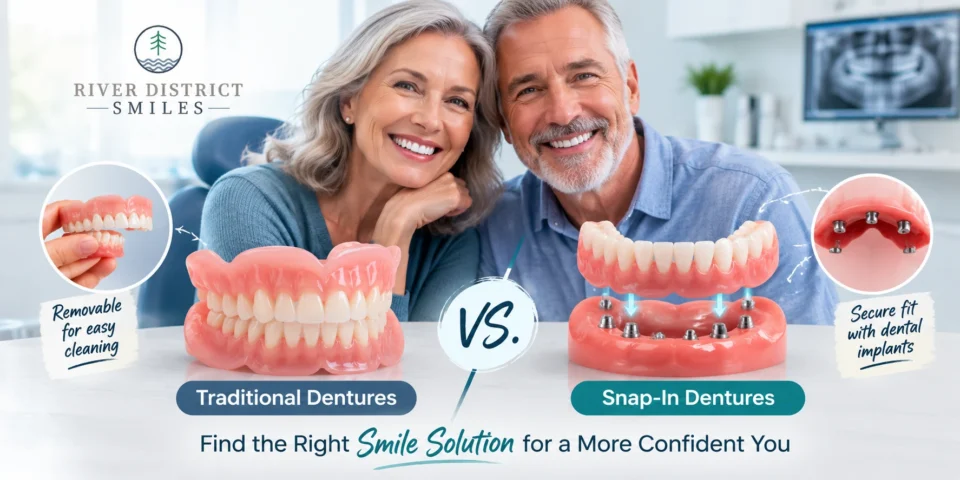
Dentures vs. Snap-In Dentures: What’s the Difference?
Traditional dentures and snap-in dentures both replace missing teeth, but they do not feel, function, or stay in place the…
All-on-X vs. Traditional Dentures
| Option | Cost | Stability | Maintenance | Best Fit |
| Traditional dentures | Lower upfront | Can move or slip | Removed daily | Patients needing the most affordable option |
| Snap-in dentures | Moderate | More stable than dentures | Removable | Patients wanting implant support at a lower cost |
| All-on-X implants | Highest upfront | Fixed and secure | Cleaned like fixed teeth, with special tools | Patients wanting the closest feel to natural teeth |
All-on-X is usually not the cheapest option. It is often chosen because patients want stronger chewing ability, less movement, and a more natural-feeling solution.
Is All-on-X Worth the Cost?
For many patients, yes especially if loose dentures, failing teeth, or missing teeth are affecting eating, confidence, or quality of life.
All-on-X may be worth considering if you:
- Are missing most or all teeth in one arch
- Have teeth that cannot predictably be saved
- Want fixed teeth instead of removable dentures
- Have enough bone or are a candidate for implant treatment
- Understand the maintenance and long-term investment involved
It may not be the best fit if:
- Budget is the main concern
- You prefer a removable option
- You have uncontrolled gum disease
- You smoke heavily and are not willing to discuss risk reduction
- Certain health conditions make surgery less predictable
Does Insurance Cover All-on-X?
Dental insurance may cover parts of treatment, but it usually does not cover the full cost. Coverage may apply to extractions, exams, imaging, or part of the prosthetic teeth, depending on the plan. Many plans still have annual maximums that limit how much they pay toward major dental work.
Before starting treatment, ask for a written estimate and insurance breakdown so you understand your expected out-of-pocket cost.
Questions to Ask Before Choosing All-on-X
Before moving forward, ask:
- How many implants do I need, and why?
- Is this quote for one arch or both arches?
- Are extractions included?
- Are temporary teeth included?
- What material will my final teeth be made from?
- Is sedation included?
- What maintenance will I need over time?
- What happens if one implant or part of the bridge fails?
A lower quote is not always a worse quote, and a higher quote is not automatically better. The most important thing is knowing exactly what is included and whether the treatment plan fits your mouth.
The Bottom Line
All-on-X dental implants are expensive because they replace an entire arch of teeth with a fixed, implant-supported restoration. For many patients, the value comes from better stability, stronger chewing, improved confidence, and a solution that feels much closer to natural teeth than traditional dentures.
The next step is not choosing the cheapest advertised price. It is getting a clear diagnosis, understanding your options, and comparing what each treatment plan actually includes. A good dental consultation should leave you feeling informed, not pressured.
Worried About the Cost of All-on-X Implants?
Discover your options with a personalized consultation. Call today to get honest pricing and expert guidance.