
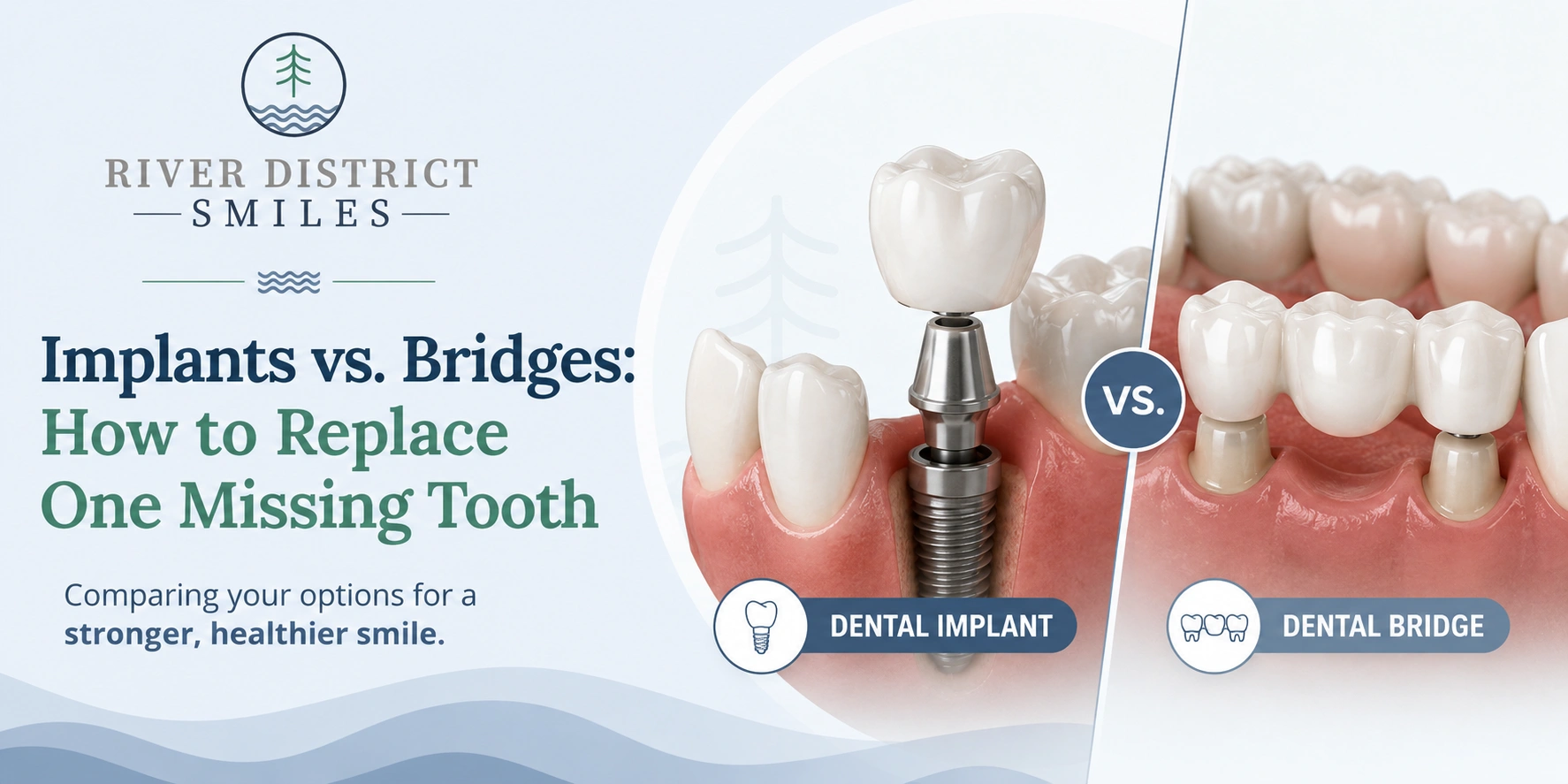


Losing a tooth can be stressful, and one of the first questions patients ask is: “Should I get a dental implant or a bridge?”
The short answer: a dental implant is usually the most durable and natural-feeling replacement, while a bridge can be a quicker, less invasive option if the adjacent teeth are healthy and you prefer a non-surgical approach.
At River District Smiles, both options are offered, and the right choice depends on your oral health, budget, and long-term goals.
Missing a Tooth? Don't Wait to Replace It
Learn whether a dental implant or bridge is the right solution. Call today to schedule your personalized consultation.
Dental Implants
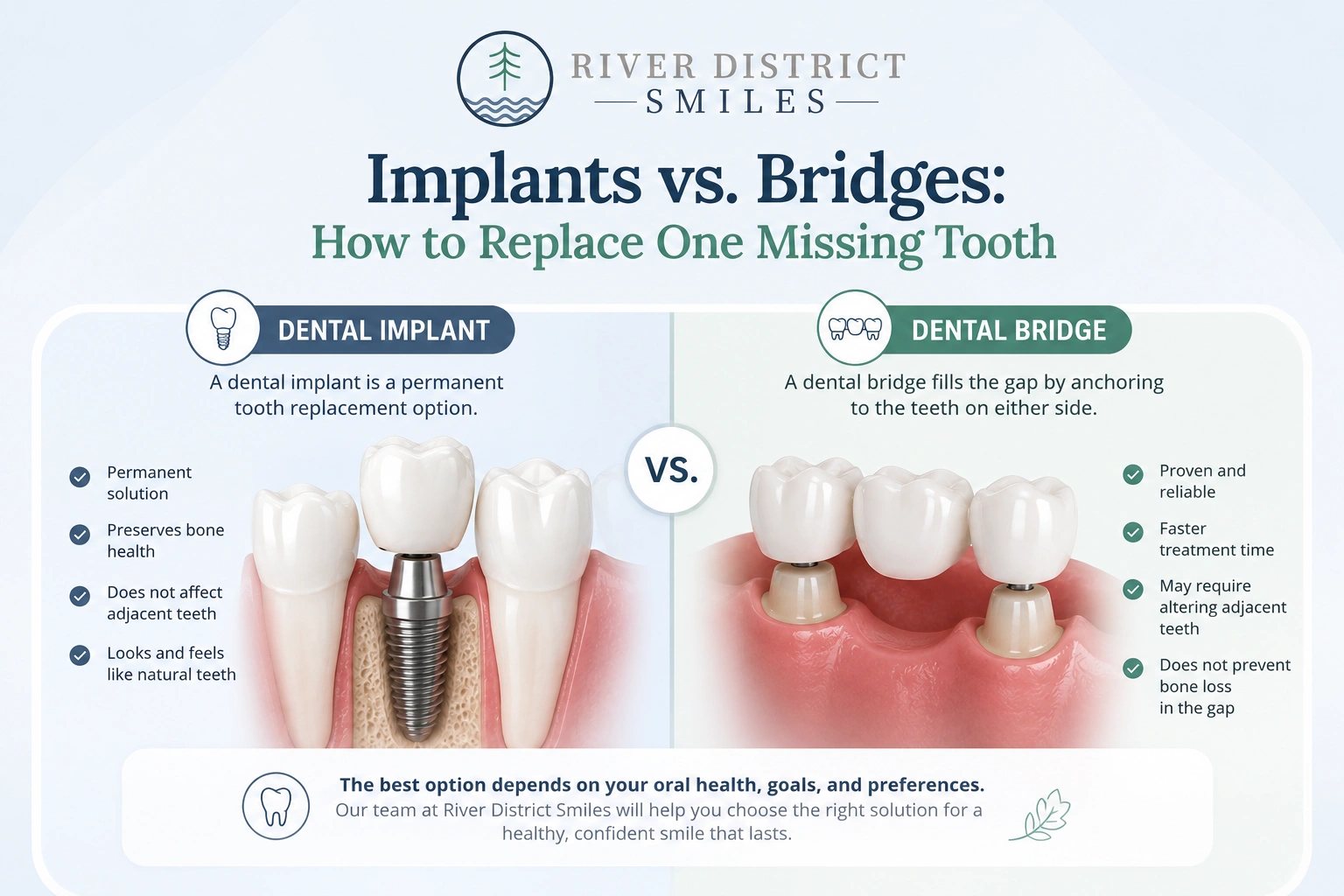
A dental implant is a titanium post surgically placed into the jawbone, topped with a crown that looks and functions like a natural tooth.
Best for:
- Patients seeking a long-lasting solution
- Avoiding alterations to adjacent teeth
- Maintaining jawbone health
Pros:
- Can last 15–25+ years with proper care
- Feels and functions like a natural tooth
- Helps prevent bone loss in the jaw
- Does not rely on neighboring teeth for support
Cons:
- Surgical procedure required
- Healing time of several months before crown placement
- Higher upfront cost ($3,000–$5,000 per tooth)
Dental Bridges
A dental bridge replaces a missing tooth by anchoring a crown to the adjacent teeth.
Best for:
- Patients who prefer a non-surgical option
- Missing teeth where adjacent teeth already need crowns
Pros:
- Usually completed in 2–3 visits
- Less invasive; no surgery required
- Cost may be lower than implants ($1,500–$3,000 for a single tooth bridge)
Cons:
- Requires filing down adjacent healthy teeth
- Can be harder to clean around, increasing risk of decay or gum disease
- Typically lasts 10–15 years; may need replacement sooner than implants
Comparison at a glance
| Feature | Dental Implant | Dental Bridge |
| Longevity | 15–25+ years | 10–15 years |
| Invasiveness | Surgical | Non-surgical |
| Effect on adjacent teeth | None | Requires crowns on neighboring teeth |
| Bone preservation | Preserves jawbone | Does not prevent bone loss |
| Cost | Higher upfront | Lower upfront |
| Maintenance | Regular brushing, flossing, check-ups | Similar, plus careful flossing around pontic |
How to decide
- Health of adjacent teeth: If the neighboring teeth are strong and healthy, an implant avoids altering them.
- Jawbone density: Sufficient bone is needed for implants; otherwise, bone grafting may be required.
- Budget: Bridges are typically less expensive initially, but implants may offer better long-term value.
- Treatment timeline: Bridges are faster to place; implants require healing time.
- Long-term oral health: Implants help maintain bone structure and reduce future dental complications.

Can I Fix Chipped or Cracked Teeth Without Veneers?
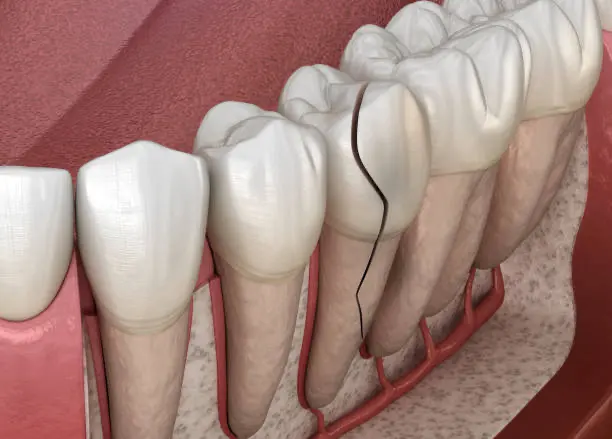
A chipped or cracked tooth does not automatically mean you need veneers. Depending on the location and extent of the…
Bottom line
Both implants and bridges effectively replace a missing tooth, but they serve different needs. Implants provide a durable, natural-feeling solution that preserves bone and protects adjacent teeth, while bridges are quicker and less invasive but rely on neighboring teeth for support.
The next step is a dental evaluation at River District Smiles, where a dentist can assess your teeth, bone, and bite to determine which option offers the best long-term outcome for your smile.
One Missing Tooth Can Affect More Than Your Smile
Get expert guidance before the gap leads to bigger dental problems. Call today to book your consultation.