
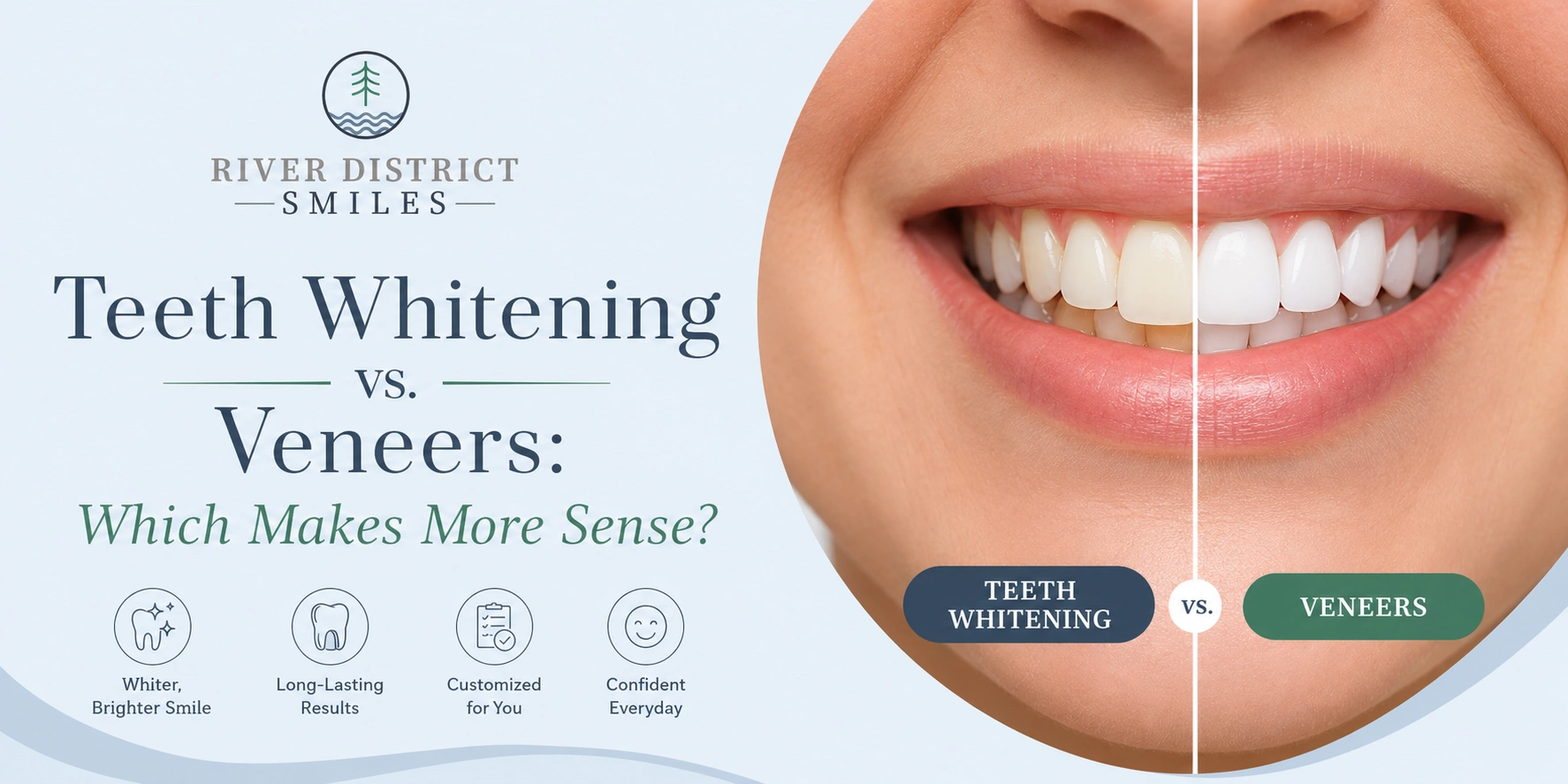


If you’re considering a brighter, more attractive smile, it’s common to wonder: “Should I just whiten my teeth, or are veneers a better choice?”
The short answer: teeth whitening is ideal for natural teeth that are mostly healthy but discolored, while veneers are better for teeth that have structural issues, chips, uneven shape, or deep stains that whitening cannot fix.
Ready for a Brighter, More Confident Smile?
Compare teeth whitening and veneers with professional advice you can trust. Call now to get started.
Teeth Whitening
Teeth whitening uses bleaching agents to lighten the color of your natural teeth.
Best for:
- Stains from coffee, tea, wine, or tobacco
- Mild yellowing over time
- Evenly shaped and healthy teeth
- General concerns with discolored teeth
Pros:
- Less expensive, typically $200–$800 depending on in-office or take-home treatment
- Non-invasive; no enamel removal required
- Quick results, with in-office treatment often working in one visit
- Can be repeated or touched up over time
Cons:
- Only changes color; does not fix chips, cracks, or gaps
- Results may fade over time or with certain foods and drinks
- Does not alter tooth shape or alignment
- Does not work the same way on restorations, crowns, or existing veneers
Veneers
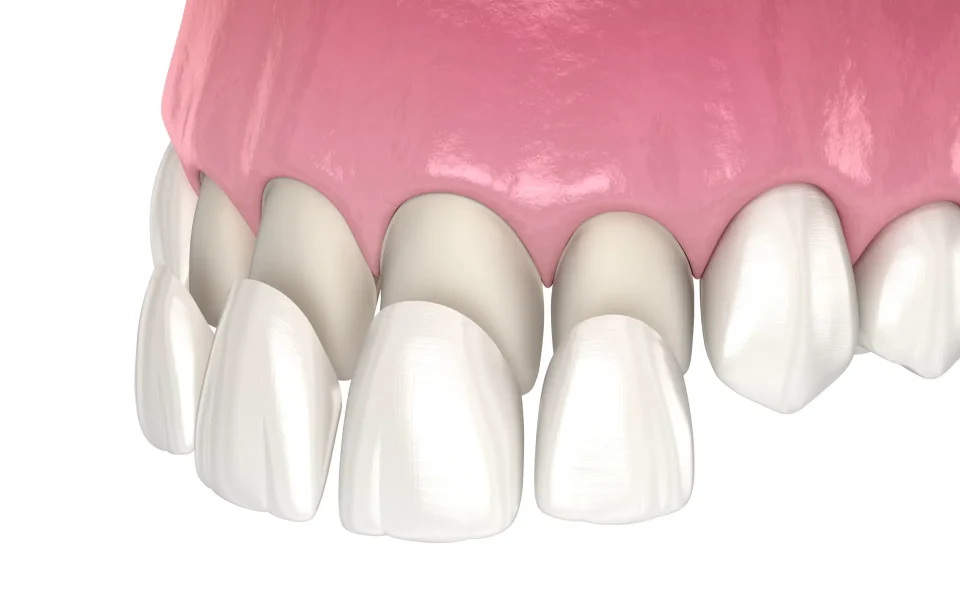
Veneers are thin porcelain shells bonded to the front of teeth to improve appearance.
Best for:
- Teeth that are chipped, worn, or cracked
- Deep stains that don’t respond to whitening
- Uneven, misaligned, or irregularly shaped teeth
- Desire for a long-lasting, uniform smile
- Cosmetic concerns such as misshapen teeth or gapped teeth
Pros:
- Durable, often lasting 10–20+ years
- Can change color, shape, and alignment
- Resistant to staining
- Provides a complete cosmetic transformation
Cons:
- More expensive, typically $800–$2,500 per tooth
- Enamel removal required; irreversible
- Usually takes two visits unless using same-day technology

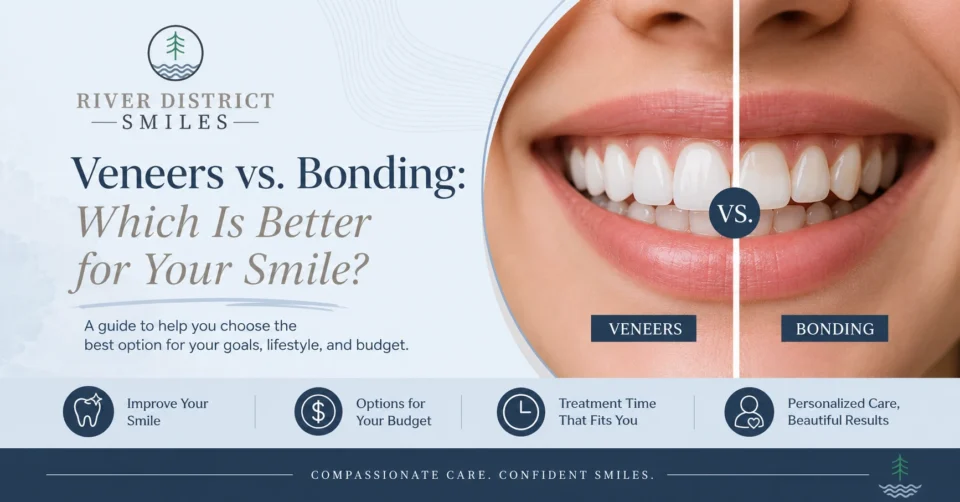
Veneers vs. Bonding: Which Is Better for Your Smile?
If you are considering cosmetic improvements to your teeth, you may be wondering whether veneers or bonding is the right…
How to Decide
If your teeth are healthy and only need a brighter color, whitening is usually sufficient.
If your teeth have structural damage, uneven shape, or deep discoloration, veneers are likely a better long-term solution. For chipped, worn, or broken teeth, treatment may also involve options related to chipped teeth depending on the extent of the damage.
Budget
Whitening is less costly and non-invasive. Veneers are more of an investment but provide broader cosmetic results.
Longevity
Whitening may require touch-ups over time, while veneers last longer with proper care.
Smile Goals
Whitening enhances the color of your natural teeth. Veneers can transform the overall appearance of your smile by improving color, shape, size, and symmetry.
Bottom Line
Whitening and veneers serve different purposes. Whitening enhances color, while veneers transform the smile.
The next step is a consultation at a place like River District Smiles, where a dentist can assess your teeth, discuss your goals, and recommend whether whitening, veneers, or a combination through cosmetic dentistry is the most effective solution for your smile.
Want a Smile Makeover That Makes Sense?
Find out whether whitening or veneers are the better fit for your teeth. Schedule your consultation today.