


One week, you can drink ice water without thinking about it. The next, a cold sip sends a sharp feeling through one tooth or several of them.
Sudden tooth sensitivity does not automatically mean you need a root canal. It can happen after whitening, recent dental treatment, gum recession, enamel wear, or a change in brushing habits.
It can also be an early sign of a cavity, cracked tooth, loose filling, or inflammation inside the tooth.
The most useful clues are where the sensitivity occurs, what triggers it, and how long it lasts.
A brief sensation that stops as soon as the cold is gone is often less concerning than pain that lingers, throbs, wakes you at night, or occurs when you bite. Ongoing or worsening sensitivity should be evaluated rather than covered up indefinitely with sensitive-tooth toothpaste.
Sudden Tooth Sensitivity? Don’t Ignore It
Get your teeth checked before the discomfort gets worse. Call today to schedule an appointment.
Sudden Tooth Sensitivity at a Glance
| What you notice | What it may suggest |
| Several teeth became sensitive after whitening | Temporary irritation from the whitening product |
| Sensitivity near the gumline | Gum recession or exposed root surfaces |
| One tooth reacts to cold | Cavity, worn filling, crack, exposed dentin, or recent dental treatment |
| Sharp pain when biting | Crack, loose filling, decay, or inflammation inside the tooth |
| Cold sensitivity stops immediately | Often less urgent, but monitor it |
| Pain lingers after cold or heat | Possible deeper inflammation inside the tooth |
| Sensitivity began after a filling or crown | The tooth may be temporarily irritated or the bite may need evaluation |
| Teeth feel sensitive with jaw soreness or headaches | Grinding or clenching may be contributing |
| Sensitivity occurs with swelling or a bad taste | Possible infection requiring prompt care |
| Facial swelling affects breathing or swallowing | Medical emergency |
This table can help you describe the problem, but it cannot diagnose the tooth. Several dental conditions produce similar symptoms.
Why Sensitive Teeth Hurt
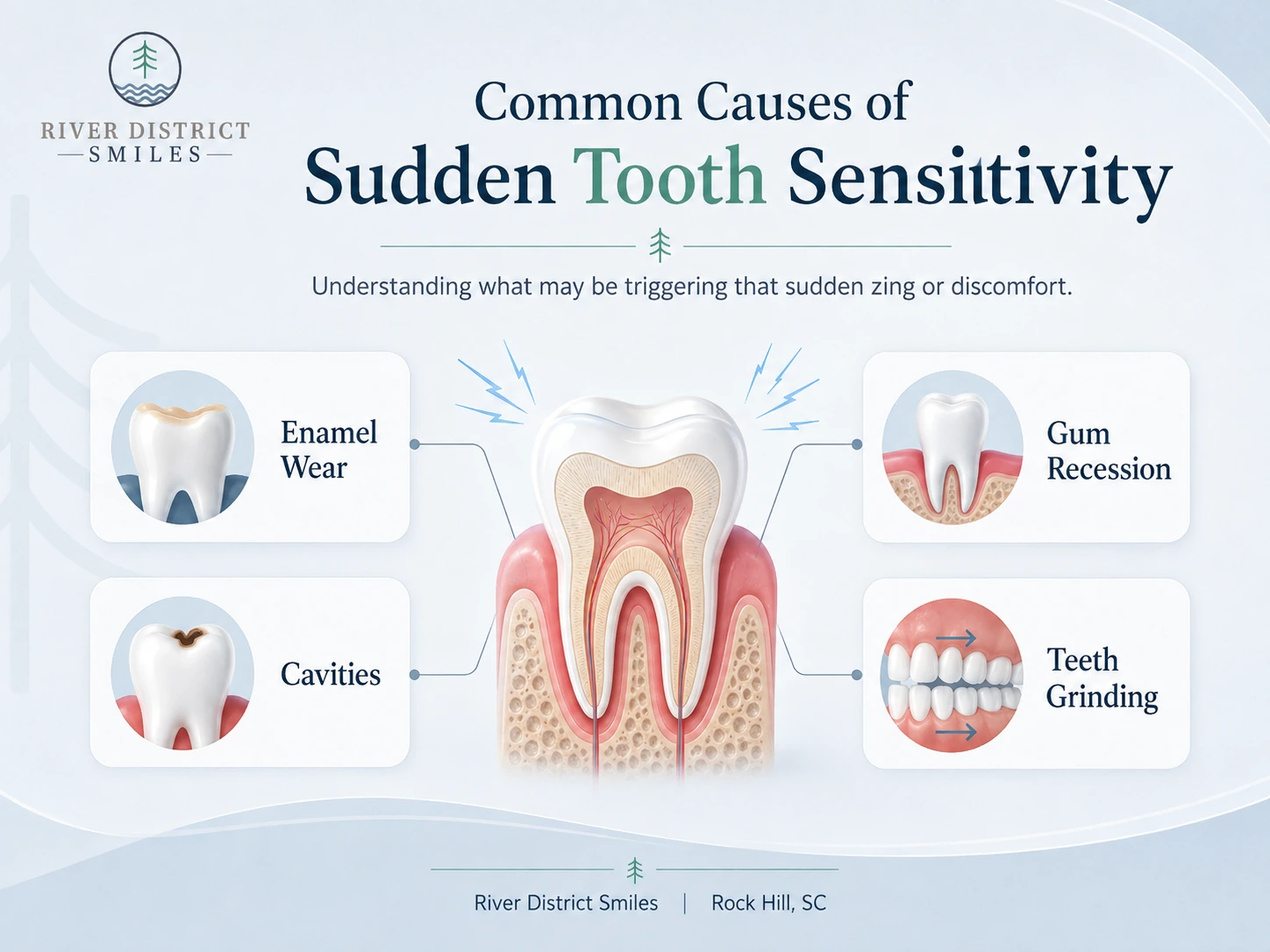
A healthy tooth has a protective outer layer of enamel above the gumline. The root is normally protected by gum tissue and a thinner covering called cementum.
Underneath those protective layers is dentin. Dentin contains microscopic channels that communicate with the living tissue inside the tooth.
When enamel wears down or the root becomes exposed, temperature changes, air, sweets, acids, and touch can travel through those channels and stimulate the tooth. That is why a sip of cold water can create a fast, sharp sensation even when the tooth looks normal from the outside.
The sensitivity itself is a symptom. Treatment depends on why the dentin or the nerve deeper inside the tooth is reacting.
1. Your Gums Have Receded
Gum recession exposes part of the tooth root.
Because the root does not have the same thick enamel covering as the crown of the tooth, it is more vulnerable to temperature changes, brushing pressure, plaque, and decay. The sensitive area is often close to the gumline and may involve more than one tooth.
Gum recession can be associated with:
- Gum disease
- Aggressive brushing
- Naturally thin gum tissue
- Tooth position
- Grinding or clenching
- Previous orthodontic movement
- Age-related changes
- Repeated inflammation around the gums
Do not assume that recession means you have been brushing poorly. Some patients maintain good oral hygiene and still develop exposed roots because of their anatomy, bite forces, or previous dental history.
The important question is whether the recession is stable or continuing.
Clues that recession may be involved
- The sensitivity is strongest near the gumline
- The tooth looks slightly longer
- A yellowish root surface is visible
- Several teeth react in similar areas
- Cold water or brushing causes a quick sensation
- There is little or no spontaneous pain
Treatment may involve desensitizing toothpaste, fluoride, bonding over the exposed area, changes in brushing technique, gum-disease treatment, or a gum graft in selected cases.
2. You Recently Whitened Your Teeth
Whitening is one of the most common reasons several teeth suddenly become sensitive at the same time.
Peroxide in whitening products travels through the enamel and can temporarily irritate the dentin and nerve tissue underneath. In many cases, the sensitivity improves after whitening is paused or completed.
Sensitivity is more likely when:
- The product is used more often than directed
- A stronger concentration is used
- Whitening trays do not fit properly
- Whitening gel touches exposed roots
- You already had sensitive teeth
- You have cavities, cracks, or gum recession
- Several whitening products are being combined
Overusing whitening products can also irritate the gums or damage tooth structure, so increasing the frequency is not a safe way to speed up the result.
What to do
Pause the whitening treatment and allow the teeth to settle.
Use a fluoride toothpaste intended for sensitive teeth and avoid very hot or cold foods temporarily. Before restarting, ask your dentist whether the product, strength, and schedule are appropriate.
A tooth that remains painful after the other teeth improve deserves an examination. Whitening may have revealed an existing crack, cavity, or exposed root rather than causing the entire problem.
3. You Recently Had Dental Treatment
A tooth can become temporarily sensitive after:
- A filling
- A crown
- Dental bonding
- A deep cleaning
- Removal of decay
- Adjustment of the bite
- Whitening
- Other treatment close to the nerve
Dental work can temporarily inflame the pulp of the living tissue inside the tooth. The American Association of Endodontists notes that temperature sensitivity after treatment may settle over the following weeks, but persistent or worsening pain should be checked.
The expected recovery depends on what was done and how deep the original damage was.
Call the dentist sooner when:
- The tooth hits first when you bite
- Biting causes a sharp pain
- The sensitivity is getting worse
- The pain lingers after hot or cold
- The tooth begins throbbing on its own
- You cannot chew comfortably
- The temporary or permanent restoration feels loose
- Swelling develops
A filling or crown that feels “high” can place excessive pressure on the tooth. A simple bite adjustment may help, but the dentist first needs to determine whether the bite is actually the source of the discomfort.
4. A Cavity Has Reached the Dentin
A cavity may not hurt during its earliest stage.
As decay moves through the enamel and reaches the softer dentin underneath, the tooth may begin reacting to cold, sweets, or air. Untreated decay can continue into the pulp and eventually cause pain, infection, or tooth loss.
Possible clues
- One specific tooth is sensitive
- Sweet foods trigger the sensation
- Food catches in the area
- Floss tears or catches
- You can see a dark spot or small hole
- An old filling is nearby
- Sensitivity is becoming more frequent
- The tooth has started aching without a trigger
Not all cavities are visible. Decay can develop between teeth or underneath the edge of an existing restoration.
Sensitive-tooth toothpaste may reduce the symptom, but it does not remove decay. A dental examination and appropriate X-rays can help determine whether the tooth needs preventive care, a filling, a crown, or deeper treatment. River District Smiles uses digital X-rays when needed to evaluate decay, infection, bone changes, and concerns beneath existing restorations.
5. A Tooth or Filling Has Cracked
A cracked tooth can cause sensitivity that appears suddenly, disappears, and returns unpredictably.
Some cracks are visible. Others are too small to see easily or extend underneath an existing filling.
Typical symptoms can include:
- Sharp pain when chewing
- Pain when you release your bite
- Sudden sensitivity to hot or cold
- Symptoms that come and go
- Difficulty identifying the exact tooth
- Pain when biting on one part of the tooth
- A recent history of biting something hard
Cracked teeth can produce erratic chewing pain and sudden temperature sensitivity. Because the symptoms may be intermittent, patients sometimes delay care when the tooth temporarily feels better.
A worn, chipped, or loose filling can cause similar symptoms. It may expose dentin, allow bacteria around the restoration, or leave part of the tooth unsupported.
Why timing matters
A small cracked section may be repairable with bonding, a filling, an onlay, or a crown.
A crack that extends into the pulp may require root canal treatment. A tooth that splits deeply or fractures into the root may not be repairable.
Prompt evaluation cannot guarantee that the tooth will be saved, but waiting may allow the crack to spread.
6. You Are Grinding or Clenching Your Teeth
Many people clench or grind without realizing it.
It can happen while concentrating, driving, exercising, working, or sleeping. Over time, these forces can wear enamel, create tiny cracks, damage restorations, and make teeth feel sensitive.
Other signs may include:
- Morning headaches
- Jaw tightness
- Tender cheek or temple muscles
- Flattened or shortened teeth
- Small chips
- Ear-area discomfort
- Teeth that feel sore when you wake up
- A partner hearing grinding at night
The National Institute of Dental and Craniofacial Research identifies tooth sensitivity, tooth wear, headaches, and jaw or ear discomfort as possible signs of bruxism. Severe or frequent grinding can also damage teeth and restorations.
A night guard may protect the teeth, but it does not automatically eliminate the underlying muscle activity. Treatment may also involve awareness of daytime clenching, sleep evaluation, stress management, physical therapy, or treatment of damaged teeth.
An over-the-counter guard is not always a good substitute for an examination. If one tooth has a crack or infection, covering the teeth with a guard will not solve that problem.
7. Acid Has Worn Down Your Enamel
Enamel erosion occurs when acids gradually dissolve the protective surface of the teeth.
Possible sources include:
- Soft drinks
- Energy drinks
- Sports drinks
- Citrus beverages
- Frequent sour candy
- Repeated vomiting
- Acid reflux
- Holding acidic drinks in the mouth
- Frequent snacking on acidic foods
Acid erosion is permanent once enamel has been lost. As the enamel becomes thinner, the underlying dentin is less protected and the teeth may become more sensitive.
Acid reflux can expose the teeth to stomach acid, particularly on the inner surfaces. Patients with frequent reflux should discuss the underlying condition with a medical provider while their dentist monitors the teeth for erosion.
Possible clues
- Several teeth are sensitive
- Teeth appear more yellow as dentin shows through
- Edges look thinner or more transparent
- Small cups or depressions appear on chewing surfaces
- Teeth chip more easily
- Sensitivity follows frequent acidic drinks
- Reflux, heartburn, or repeated vomiting is present
Do not brush immediately and aggressively after an acidic exposure. The more important long-term step is reducing how often the teeth are exposed to acid and addressing any medical cause.
8. Gum Disease Has Exposed or Inflamed the Roots
Gum disease can contribute to sensitivity in more than one way.
Inflamed gums may feel tender during brushing or cleaning. As periodontitis progresses, gum recession and loss of supporting tissue can expose root surfaces. Those roots are more sensitive to cold, touch, and air.
Possible accompanying signs include:
- Bleeding during brushing or flossing
- Red or swollen gums
- Persistent bad breath
- Gum recession
- Loose or shifting teeth
- Spaces developing between teeth
- Tenderness while chewing
- Tartar buildup near the gumline
Sensitive-tooth toothpaste may reduce discomfort, but it does not treat gum disease. Treatment depends on whether the problem is mild gingivitis, exposed roots without active disease, or periodontitis involving deeper pockets and bone loss.
9. Your Mouth Has Become Drier
Saliva helps protect teeth, control harmful microorganisms, and reduce the risk of decay.
When the mouth becomes persistently dry, cavities can develop more easily—especially around exposed roots, existing fillings, and areas that trap plaque. Dryness can therefore contribute indirectly to new sensitivity.
Dry mouth may be associated with:
- Medications
- Dehydration
- Mouth breathing
- Certain medical conditions
- Cancer treatment
- Tobacco or nicotine use
- Salivary-gland problems
Do not stop a prescribed medication on your own. Tell your dentist and prescribing clinician about the dryness so they can consider ways to manage it and protect the teeth.
Helpful care may include fluoride, saliva-supporting products, more frequent preventive visits, changes in oral hygiene, and treating decay early.
10. You Started Brushing Differently
Brushing harder does not clean teeth better.
Excessive pressure, especially with a firm toothbrush or abrasive product, may irritate the gums and contribute to wear around exposed root surfaces.
A soft-bristled toothbrush and gentle technique are usually more appropriate for sensitive areas. The American Association of Endodontists recommends sensitive-tooth toothpaste and a soft or extra-soft brush for momentary sensitivity associated with exposed roots.
Sensitivity may seem sudden after:
- Switching to a harder toothbrush
- Beginning an aggressive brushing routine
- Using abrasive whitening products
- Scrubbing repeatedly at stained areas
- Brushing exposed roots with heavy pressure
The goal is thorough plaque removal, not force.
Does the Pattern of Sensitivity Matter?
Yes. The pattern can help the dentist narrow down the cause.
One Tooth or One Small Area
Sensitivity isolated to one tooth is more likely to involve a local problem, such as:
- A cavity
- A crack
- A worn filling
- Recent dental work
- A broken edge
- An exposed root
- Inflammation inside the tooth
That does not mean the condition is necessarily serious. It means the tooth should be evaluated individually.
Several Teeth at Once
Sensitivity across several teeth may be more consistent with:
- Whitening
- Gum recession
- Enamel erosion
- Grinding
- A change in toothpaste or brushing
- Recent cleaning or gum treatment
- Dry mouth
One tooth can still have a separate problem even when the entire mouth feels sensitive.
Brief Cold Sensitivity
A quick sensation that stops when the cold is removed can occur with exposed dentin, minor recession, early decay, a loose filling, or mild irritation. The AAE notes that momentary sensitivity is generally less concerning unless it persists or progresses.
Lingering Temperature Pain
Pain that continues after the hot or cold item is gone deserves faster attention.
Lingering pain—particularly when it lasts more than about 30 seconds—may indicate significant inflammation or damage inside the tooth.
Pain When Biting
Sharp pain during chewing may be associated with:
- A cracked tooth
- A loose restoration
- Tooth decay
- Pulp damage
- A bite that needs adjustment
This symptom should be evaluated rather than treated only with sensitive-tooth toothpaste.
Throbbing or Spontaneous Pain
Pain that begins without eating or drinking is more concerning than simple surface sensitivity.
Call a dentist promptly when the tooth throbs, wakes you at night, or becomes increasingly painful. These symptoms may occur with advanced inflammation or infection. River District Smiles advises urgent evaluation for severe or worsening pain, pain that interrupts sleep, biting pain, swelling, fever, or drainage.
What Can You Do at Home?
Home care can make mild sensitivity more manageable while you arrange an examination.
Use a desensitizing fluoride toothpaste
Desensitizing toothpastes contain ingredients intended to reduce the transmission of sensations through exposed dentin. They usually require repeated use rather than working after one brushing.
Use the toothpaste consistently according to its directions. Switching between several products every few days can make it difficult to know whether one is helping.
Brush gently
Use a soft-bristled toothbrush and light pressure.
Pay attention to plaque near the gumline, but do not scrub the roots aggressively. Continue cleaning between the teeth unless your dentist advises otherwise.
Avoid extreme temperatures temporarily
Room-temperature drinks and softer foods may be more comfortable until the cause is identified.
Avoid chewing ice or biting hard foods with the affected tooth.
Pause whitening
Stop whitening until the sensitivity settles and the teeth have been evaluated if symptoms are significant, uneven, or persistent.
Reduce repeated acid exposure
Limit how frequently you sip acidic drinks or consume sour foods.
Address frequent heartburn, reflux, or vomiting with the appropriate healthcare professional rather than relying only on dental products.
Pay attention to clenching
During the day, notice whether your teeth are touching when you are not eating.
Jaw awareness may help reduce daytime clenching, but persistent grinding, tooth wear, or morning jaw pain should be assessed by a dentist.
What Not to Do
Avoid:
- Placing aspirin directly on the tooth or gum
- Scrubbing harder because the tooth feels different
- Continuing aggressive whitening through significant pain
- Applying household chemicals or unapproved remedies
- Using glue on a loose filling or crown
- Chewing repeatedly on the tooth to “test” it
- Ignoring worsening symptoms because toothpaste temporarily reduces them
Reducing the sensation is not the same as treating the cause.
When Is Sudden Sensitivity Urgent?
Arrange prompt dental care when:
- Pain lingers after hot or cold
- The tooth hurts when you bite
- One tooth suddenly becomes much more sensitive
- Pain is worsening
- A filling or crown feels loose
- Part of the tooth has broken
- The tooth begins throbbing
- Pain wakes you at night
- Swelling develops
- You notice drainage or a bad taste
- The tooth feels loose
- The tooth changes color after an injury
- You have fever with dental pain
Constant severe pain, pressure, gum swelling, and tenderness may occur with an abscess or infection around the tooth.
Seek emergency medical care when facial, tongue, jaw, or neck swelling affects breathing or swallowing.
How a Dentist Finds the Cause
A sensitivity evaluation may include:
- Reviewing when the symptoms started
- Identifying hot, cold, sweet, air, touch, or biting triggers
- Comparing the response of several teeth
- Checking for gum recession
- Looking for cavities and worn restorations
- Testing the bite
- Examining for cracks
- Evaluating tooth wear
- Checking the gums and supporting bone
- Taking digital X-rays when appropriate
- Testing the health of the pulp inside the tooth
River District Smiles uses dental examinations, digital imaging, gum-health measurements, and intraoral cameras to help patients see and understand what is happening.
Not every sensitive tooth requires an X-ray, crown, or root canal. The treatment should match the actual cause.
How Sensitive Teeth Are Treated
Desensitizing toothpaste
This is often appropriate for mild sensitivity caused by exposed dentin or recession. It may take repeated applications before the improvement becomes noticeable.
Fluoride treatment
Professional fluoride products may help strengthen the tooth surface and reduce the transmission of sensitivity.
Bonding or a filling
Tooth-colored material may be placed over an exposed or damaged area when there is a structural defect, decay, or significant root sensitivity.
Crown or onlay
A weakened, cracked, or heavily restored tooth may need broader protection. This is more treatment than simple sensitivity toothpaste, so the dentist should explain why the tooth cannot be managed predictably with a smaller restoration.
Gum-disease treatment
When inflammation, deep deposits, or periodontal pockets are contributing to root exposure, treating the gums is more important than only reducing the sensation.
Gum grafting
A graft may be considered when significant recession has exposed the root and the area would benefit from additional tissue coverage. Not every recessed area needs surgery.
Night guard or grinding management
A custom appliance may help protect teeth from damaging grinding forces. The dentist may also recommend addressing sleep, stress, jaw-muscle tension, or possible sleep-disordered breathing, depending on the pattern.
Root canal treatment
A root canal is generally reserved for a tooth with severe, persistent sensitivity or significant damage to the pulp that cannot be managed with more conservative treatment.
A root canal should not be recommended simply because a tooth reacts briefly to cold.
Questions to Ask at Your Appointment
Ask:
- Is the sensitivity coming from the tooth, root, gum, or nerve?
- Is there a cavity, crack, or loose filling?
- Can you show me the area?
- Is the pulp inside the tooth healthy?
- Is the sensitivity expected to improve on its own?
- What is the most conservative treatment?
- Would sensitive-tooth toothpaste or fluoride be enough?
- Is gum recession involved?
- Could grinding or clenching be contributing?
- Do I need to pause whitening?
- What symptoms would make this urgent?
- What may happen if I monitor it?
- When should the tooth be rechecked?
- Does the proposed treatment address the cause or only the symptom?
A good evaluation should leave you knowing why the tooth is sensitive—not simply what product to buy.
The Bottom Line
Sudden tooth sensitivity is often caused by exposed dentin.
That exposure may come from gum recession, enamel wear, whitening, recent dental work, grinding, acid erosion, a cavity, a crack, or a worn restoration.
Brief sensitivity that stops immediately may not be an emergency. It still deserves attention if it continues, worsens, or is isolated to one tooth.
Contact a dentist sooner when sensitivity:
- Lingers after hot or cold
- Occurs during biting
- Becomes spontaneous or throbbing
- Interrupts sleep
- Follows an injury
- Is accompanied by swelling, drainage, fever, or a broken restoration
River District Smiles provides comprehensive and emergency dental examinations for patients in Rock Hill. The practice uses digital imaging, gum evaluation, bite assessment, and clear treatment planning to separate minor sensitivity from cavities, cracks, infection, and other conditions that need care.
The next step is not assuming the worst or masking the feeling indefinitely.
It is identifying why the protective layer of the tooth changed and choosing the smallest treatment that addresses the actual cause.
Sensitive Teeth Can Be a Warning Sign
Don’t wait for mild sensitivity to become serious tooth pain. Call today and get it checked.