
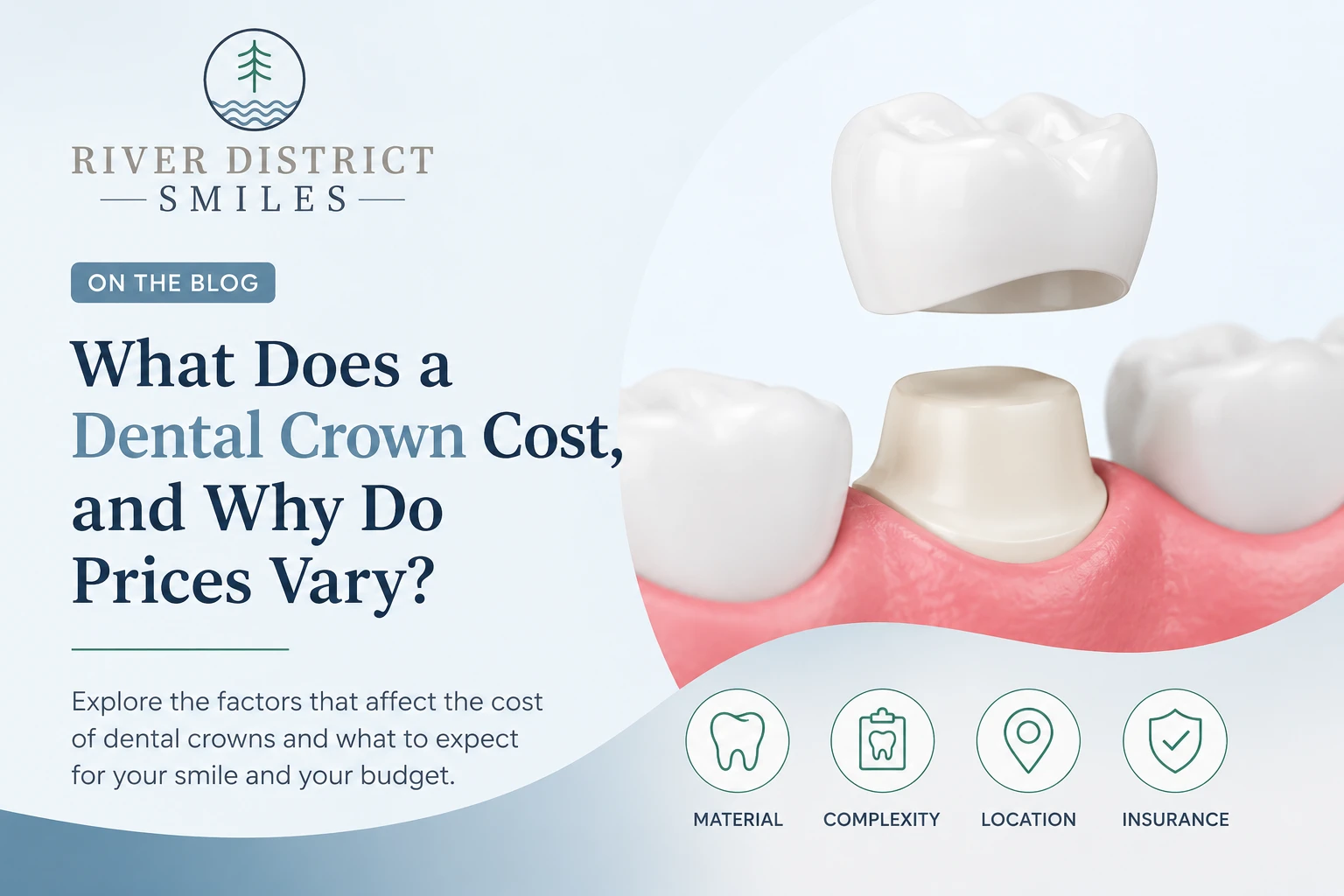


If a dentist tells you that a tooth needs a crown, it’s natural to wonder: “How much is this going to cost?” and “Why do prices seem so different from one office to another?”
The short answer is: a dental crown typically costs between $800 and $2,000 per tooth without insurance, depending on material, location, complexity, and additional services.
At River District Smiles, crowns and bridges are customized to each patient’s tooth, bite, and cosmetic goals, which means the cost can vary.
Protect Your Tooth with the Right Dental Crown
Call now to discuss crown options, pricing, and next steps.
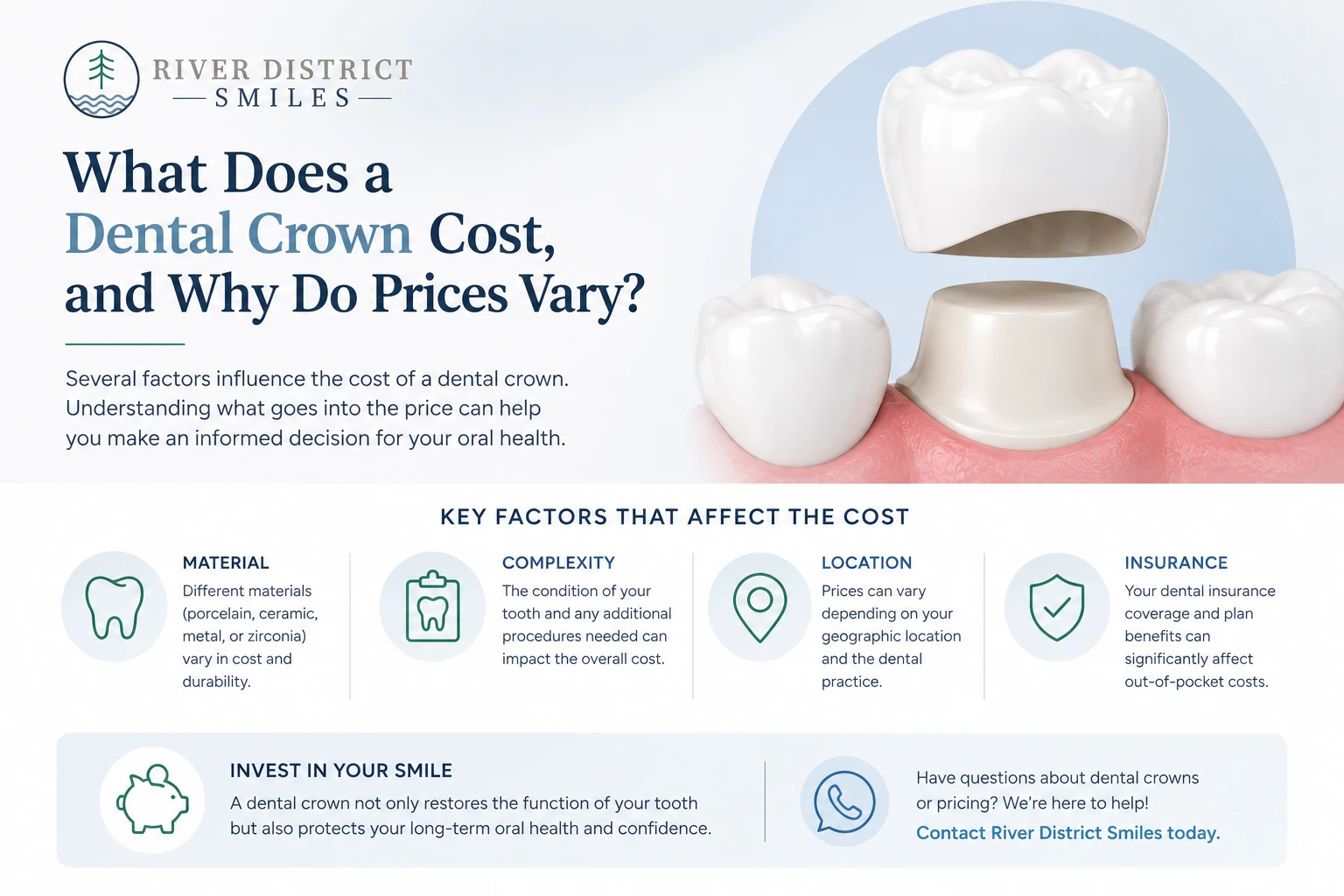
Why the Cost Varies
Several factors influence the price of a crown:
| Factor | How it affects cost |
|---|---|
| Material | Porcelain, zirconia, gold, or porcelain-fused-to-metal crowns differ in strength, appearance, and cost. Zirconia and all-porcelain are often more expensive than metal crowns. |
| Location of the tooth | Back teeth take more chewing pressure, so stronger materials may be used, slightly raising the cost. Front teeth often require more cosmetic work. |
| Complexity of preparation | Broken, decayed, or previously treated teeth may require extra work before the crown can be placed. |
| Lab vs. in-office milling | Some offices use dental labs for custom crowns; others use CEREC technology to make same-day crowns. Lab-made crowns may take longer but can offer better aesthetics. |
| Additional procedures | Root canal therapy, buildup of broken tooth structure, or gum treatment before the crown adds to the cost. |
| Dentist’s experience and location | Practices in urban areas or with highly experienced dentists may charge more due to overhead and expertise. |

Veneers vs. Bonding: Which Is Better for Your Smile?
If you are considering cosmetic improvements to your teeth, you may be wondering whether veneers or bonding is the right…
Average Costs by Type of Crown
| Crown type | Typical cost without insurance |
|---|---|
| All-porcelain | $1,000–$2,000 |
| Zirconia (high-strength ceramic) | $1,200–$2,000 |
| Porcelain-fused-to-metal | $900–$1,500 |
| Gold or metal alloy | $800–$2,000 |
Insurance may cover part of the crown cost, especially if it is medically necessary, but coverage levels vary. Many dental plans cover crowns at the “major restorative” level, which may require a deductible or co-pay.
What Happens If You Delay
Delaying a crown can increase risk:
- A weakened or cracked tooth may fracture further
- Decay can progress toward the nerve, requiring root canal therapy
- Teeth may shift if a damaged tooth is left unprotected
Early treatment usually preserves more tooth structure and reduces the chance of needing a more expensive or extensive procedure later. For patients comparing whether a tooth needs more conservative care or stronger protection, understanding the difference between a dental crown or a filling can help clarify why timing matters.
Bottom Line
Dental crown costs vary because each tooth and patient is different. Material, tooth location, complexity, and lab or in-office fabrication all affect the price. A crown is more than just a cap—it restores function, protects the tooth, and can improve appearance.
The next step is to have a dentist evaluate the tooth and provide a clear estimate that includes material, preparation, and any necessary additional procedures, so you understand what you are paying for and why.
Need a Dental Crown? Get Pricing Answers Now
Schedule a visit and learn what affects your crown cost.