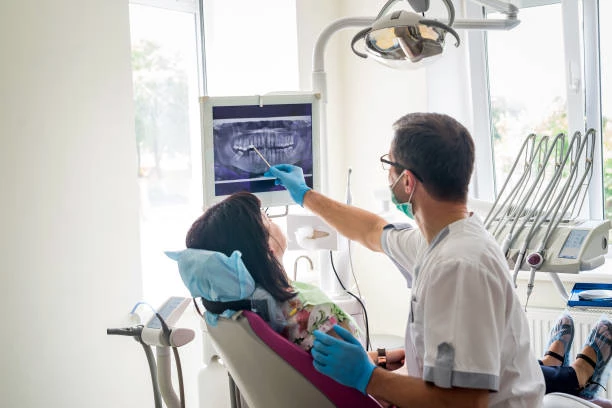




Many patients are surprised when they are told they need gum disease treatment.
They may have expected a regular cleaning, especially if their teeth do not hurt. Then they hear terms such as “deep cleaning,” “periodontal pockets,” or “bone loss” and are given an estimate that is higher than a routine preventive visit.
In practical terms, gum disease treatment can cost anywhere from the price of a regular cleaning to several thousand dollars, depending on how far the disease has progressed.
For patients without insurance:
- A routine cleaning used to manage early gingivitis may cost roughly $50 to $350.
- Scaling and root planing, commonly called a deep cleaning, averages about $242 per quadrant nationally, with a reported range of approximately $185 to $444 per quadrant.
- In South Carolina, one national cost study estimated an average of about $221 per quadrant for scaling and root planing.
- Advanced periodontal surgery may cost $1,000 to $3,000 per quadrant, and grafting or regenerative procedures may add more.
These are planning ranges, not River District Smiles’ office fees. Your actual cost depends on the number of teeth involved, the depth of the gum pockets, whether bone has been lost, what your insurance covers, and whether treatment can be completed nonsurgically.
Gum Disease Treatment Costs at a Glance
| Treatment | General self-payplanning range | When it may be recommended |
| Routine professional cleaning | $50–$350 | Gingivitis without deeper attachment or bone loss |
| Scaling and root planing | $185–$444 per quadrant | Plaque and tartar have collected below the gumline |
| Full-mouth scaling and root planing | Roughly $740–$1,776 | All four areas of the mouth require treatment |
| Localized medication | Additional fee | Selected deeper or persistent gum pockets |
| Periodontal maintenance | Ongoing separate fee | Follow-up care after active gum disease treatment |
| Gum or pocket-reduction surgery | $1,000–$3,000 per quadrant | Deep pockets remain after nonsurgical treatment |
| Bone grafting or regeneration | $1,500–$3,000 or more | Gum disease has damaged supporting bone |
The full-mouth scaling estimate above is a rough calculation based on four quadrants. An office may price treatment differently based on the number of teeth treated, insurance coding, or whether only part of a quadrant is involved. Surgical costs also vary widely based on the procedure and the amount of damage present.
The Biggest Cost Factor Is the Stage of Gum Disease
“Gum disease” does not describe one single condition.
It can mean mild inflammation that has not damaged the supporting tissues, or it can mean an advanced infection that has already caused significant gum and bone loss.
Gingivitis
Gingivitis is the earliest stage. The gums may look red or swollen and may bleed during brushing or flossing, but the bone supporting the teeth has not yet been permanently damaged.
At this stage, a professional cleaning and improved home care may be enough. Gingivitis is considered reversible when it is treated and plaque is kept under control.
Periodontitis
Periodontitis develops when bacteria and tartar extend below the gumline and the gums begin to pull away from the teeth. This creates pockets that a toothbrush or floss cannot fully clean.
As the disease progresses, it can damage the ligament and bone that hold the teeth in place. Treatment may require scaling and root planing, periodontal maintenance, localized medication, surgery, or a combination of these approaches.
This difference matters because a regular cleaning and periodontal therapy are not interchangeable services.
Regular Cleaning vs. Deep Cleaning
Patients sometimes feel that they are being charged more for a “stronger version” of a normal cleaning.
That is not quite what is happening.
| Regular cleaning | Scaling and root planing |
| Prevents disease in generally healthy gums | Treats active gum disease |
| Removes plaque and tartar mainly above the gumline | Cleans above and below the gumline |
| Usually completed throughout the mouth in one visit | May be divided into two or more visits |
| Usually does not require local anesthetic | Often requires local anesthetic |
| Focuses on prevention and maintenance | Focuses on stopping infection and limiting further damage |
| Commonly scheduled every six months | Followed by reevaluation and periodontal maintenance |
During scaling and root planing, the dentist or dental hygienist removes plaque and hardened tartar from below the gumline and cleans the root surfaces. Smoothing and cleaning the roots helps the gum tissue heal closer to the tooth and reduces areas where bacteria can remain.
Why Is Deep Cleaning Priced by Quadrant?
The mouth is commonly divided into four areas:
- Upper right
- Upper left
- Lower right
- Lower left
Scaling and root planing is frequently billed according to the area being treated because gum disease may affect one section of the mouth more severely than another.
A patient with localized disease may need treatment in only one or two quadrants. Someone with generalized periodontitis may need all four.
Using the published national range of approximately $185 to $444 per quadrant, treatment could look like this:
| Areas treated | Rough planning range |
| One quadrant | $185–$444 |
| Two quadrants | $370–$888 |
| Three quadrants | $555–$1,332 |
| Four quadrants | $740–$1,776 |
The average reported South Carolina fee is about $221 per quadrant, which would equal roughly $884 for four quadrants before insurance or additional services. Actual fees in Rock Hill may be different.
What Are You Paying For During Gum Disease Treatment?
The cost is not only for removing visible tartar.
Periodontal treatment may involve several separate steps.
A complete gum evaluation
Before recommending treatment, the dental team needs to determine whether the problem is gingivitis, periodontitis, gum recession, or another condition.
At River District Smiles, a periodontal evaluation may include:
- Measuring the spaces between the teeth and gums
- Evaluating bleeding and inflammation
- Taking digital images to assess bone levels
- Checking whether teeth are loose or shifting
- Evaluating the bite
- Reviewing medications and medical conditions
- Discussing dry mouth, smoking, and home-care habits
These findings help determine whether a regular cleaning is appropriate or whether deeper treatment is needed.
Time and difficulty
A routine cleaning is generally shorter and is performed around healthy or mildly inflamed gums.
Scaling and root planing takes longer because the clinician is working beneath the gumline, often around deeper pockets and root surfaces that are difficult to reach. Treatment may take more than one visit, and local anesthetic may be needed for comfort.
The number of teeth involved
Treating four teeth in one area generally requires less time than treating most of the mouth.
Some insurance codes also distinguish between a quadrant with four or more affected teeth and an area with fewer involved teeth. Your estimate may therefore depend on both the number of quadrants and the number of teeth in each area.
Local anesthetic
Deep cleaning frequently requires numbing because the instruments must reach below inflamed gum tissue.
Local anesthetic may be included in the procedure fee, but patients should confirm this when reviewing the estimate.
Reevaluation
After the gums have had time to heal, the dental team may measure the pockets again and assess whether bleeding and inflammation have improved.
This visit helps determine whether the initial treatment was successful or whether deeper areas need additional care. The ADA notes that further treatment may be recommended when pockets remain deep or worsen after scaling and root planing.
What Else Can Increase the Price?
X-rays and diagnostic imaging
X-rays help show whether the bone supporting the teeth has been damaged.
They can also reveal tartar beneath the gumline, abscesses, tooth-root problems, and other conditions that may affect the treatment plan. The cost may be included in the examination or listed separately.
Localized antibiotics
Medication may sometimes be placed directly into a deeper periodontal pocket after it has been cleaned.
This is not necessary for every patient, and it is not a substitute for removing tartar and disrupting the bacterial buildup. River District Smiles lists localized antibiotic therapy as one option that may be used to reduce bacterial growth and support healing in selected areas.
Ask whether the medication is:
- Necessary for controlling the disease
- Recommended for one specific pocket
- Included in the treatment estimate
- Expected to improve the likely outcome
Treatment by a periodontist
A periodontist is a dentist with additional training in diagnosing and treating diseases of the gums and supporting bone.
A general dentist can manage many cases of gingivitis and mild-to-moderate periodontitis. Referral may make sense when the disease is advanced, teeth are becoming loose, significant bone loss is present, or surgery may be required.
Specialist treatment can cost more, but the referral may provide more predictable care for a complicated situation.
Sedation
Most scaling and root planing can be completed using local anesthetic alone.
Sedation may be considered for significant dental anxiety, extensive treatment, or certain surgical procedures. Nitrous oxide, oral sedation, and intravenous sedation are separate services and may not be covered by insurance.
Gum surgery
Scaling and root planing is usually the starting point for periodontitis, but it has limits.
If pockets remain too deep to clean effectively, a periodontist may recommend flap or pocket-reduction surgery. During this procedure, the gum tissue is gently moved back so the roots and supporting bone can be cleaned more thoroughly.
Published consumer estimates place pocket-reduction procedures at approximately $1,000 to $3,000 per quadrant, although the actual cost depends on the number of teeth and the type of surgery.
Bone grafting or regenerative treatment
Advanced gum disease can create defects in the bone around a tooth.
In selected cases, grafting materials or regenerative membranes may be used to encourage the body to rebuild some of the lost support. Published estimates place periodontal bone-grafting procedures around $1,500 to $3,000, but complex treatment may cost more.
Regeneration is not possible or necessary in every area. The shape of the bone defect, tooth stability, smoking status, medical health, and ability to keep the area clean all affect whether it makes sense.
Why Do I Need Periodontal Maintenance After Treatment?
Scaling and root planing controls the current infection. It does not make a person permanently immune to gum disease.
Most patients with a history of periodontitis need periodontal maintenance more frequently than someone with consistently healthy gums. The American Academy of Periodontology states that many patients need ongoing maintenance after scaling and root planing to sustain periodontal health.
River District Smiles generally describes periodontal maintenance visits at intervals of about three to four months after initial treatment. The exact timing depends on how quickly tartar returns, how well the gums respond, smoking, medical conditions, and the patient’s ability to clean effectively at home.
A periodontal maintenance visit may include:
- Measuring selected gum pockets
- Checking for bleeding and inflammation
- Removing plaque and tartar above and below the gumline
- Cleaning previously affected root surfaces
- Reviewing home-care techniques
- Monitoring loose teeth and bone levels
- Identifying areas where disease may be returning
These visits are usually billed separately from the initial deep cleaning.
Does Insurance Cover Gum Disease Treatment?
Many dental insurance plans cover part of medically necessary periodontal treatment, but coverage varies considerably.
A plan may cover scaling and root planing at a different percentage than a routine cleaning. One national consumer cost guide reports that plans often contribute around 50% toward scaling and root planing, but your actual benefit may be higher, lower, or unavailable because of plan restrictions.
Your out-of-pocket cost may depend on:
- Your deductible
- Whether the office is in network
- Your annual benefit maximum
- The number of quadrants approved
- The number of affected teeth
- Required X-rays and periodontal measurements
- Waiting periods
- How often the plan allows treatment
- Whether maintenance visits are covered
- Whether medication, grafting, or surgery is excluded
Some insurers require documentation showing deeper pockets, bleeding, tartar below the gumline, or bone loss before approving scaling and root planing.
Ask for a written estimate that separates:
- Examination and X-rays
- Scaling and root planing
- Medication or additional therapy
- Reevaluation
- Periodontal maintenance
- Surgical care, when applicable
Insurance estimates are not guaranteed. The insurance company makes the final decision after reviewing the claim.
Can I Choose a Regular Cleaning Instead?
You can always ask why a specific treatment is being recommended.
However, a routine cleaning does not adequately treat tartar and bacteria that have accumulated deep below the gumline. Polishing the visible teeth may make the mouth feel cleaner without addressing the source of active periodontitis.
Before agreeing to a deep cleaning, ask the dentist or hygienist to show you:
- Your gum-pocket measurements
- The areas that bleed
- Tartar visible on the X-rays
- Areas where bone has been lost
- Which quadrants need treatment
- Which areas appear healthy
- What would happen if treatment were delayed
A deep cleaning should be based on clear clinical findings, not simply on the date of your last dental visit.
Is Laser Gum Treatment Worth the Extra Cost?
Lasers may be used as part of periodontal treatment, but patients should be cautious about assuming that a laser automatically produces a better result.
The American Academy of Periodontology states that controlled studies have found results similar to certain other nonsurgical treatments, including scaling and root planing alone. Laser safety also depends on using the correct wavelength and settings.
Before paying an additional laser fee, ask:
- What does the laser add to the treatment?
- Is it replacing or supplementing scaling and root planing?
- Is there good evidence that it will improve my specific outcome?
- Is the fee covered by insurance?
- What treatment would you recommend without the laser?
The best option is the one supported by your diagnosis, not necessarily the one involving the most technology.
What Happens If You Delay Treatment?
Gum disease is often painless, especially in its earlier stages. That can make it easy to postpone care.
Unfortunately, periodontitis can continue damaging the tissue and bone around the teeth even when the patient is not experiencing significant pain. As bone support is lost, teeth may become loose, shift position, or eventually need to be removed.
Waiting can also change the cost.
A condition that might have been managed with a regular cleaning or nonsurgical deep cleaning may eventually require:
- More quadrants of treatment
- More frequent maintenance
- Periodontal surgery
- Bone grafting
- Tooth extraction
- Replacement with a bridge, denture, or implant
That does not mean every bleeding gum requires expensive treatment. Bleeding may also occur because of temporary irritation, changes in flossing habits, medication, or other factors.
The important step is identifying whether the bleeding is coming from reversible gingivitis or from deeper periodontal damage.
When Should You Call a Dentist?
Schedule a gum evaluation when you notice:
- Bleeding during brushing or flossing
- Red or swollen gums
- Persistent bad breath
- Gum recession
- Teeth that appear longer
- Tender gums
- Sensitivity around the gumline
- Loose or shifting teeth
- Pain when chewing
- A change in how the teeth fit together
These are recognized signs that may occur with gum disease, although some patients have little or no noticeable discomfort.
Seek more urgent care when swelling is rapidly increasing, you have fever with dental swelling, pus is draining from the gums, or you are having difficulty swallowing or breathing.
Questions to Ask About Your Estimate
Before beginning treatment, ask:
- Do I have gingivitis or periodontitis?
- Is there visible bone loss?
- What are my gum-pocket measurements?
- Which teeth or quadrants need treatment?
- Why is a regular cleaning not enough?
- What is included in the deep-cleaning fee?
- Are X-rays and local anesthetic separate?
- Is medication being recommended?
- When will my gums be reevaluated?
- How often will I need periodontal maintenance?
- What is my estimated insurance benefit?
- What happens if the gums do not respond?
- At what point would I need a periodontist?
- Are there areas that cannot be treated predictably?
A good treatment discussion should make the diagnosis and the price understandable.
The Bottom Line
The cost of gum disease treatment is determined mainly by how deeply the disease extends and how much of the mouth is involved.
Early gingivitis may be managed with a professional cleaning and improved home care. Periodontitis usually requires scaling and root planing, which commonly costs about $185 to $444 per quadrant without insurance. More advanced disease may require ongoing maintenance, localized medication, surgery, or regenerative treatment that can bring the total into several thousand dollars.
River District Smiles provides periodontal evaluations, scaling and root planing, periodontal maintenance, localized antibiotic therapy, and additional gum-care options for patients in Rock Hill. Treatment is based on pocket measurements, inflammation, bone levels, tooth stability, and the patient’s individual risk factors.
The next step is not deciding based only on the price of a “cleaning.” It is finding out whether you have reversible inflammation or deeper damage to the structures supporting your teeth.
Once that is clear, you can compare the real cost, likely benefit, and long-term maintenance involved in each option.