


It can be confusing and concerning when your gums bleed even though you brush daily. The short answer is: bleeding gums are usually a sign of inflammation or irritation, not a failure to brush. Regular brushing is essential, but it doesn’t always prevent gum problems if other factors are at play.
Don’t Ignore Bleeding Gums
Get trusted periodontal care before the problem gets worse. Call today.
Common Reasons Gums Bleed Despite Brushing
Gingivitis: Early Gum Disease
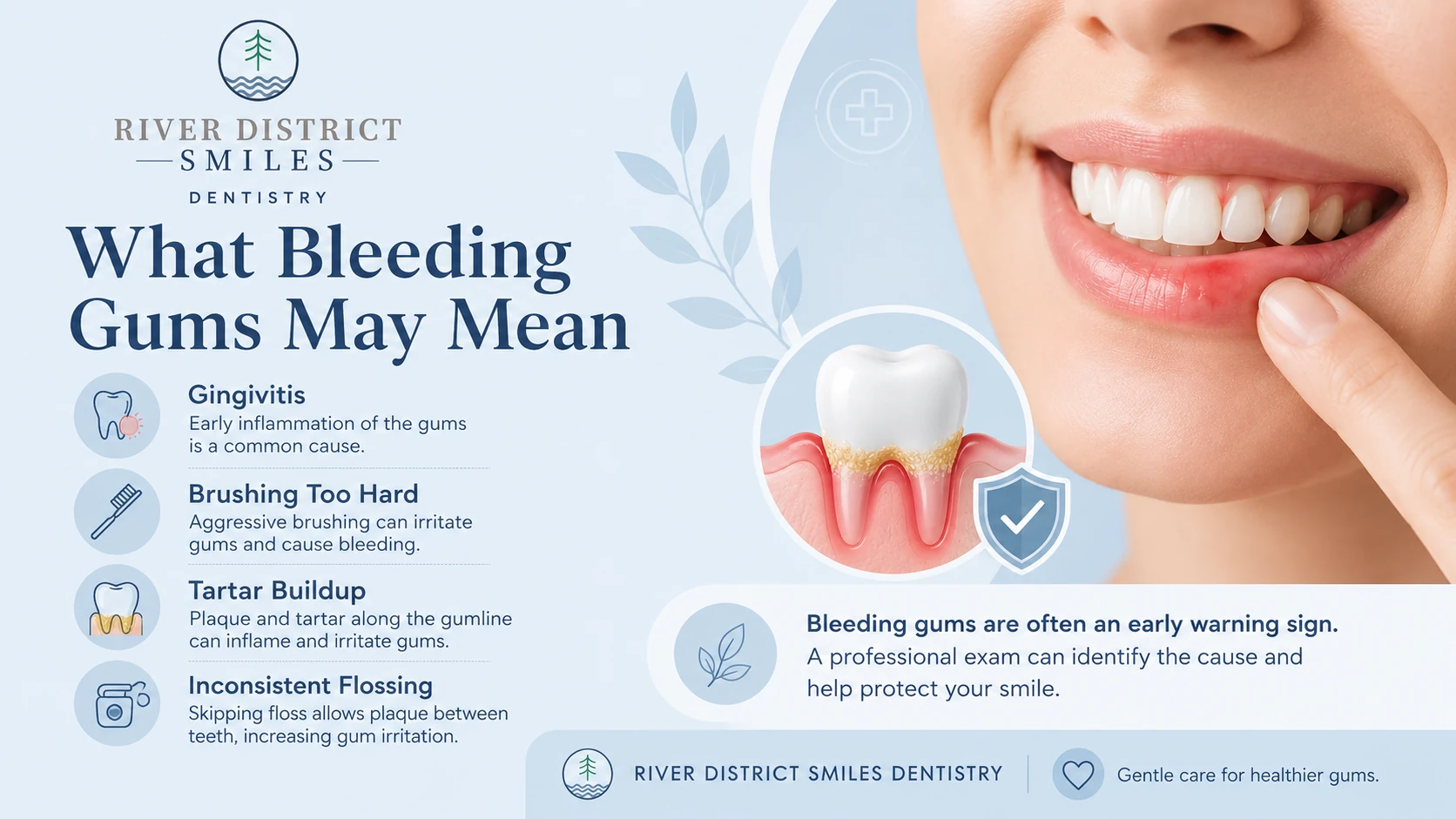
Plaque that isn’t fully removed along the gumline can irritate gums.
This inflammation can cause redness, swelling, and bleeding, even with daily brushing. If this sounds familiar, it may be helpful to learn more about bleeding gums and when they may point to a deeper gum health concern.
Brushing Technique
Brushing too hard or using a medium or hard bristled toothbrush can damage delicate gum tissue.
Gentle, thorough brushing with a soft-bristled brush is most effective.
Flossing Habits
If you floss inconsistently or have recently restarted flossing, gums may bleed until they adapt.
Bleeding usually decreases with consistent daily flossing.
Tartar Buildup
Plaque that hardens into tartar cannot be removed by brushing alone.
Tartar along the gumline can keep gums inflamed, leading to bleeding. A professional teeth cleaning can remove tartar and help reduce gum irritation that brushing at home cannot fully address.
Hormonal Changes
Pregnancy, menstruation, and menopause can increase gum sensitivity, making bleeding more likely.
Medications
Blood thinners, some heart medications, and certain supplements can increase bleeding tendency.
Underlying Health Conditions
Diabetes, vitamin deficiencies, or blood disorders may contribute to bleeding gums.
Dental Appliances or Misaligned Teeth
Braces, ill-fitting dentures, or crowded teeth can create areas where plaque builds up and irritates gums.

Teeth Grinding Solutions and Esthetic Services: A Winning Combination
Teeth grinding, medically known as bruxism, is a common dental issue that can have far-reaching consequences. While addressing the functional…

What to Do
Evaluate Your Technique
Use a soft-bristled toothbrush, brush gently along the gumline, and floss daily.
Schedule a Professional Cleaning
A dentist or hygienist can remove tartar and check for early gum disease. Routine dental exams and cleanings help identify inflammation, tartar buildup, and other issues before they progress.
Monitor Symptoms
If bleeding continues more than a couple of weeks, worsens, or comes with swelling, bad breath, or loose teeth, see a dentist promptly.
Address Underlying Health Issues
Discuss medications, hormones, or systemic conditions with your doctor if bleeding persists.
Bottom Line
Bleeding gums are usually a warning sign, not a failure on your part. Even with diligent brushing, inflammation, tartar, or other health factors can cause bleeding. The next step is a professional evaluation to identify the exact cause and prevent progression to more serious gum disease.
At River District Smiles, we focus on gentle, thorough cleaning and personalized guidance to help gums heal and stay healthy. Our periodontal services are designed to support gum health and help manage concerns before they become more serious.
Why Are Your Gums Bleeding?
Get gentle, professional gum care today. Call now to schedule your dental exam.