
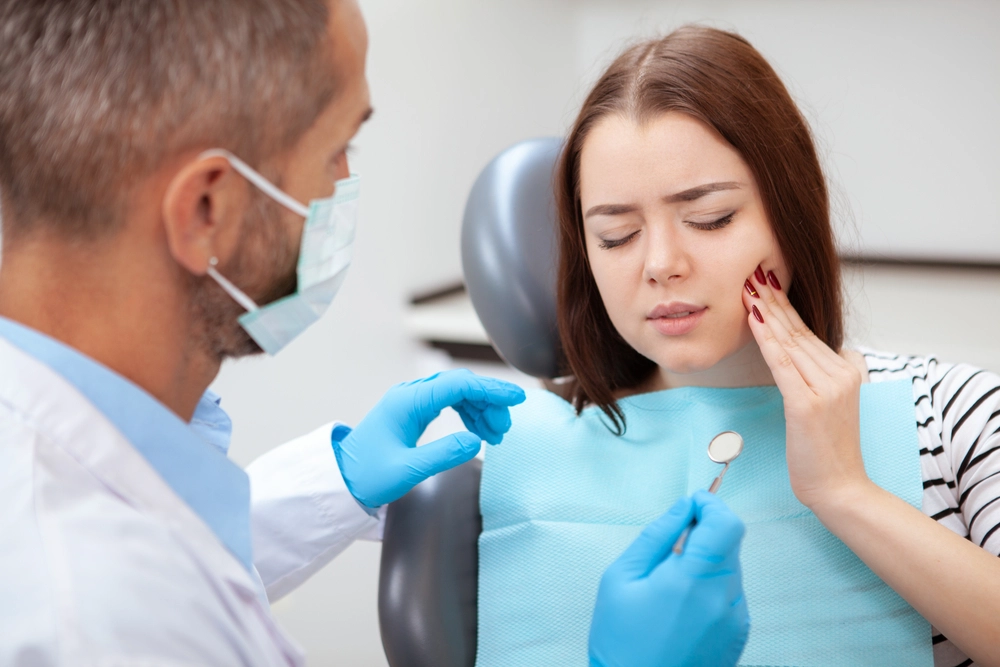

Sudden tooth pain can hit when you least expect it, and it is not something you should ignore. Knowing when you need emergency dental care in Rock Hill, SC can make an important difference in protecting your smile.
Some dental problems may seem minor at first but can quickly become more serious without proper attention. If you are searching for tooth pain relief, recognizing the warning signs early can help you know when it is time to contact a dentist.
Understanding common dental emergency signs in Rock Hill, SC can help you act quickly, reduce discomfort, and prevent additional damage. The sooner you recognize what is happening, the sooner you can get the appropriate care.
What Dental Pain Is Considered an Emergency?
Not every toothache is a dental emergency, but certain types of pain require prompt professional attention.
Here are some signs that your tooth pain may indicate an urgent dental problem:
- Severe, throbbing pain: Intense pain that does not improve may indicate an infection, abscess, advanced decay, or significant damage to the tooth.
- Pain when chewing or touching the tooth: Pain when you bite down or apply pressure can be associated with a cracked or fractured tooth.
- Sudden onset of severe pain: Pain that begins abruptly and becomes intense may be related to an infection, abscess, damaged tooth, or another condition that requires prompt evaluation.
- Pain that does not respond to medication: Over-the-counter pain relievers may temporarily reduce discomfort, but persistent or worsening pain should still be evaluated.
- Pain accompanied by swelling: Tooth pain combined with swelling of the gums, jaw, or face can be a warning sign of infection.
When you experience sharp, constant, or worsening discomfort that does not improve, contact a dentist for emergency dental care in Rock Hill, SC.
Pain is your body’s way of signaling that something may be wrong. Waiting for severe pain to disappear on its own can allow the underlying dental problem to become more complicated.
Should I Go to the ER for a Tooth Infection?
A tooth infection can become serious if it is left untreated.
If you have an infection involving a tooth or the surrounding gums, you may wonder whether you should visit a hospital emergency room or contact a dentist.
For most dental infections, a dentist is the appropriate provider because dental offices can evaluate and address the source of the problem.
A hospital emergency department may be able to provide temporary pain management, antibiotics when medically appropriate, or treatment for complications caused by a spreading infection. However, hospital teams generally do not perform definitive restorative dental procedures.
Depending on the condition of the tooth, appropriate dental care may involve:
- Treatment of decay
- Drainage of an abscess when appropriate
- Periodontal care
- Repair of damaged tooth structure
- Tooth extraction when the tooth cannot be predictably restored
- Referral to an appropriate dental provider when additional care is required
Seek immediate medical attention if a dental infection causes:
- Difficulty breathing
- Difficulty swallowing
- Rapidly increasing facial or neck swelling
- Significant swelling beneath the jaw
- Severe illness or weakness
- Other signs that the infection may be affecting your airway or overall health
Fever, swelling around a tooth, drainage, or worsening pain should also be evaluated promptly.
When the condition is limited to the tooth or gums and there are no life-threatening symptoms, contacting an emergency dentist is generally the most direct way to have the source evaluated.
What Do I Do If My Tooth Gets Knocked Out?
A knocked-out permanent tooth is one of the most time-sensitive dental emergencies.
Acting quickly may improve the possibility of preserving the tooth.
Here is what to do:
Retrieve the Tooth Carefully
Pick up the tooth by the crown, which is the visible chewing portion.
Avoid touching the root whenever possible.
Rinse the Tooth Gently
If the tooth is dirty, rinse it gently with water.
Do not:
- Scrub the tooth
- Use soap
- Apply disinfectant
- Remove attached tissue
- Allow the tooth to dry unnecessarily
Keep the Tooth Moist
If possible and appropriate, gently place the permanent tooth back into its socket without forcing it.
If you cannot reposition it, keep the tooth moist while getting professional help.
Milk may be used temporarily when appropriate.
Seek Immediate Dental Care
Contact a dentist immediately and explain that a permanent tooth has been knocked out.
Time matters with this type of injury.
The sooner the tooth is professionally evaluated and managed, the better the possibility of a favorable outcome.
A knocked-out baby tooth should generally not be placed back into the socket because doing so may affect the developing permanent tooth underneath.
If you are unsure whether the tooth is permanent or primary, contact a dentist for immediate guidance.
Is a Cracked Tooth a Dental Emergency?
A cracked tooth can be urgent depending on the depth of the fracture and the symptoms it causes.
A minor superficial crack may not require same-day treatment.
A larger fracture, significant pain, swelling, or exposure of deeper tooth structure should be evaluated promptly.
Warning signs include:
- Sharp pain while chewing
- Pain when releasing your bite
- Significant temperature sensitivity
- A large portion of tooth breaking away
- Swelling around the tooth
- Bleeding from the damaged area
- A visible pink or red area inside the tooth
- A loose or unstable tooth
- A persistent bad taste or drainage
Cracks can allow bacteria to enter vulnerable areas of the tooth and may eventually contribute to infection.
Treatment depends on how much tooth structure has been damaged and whether the tooth remains predictably restorable.
Possible treatment may include:
- Dental bonding
- A tooth-colored filling
- A dental crown
- Tooth extraction when the fracture is too extensive for predictable restoration
- Referral to another appropriate dental provider when additional care is necessary
If a cracked tooth is painful, swollen, significantly broken, or changing quickly, contact your dentist for emergency guidance.
How Long Can You Wait With Severe Tooth Pain?
Severe tooth pain should not simply be ignored for several days while hoping it resolves.
Persistent or intense pain can be associated with:
- Dental infection
- An abscess
- Advanced tooth decay
- A cracked or fractured tooth
- A damaged filling or crown
- Gum infection
- Dental trauma
Over-the-counter pain medication may provide temporary relief, but reducing the pain does not correct the underlying problem.
If your pain is severe or persistent, contact your dentist as soon as possible.
Waiting can allow decay, infection, or structural damage to progress and may reduce the number of treatment options available.
Seek more urgent care when severe tooth pain occurs together with:
- Facial swelling
- Gum swelling
- Fever
- Drainage
- A bad taste
- Difficulty opening your mouth
- Difficulty swallowing
Difficulty breathing or swallowing with facial, jaw, tongue, or neck swelling requires immediate medical attention.
What Are the Symptoms of a Dental Abscess?
A dental abscess is a collection of infection that may develop around a tooth or within the surrounding gum tissues.
An abscess requires professional evaluation because the infection can spread if it is not treated.
Possible symptoms include:
Severe or Constant Tooth Pain
Pain may be throbbing, persistent, or intense.
In some cases, discomfort can spread toward the jaw, ear, or neck.
Swelling
Swelling may occur in the:
- Gums
- Cheek
- Jaw
- Face
Increasing swelling can indicate that the infection is spreading into surrounding tissues.
Red or Tender Gums
The gum around the affected tooth may become red, swollen, painful, or sensitive to pressure.
Bad Taste or Odor
An abscess may drain into the mouth and produce a foul, bitter, or unpleasant taste.
Some people notice temporary relief in pressure after drainage occurs.
That does not mean the infection has been eliminated.
Fever
A fever may indicate that your body is responding to infection.
Fever together with dental pain or swelling should be taken seriously.
A Bump on the Gum
A small pimple-like bump near a tooth can sometimes be associated with drainage from a dental infection.
Even if the area is not extremely painful, it should be evaluated.
If you suspect you have a dental abscess, contact a dentist promptly.
Rapidly increasing swelling, difficulty swallowing, or difficulty breathing requires emergency medical care.
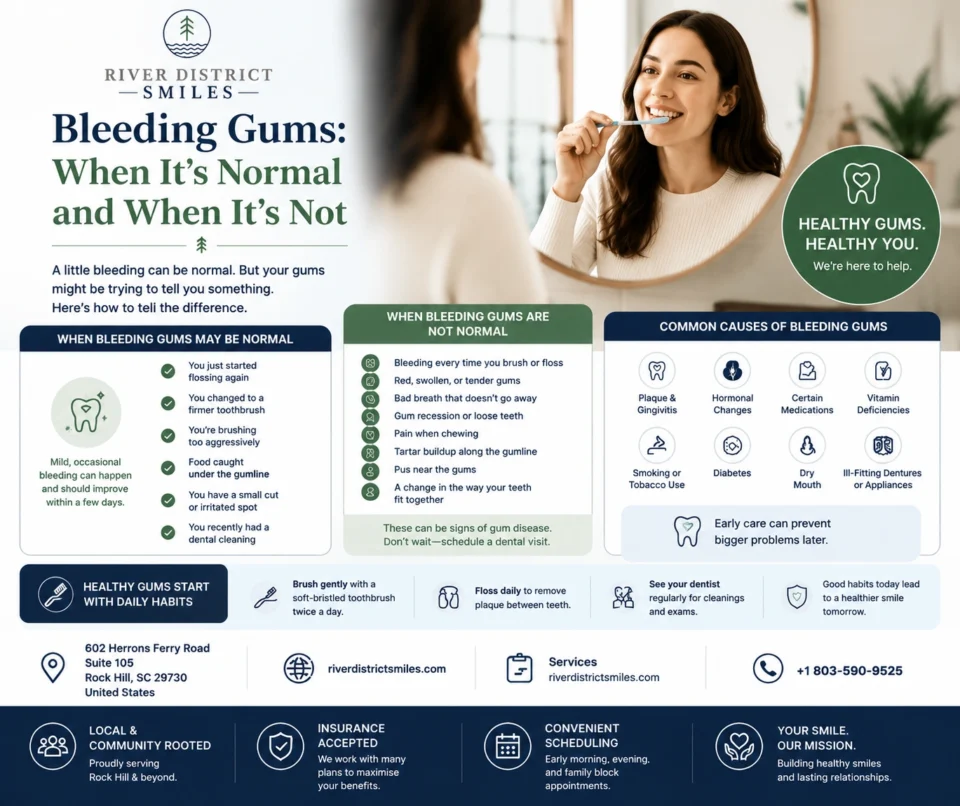
Can Bleeding Gums Be an Emergency?
Bleeding gums can happen for several reasons.
Mild bleeding during brushing or flossing is commonly associated with gum inflammation and usually does not require emergency treatment.
However, regular gum bleeding should still be discussed with your dentist because it may indicate gingivitis or periodontal disease.
Possible causes include:
- Plaque buildup
- Gingivitis
- Periodontal disease
- Aggressive brushing
- Flossing an inflamed area
- Dental injury
- Recent dental procedures
- Certain medications
- Other health conditions
When Bleeding May Require Urgent Care
Contact your dentist promptly when bleeding is:
- Heavy
- Persistent
- Difficult to stop
- Associated with significant pain
- Caused by dental trauma
- Accompanied by substantial swelling
- Occurring after a tooth has been knocked loose or fractured
Uncontrolled oral bleeding after an injury may require emergency medical attention, particularly if it cannot be managed with firm, continuous pressure.
Routine bleeding during brushing is usually less urgent, but it should not simply be ignored if it happens regularly.
Healthy gums generally should not bleed frequently.
What Other Dental Problems May Require Emergency Care?
Several other situations may justify a same-day or urgent dental call.
A Broken Tooth
A significantly broken tooth should be evaluated quickly, particularly when the tooth is painful, sharp, bleeding, or sensitive.
Avoid chewing on the damaged side until you have been examined.
A Lost Crown or Filling
A lost restoration may leave the underlying tooth vulnerable.
The area can become sensitive and may fracture further when exposed to chewing pressure.
Contact your dentist for guidance rather than attempting to permanently glue the restoration back into place yourself.
Facial or Gum Swelling
New swelling around a tooth or gum can indicate infection.
Swelling that is increasing should be evaluated promptly.
Dental Trauma
A fall, sports injury, car accident, or blow to the mouth may damage teeth even when no tooth has completely broken.
A tooth may be:
- Cracked
- Loose
- Displaced
- Pushed into the gum
- Damaged beneath the visible surface
Professional evaluation can help determine the extent of the injury.
A Loose Permanent Tooth
An adult tooth that suddenly becomes loose after trauma needs prompt evaluation.
Avoid repeatedly moving or testing the tooth with your tongue or fingers.
Significant Sensitivity After an Injury
A tooth that becomes highly sensitive after a blow to the mouth may have experienced structural or internal damage.
Persistent symptoms deserve evaluation even when the tooth looks normal from the outside.
What Can You Do While Waiting for Emergency Dental Care?
What you should do depends on the type of emergency.
General steps may include:
- Rinsing gently with water
- Keeping the mouth reasonably clean
- Avoiding chewing on the affected side
- Choosing soft foods
- Using a cold compress outside the face for swelling caused by trauma
- Taking an over-the-counter pain reliever as directed when appropriate
- Saving pieces of a broken tooth
- Keeping a knocked-out permanent tooth moist
- Contacting your dentist as soon as possible
Avoid placing aspirin directly against a tooth or gum.
Aspirin can irritate oral tissues when applied directly.
Do not attempt to repair a cracked tooth, broken restoration, or damaged dental appliance with household glue.
Temporary home measures may help you manage symptoms, but they do not replace professional diagnosis and treatment.
When Is a Dental Problem a Medical Emergency?
Most toothaches, broken fillings, chipped teeth, and other dental emergencies should be handled by a dentist.
However, some conditions require hospital-level emergency care.
Go to an emergency department or call emergency services when you experience:
- Difficulty breathing
- Difficulty swallowing
- Rapidly expanding facial or neck swelling
- Significant head or facial trauma
- Uncontrolled bleeding
- Loss of consciousness
- Suspected facial fractures
- Severe illness associated with a spreading infection
Airway problems and major trauma take priority over routine dental treatment.
Once the immediate medical emergency has been stabilized, dental follow-up may still be necessary to address the affected teeth.
How Can You Reduce the Risk of Dental Emergencies?
Not every emergency can be prevented, but many risks can be reduced with consistent dental care and sensible habits.
Attend Regular Dental Checkups
Routine examinations may identify cavities, weakened fillings, cracked teeth, gum disease, and other concerns before they turn into painful emergencies.
Avoid Chewing Extremely Hard Objects
Do not use your teeth to chew:
- Ice
- Hard candy
- Pens
- Bottle caps
- Packaging
- Other non-food objects
Wear a Mouthguard
A properly fitted mouthguard can help protect your teeth during sports and other activities where facial impact is possible.
Address Grinding and Clenching
Frequent grinding or clenching can place significant pressure on teeth and restorations.
If you grind your teeth, ask whether a night guard or another protective approach may be appropriate.
Treat Cavities and Broken Restorations
A small cavity or damaged filling can become a larger problem when treatment is repeatedly postponed.
Addressing problems while they are manageable may reduce the risk of fractures, infection, and emergency visits later.
Conclusion
Not every dental problem requires emergency treatment, but knowing which signs deserve immediate attention can help you protect your health and your smile.
Severe tooth pain, significant swelling, dental trauma, knocked-out permanent teeth, persistent bleeding, abscess symptoms, and painful fractures should not be ignored.
Acting quickly can reduce discomfort, limit additional damage, and give your dentist more options for managing the problem.
Pay attention to changes in your mouth.
You do not have to wait until a dental problem becomes unbearable before asking for professional guidance.
When symptoms are severe, worsening, or associated with infection or trauma, contact a dentist promptly.
Get Immediate Help at River District Smiles Dentistry
Dental emergencies can be alarming, but knowing where to turn can help you respond with confidence.
River District Smiles Dentistry provides emergency dental care in Rock Hill, SC for concerns such as severe tooth pain, cracked or broken teeth, dental abscesses, swelling, knocked-out teeth, lost restorations, and dental injuries.
Our team can examine the affected area, determine what may be causing your symptoms, and explain the available treatment options.
Depending on the condition, care may involve fillings, crowns, extractions, periodontal treatment, repair of damaged restorations, infection management, or referral to an appropriate dental provider when additional treatment is required.
If you are experiencing severe tooth pain, swelling, a cracked tooth, dental trauma, or another urgent dental concern, contact River District Smiles Dentistry for an evaluation.
Taking action early may help relieve discomfort, protect remaining tooth structure, and prevent a manageable dental problem from becoming more complicated.