



If your gums bleed when you brush or floss, the hard part is knowing whether it is a small irritation or a sign that something needs attention.
The short answer is this: occasional light bleeding can happen, especially if you just started flossing again or brushed too hard. But gums that bleed easily, bleed often, or bleed without a clear reason are not something to ignore. Bleeding gums are commonly linked to gingivitis, the early stage of gum disease, and gingivitis is usually reversible when treated early.
Bleeding gums could be a warning sign
Do not wait for symptoms to get worse. Call now for gum health evaluation and treatment.
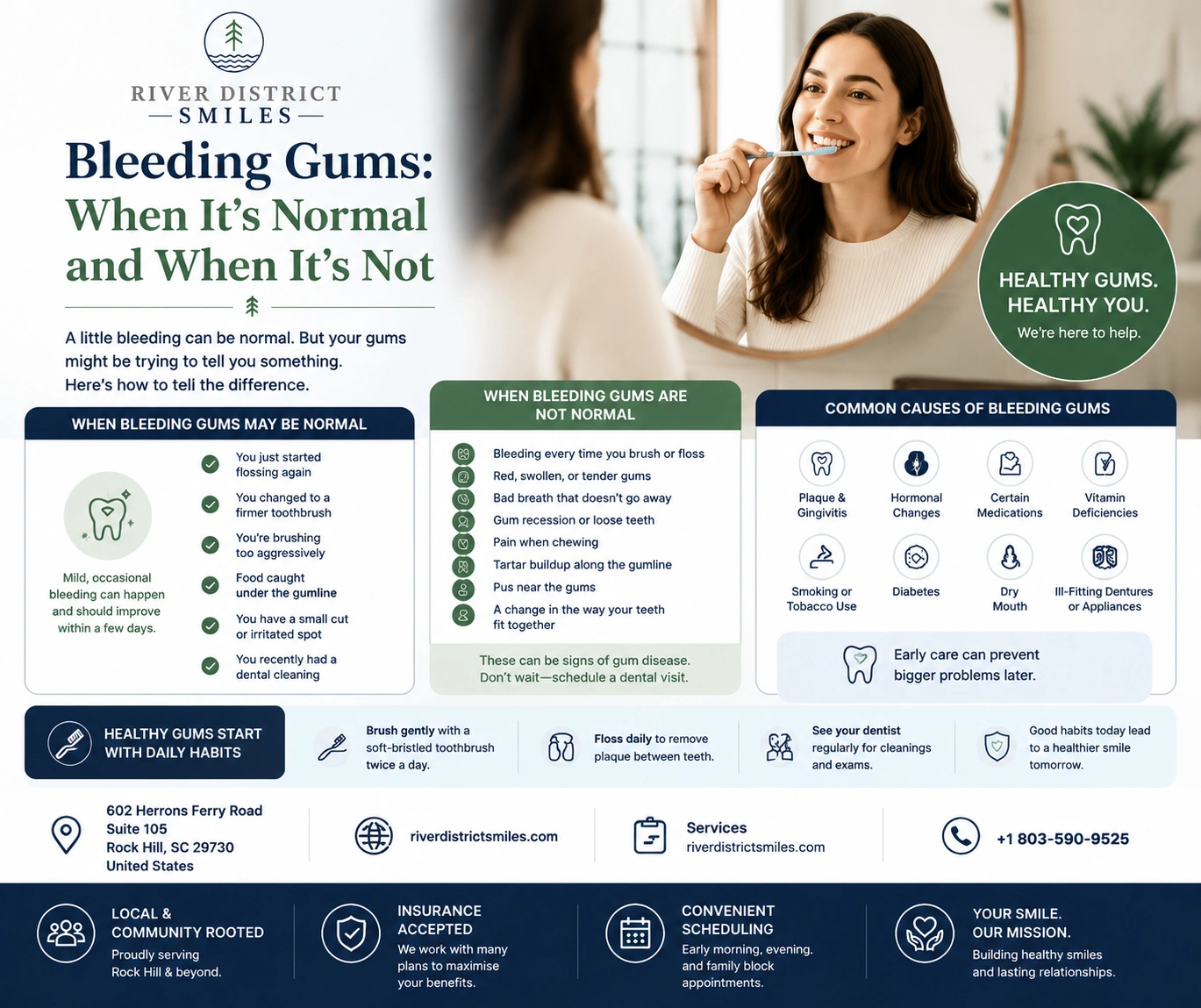
When bleeding gums may be normal
A small amount of gum bleeding does not always mean something serious is happening.
It may happen if:
- You just started flossing after not flossing regularly
- You changed to a firmer toothbrush
- You are brushing too aggressively
- Food got caught under the gumline
- You have a small cut or irritated spot
- You recently had a dental cleaning
In these cases, the bleeding should be mild and temporary. If your gums are otherwise comfortable and the bleeding improves within a few days of gentle, consistent brushing and flossing, it may simply be irritation.
But here is the important part: healthy gums should not bleed regularly.
When bleeding gums are not normal
Bleeding is more concerning when it happens often or comes with other symptoms.
You should schedule a dental visit if you notice:
- Bleeding every time you brush or floss
- Red, swollen, or tender gums
- Bad breath that does not go away
- Gum recession
- Loose teeth
- Pain when chewing
- Tartar buildup along the gumline
- Pus near the gums
- A change in the way your teeth fit together
These can be signs that plaque and bacteria have irritated the gum tissue. The National Institute of Dental and Craniofacial Research explains that gum disease often begins with swollen, red, bleeding gums and can progress to damage the bone that supports the teeth if it is not treated.
The most common reason gums bleed
For most patients, bleeding gums are related to plaque.
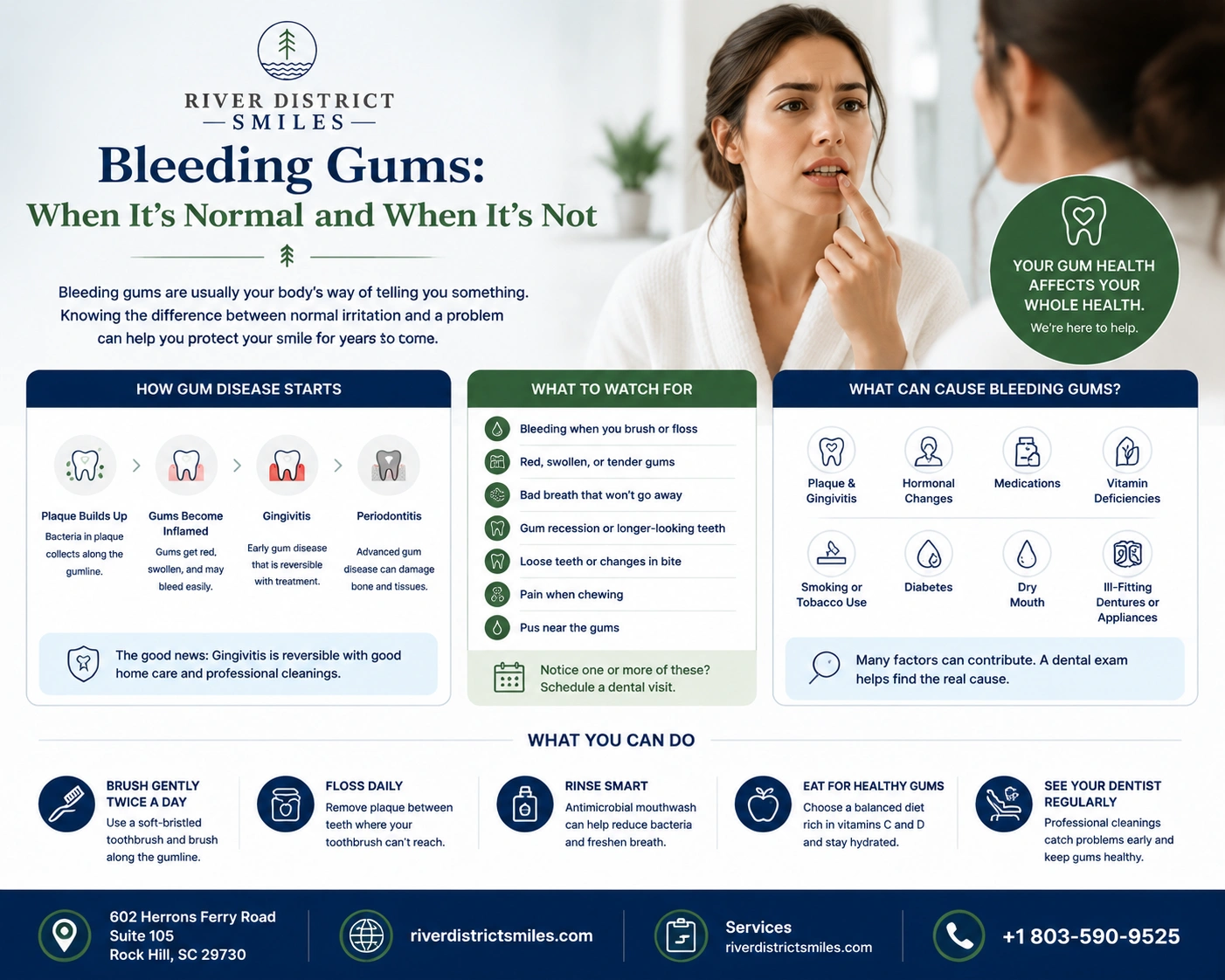
Plaque is a sticky film of bacteria that builds up on teeth, especially near the gumline and between teeth. If it is not removed well, the gums can become inflamed. This early inflammation is called gingivitis.
In plain terms, gingivitis means the gums are irritated. They may look puffy, red, or shiny, and they may bleed when touched with a toothbrush or floss. Mayo Clinic describes gingivitis as a mild form of gum disease that causes irritation, redness, swelling, and bleeding around the base of the teeth.
The good news is that gingivitis is often reversible with better home care and a professional cleaning. The harder part is that it usually does not hurt much at first, so people may not realize it is developing.

What Happens When a Community Bonds With a Dentist Who Never Stops Showing Up?
Something special happens when a dentist keeps showing up for their community. It’s more than cleanings and checkups. It’s trust. …

What if your gums bleed when you floss?
This is one of the most common questions patients ask.
If you have not flossed in a while, your gums may bleed at first because the tissue is inflamed or not used to being cleaned between the teeth. That does not mean you should stop flossing. In many cases, consistent gentle flossing helps the bleeding improve over time.
What matters is the pattern.
If the bleeding improves after a week or two of careful daily flossing, that is encouraging. If it continues, gets worse, or is paired with swelling, soreness, or bad breath, it is time to have your gums checked.
Could brushing too hard cause bleeding?
Yes. Brushing too hard can irritate the gums, especially with a medium or hard-bristled toothbrush.
A better approach is:
- Use a soft-bristled toothbrush
- Brush gently along the gumline
- Let the bristles do the work
- Avoid scrubbing back and forth aggressively
- Replace the toothbrush when the bristles flare
The goal is not to “scrub the gums clean.” The goal is to gently remove plaque without injuring the tissue.
Other reasons gums may bleed
Plaque and gingivitis are common, but they are not the only causes.
Bleeding gums can also be affected by:
- Pregnancy or hormonal changes
- Certain medications, especially blood thinners
- Vitamin deficiencies
- Smoking or tobacco use
- Diabetes
- Dry mouth
- Ill-fitting dentures or appliances
- Medical conditions that affect bleeding or healing
Cleveland Clinic notes that bleeding gums can be related to gum disease, but they can also point to other health issues such as hormone changes, vitamin deficiencies, blood-clotting disorders, and certain medications.
This is why a dental exam matters. The goal is not just to stop the bleeding. It is to understand why it is happening.
Regular cleaning vs. deep cleaning
If bleeding is caused by mild gingivitis, a regular dental cleaning may be enough to remove plaque and tartar and help the gums heal.
If the problem has progressed deeper, you may need a different type of cleaning called scaling and root planing, often called a deep cleaning. This is usually recommended when bacteria and tartar have moved below the gumline and the gums are pulling away from the teeth.
| Situation | What it may mean | Possible next step |
| Mild bleeding after restarting flossing | Temporary irritation or early inflammation | Improve home care and monitor |
| Bleeding with red, puffy gums | Possible gingivitis | Dental exam and cleaning |
| Bleeding with gum pockets or tartar buildup | Possible gum disease | Deep cleaning may be needed |
| Bleeding with loose teeth or gum recession | More advanced periodontal concern | Periodontal evaluation |
| Sudden heavy or unexplained bleeding | May involve medication or medical factors | Call a dentist or physician |
What happens if you wait?
If bleeding is from early gingivitis, waiting may allow the inflammation to get worse. Over time, untreated gum disease can affect the bone and tissues that support the teeth. Mayo Clinic notes that periodontitis can damage the soft tissue and bone around teeth and may eventually lead to loose teeth or tooth loss.
That does not mean every case of bleeding gums is severe. It means the earlier you find out what is causing it, the easier it usually is to treat.
What you can do at home first
For mild bleeding, start with the basics:
- Brush twice a day with a soft toothbrush
- Floss once a day, gently
- Do not snap the floss into the gums
- Clean along the gumline, not just the chewing surfaces
- Avoid tobacco
- Stay consistent for one to two weeks
- Schedule a cleaning if you are overdue
If bleeding continues despite good home care, the issue is probably not something you can fully fix with brushing alone. Tartar cannot be removed at home once it hardens onto the teeth.
When to call a dentist
Call a dentist if your gums bleed regularly, if bleeding lasts more than a week or two, or if you notice swelling, tenderness, bad breath, recession, loose teeth, or pain when chewing.
A good dental visit should help answer three questions:
- Is this simple irritation, gingivitis, or gum disease?
- Do I need a regular cleaning or a deeper gum cleaning?
- What can I do at home to keep it from coming back?
The bottom line
Bleeding gums are common, but they are not something to brush off.
If it happens once after flossing or brushing too hard, it may be minor. If it keeps happening, your gums are usually telling you they are inflamed and need attention.
The next step is not to feel embarrassed or assume the worst. It is to find out what is causing the bleeding while the problem is still easier to treat. A dental exam can help separate a small irritation from something that needs more focused care.
Bleeding gums when you brush?
Get gentle, professional dental care today. Call now to schedule an exam and protect your smile.