


Tooth pain has a way of becoming difficult to ignore. It may start as sensitivity when you drink something cold, then turn into throbbing pain that keeps you awake or makes it difficult to chew.
When that happens, many people are unsure whether to call an emergency dentist, visit urgent care, or go directly to a hospital emergency room.
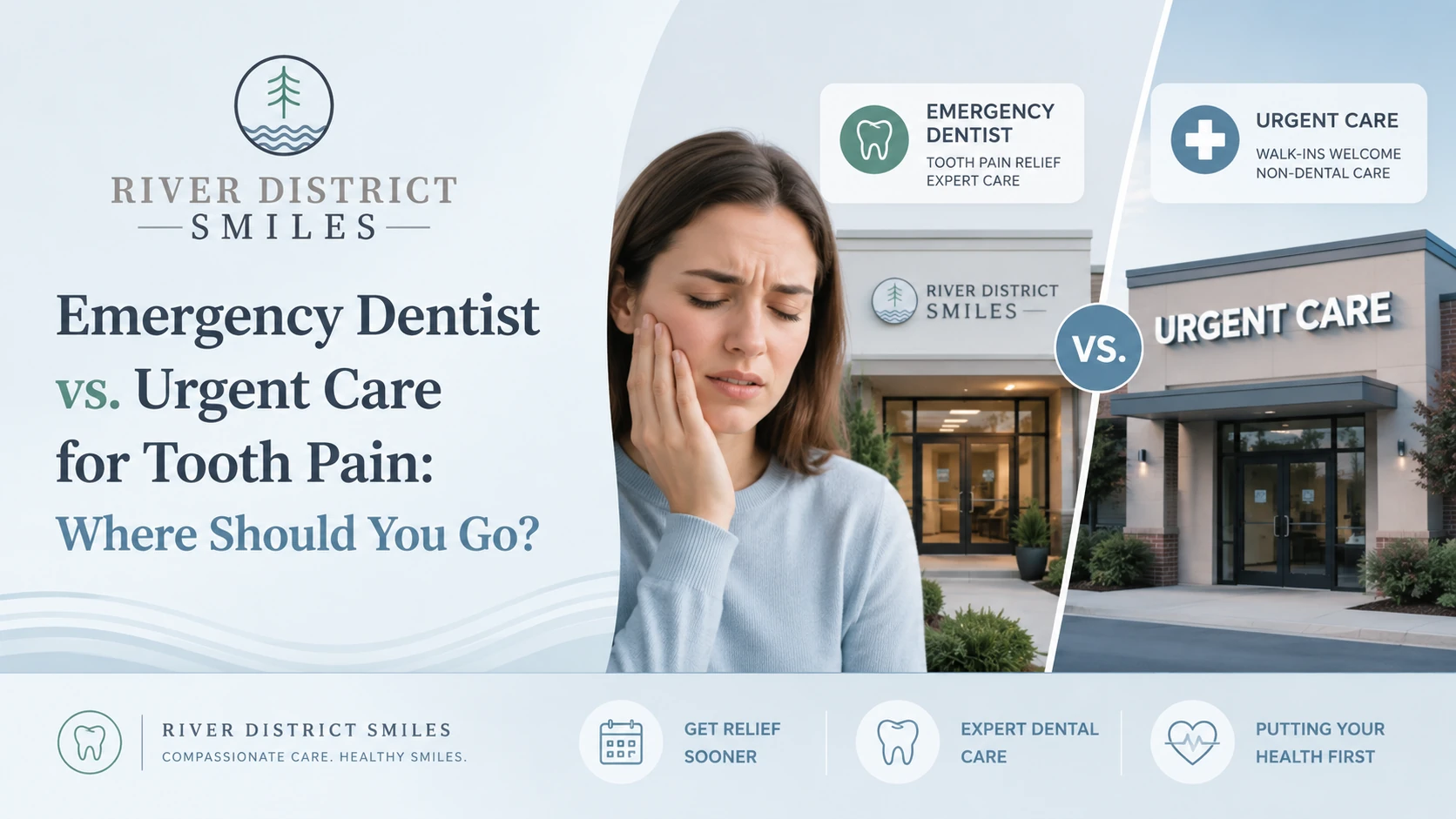
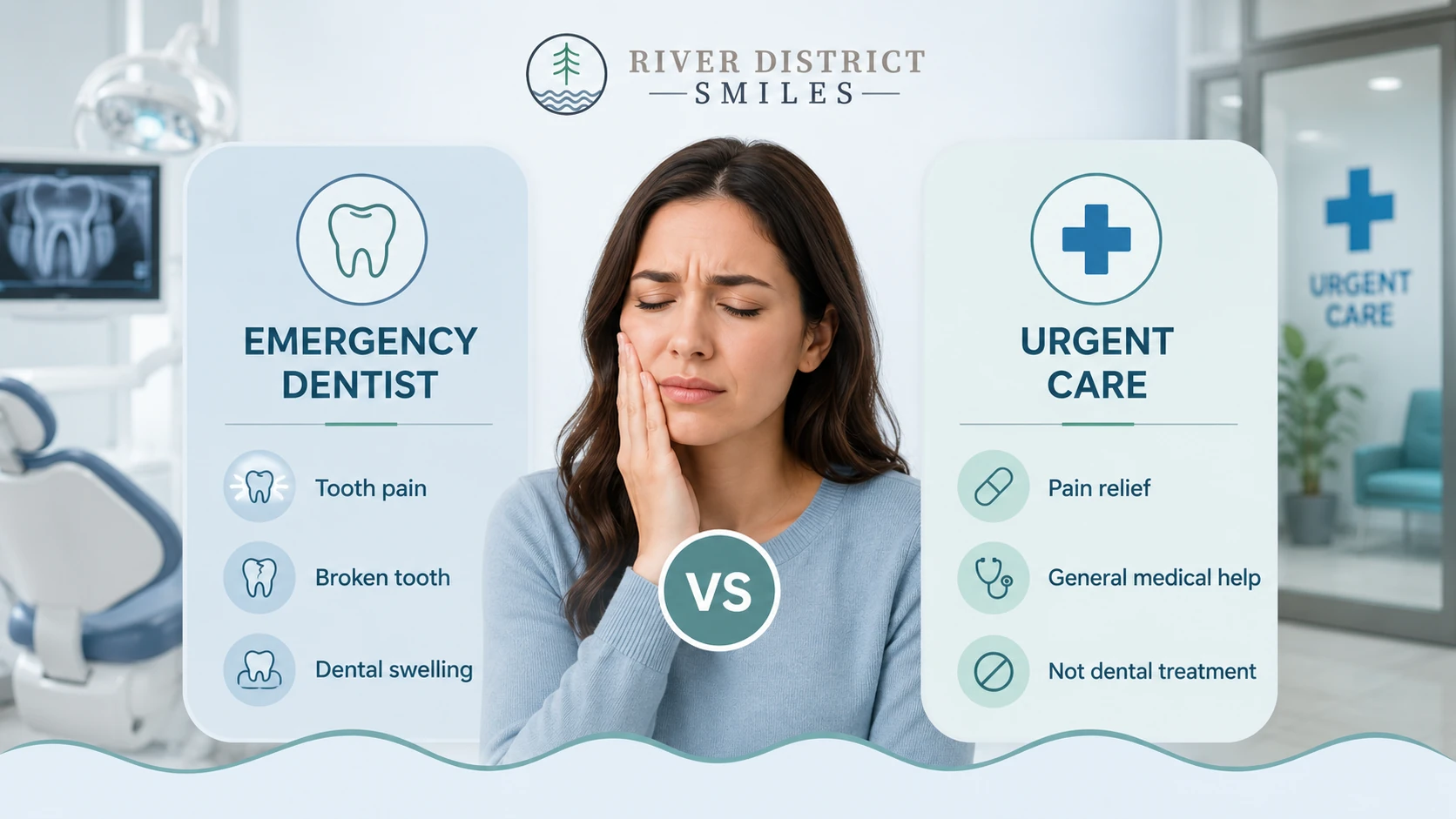
For most tooth pain, an emergency dentist is the better first choice because a dentist can diagnose and treat the source of the problem. Urgent care may help manage symptoms temporarily, but it usually cannot repair a broken tooth, perform a root canal, drain certain dental infections, or remove a tooth.
A hospital emergency department is the right choice when swelling or infection may be threatening your breathing, swallowing, or overall health.
The simplest way to decide
Use this general guide:
| Situation | Best place to start |
| Severe toothache without breathing or swallowing problems | Emergency dentist |
| Broken, cracked, or knocked-out tooth | Emergency dentist |
| Lost filling or crown with pain | Emergency dentist |
| Swollen gum or suspected dental abscess | Emergency dentist, unless severe warning signs are present |
| Mild tooth pain when no dentist is available | Urgent care may provide temporary help |
| Fever with worsening facial swelling | Emergency dentist or emergency department, depending on severity |
| Difficulty breathing or swallowing | Hospital emergency department |
| Swelling spreading toward the eye, neck, or throat | Hospital emergency department |
| Significant facial trauma or uncontrolled bleeding | Hospital emergency department |
This is not a substitute for an examination. Symptoms can change quickly, particularly when an infection is involved.
Why an emergency dentist is usually better for tooth pain
Tooth pain is a symptom, not a diagnosis.
It may be caused by:
- A deep cavity
- An inflamed or infected tooth nerve
- A cracked tooth
- A dental abscess
- Gum disease
- A loose or broken filling
- A damaged crown
- Food trapped beneath the gum
- Grinding or clenching
- Trauma to a tooth
- An impacted wisdom tooth
A dentist has the equipment and training to determine which of these problems is causing the pain. The visit may include dental X-rays, nerve testing, examination of the gums, evaluation of the bite, and testing for fractures.
More importantly, a dentist may be able to provide definitive treatment during the visit.
Depending on the diagnosis, emergency dental care may include:
- Repairing a filling
- Recementing or replacing a crown
- Opening and treating an infected tooth
- Beginning root canal treatment
- Draining an infection when appropriate
- Removing a tooth that cannot be saved
- Smoothing or stabilizing a broken tooth
- Treating gum-related pain
- Reimplanting or stabilizing an injured tooth
- Adjusting a painful bite
River District Smiles provides urgent dental care in Rock Hill for problems including toothaches, broken teeth, swelling, infections, and knocked-out teeth, with same-day appointments when availability allows.
What can urgent care do for tooth pain?
Urgent care can be useful when a dentist is unavailable and you need an initial medical assessment, especially during evenings, weekends, or while traveling.
An urgent care clinician may be able to:
- Check your temperature and other vital signs
- Evaluate whether an infection appears to be spreading
- Recommend or prescribe appropriate pain medication
- Prescribe antibiotics when there are signs that they are medically indicated
- Refer you to a dentist or hospital
- Help determine whether your symptoms require emergency medical care
The limitation is that most urgent care centers do not provide dental procedures.
They generally cannot remove decay, repair a fracture, complete a root canal, restore a lost filling, or remove the source of a dental infection. That means the pain may return after medication wears off.
Urgent care can sometimes help you get through the night. It usually cannot complete the treatment your tooth needs.
Will urgent care prescribe antibiotics?
Possibly, but antibiotics are not the answer to every toothache.
The American Dental Association recommends dental treatment rather than antibiotics alone for most pain and localized swelling caused by problems inside or around a tooth in otherwise healthy adults. Antibiotics are generally reserved for situations involving systemic illness or signs that an infection is spreading.
This is important because tooth pain is often caused by inflamed tissue trapped inside the tooth. Antibiotics do not remove that tissue or repair the tooth.
Even when antibiotics are appropriate, you may still need:
- A root canal
- Drainage
- An extraction
- Gum treatment
- Repair of a broken or decayed tooth
Symptoms may improve temporarily while taking an antibiotic and then return because the original source remains.
When should you go directly to a hospital emergency room?
Most dental pain does not require a hospital emergency department. Certain symptoms, however, can indicate that an infection or injury is becoming medically dangerous.
Go to the emergency room or call emergency services when you have:
- Difficulty breathing
- Difficulty swallowing
- Rapidly increasing facial or neck swelling
- Swelling beneath the jaw or tongue
- Swelling spreading toward the eye
- Inability to open your mouth normally along with worsening swelling
- Confusion, faintness, or severe weakness
- Significant facial trauma
- Uncontrolled bleeding
- A high fever with worsening swelling or illness
- Signs of a serious allergic reaction
A hospital can manage breathing risks, severe infection, dehydration, major trauma, and other medical complications. Once you are medically stable, dental treatment may still be needed to address the tooth itself.
When tooth pain needs a same-day dentist
You should try to see a dentist the same day when:
- Pain is severe, constant, or getting worse
- Pain keeps you awake
- It hurts to bite on one particular tooth
- Your face or gums are swollen
- You notice pus, drainage, or a bad taste
- A tooth has broken deeply
- A crown or large filling has come out
- A tooth feels loose after an injury
- A permanent tooth has been knocked out
- You have fever or feel unwell with dental pain
- Over-the-counter medication is not controlling the pain
River District Smiles identifies severe persistent pain, swelling, infection, broken teeth, and knocked-out teeth as reasons to seek prompt emergency dental care.
When it may be reasonable to schedule a regular appointment
Not every dental symptom requires same-day care.
A routine appointment may be reasonable when:
- Sensitivity is mild and brief
- A small chip is not painful or sharp
- A filling feels slightly rough but remains in place
- Mild discomfort is not worsening
- Food occasionally catches between two teeth
- A crown has come off but there is no pain or swelling
You should still contact the dental office and explain what happened. The team can help determine how quickly you need to be seen.
A minor-looking problem may need quicker care if the tooth has a history of root canal treatment, a large restoration, or a recent injury.
Toothache without swelling
A toothache without visible swelling can still require urgent dental care.
Pain may come from an inflamed nerve inside the tooth before an abscess develops. Common signs include:
- Lingering pain after hot or cold drinks
- Spontaneous throbbing
- Pain that worsens when lying down
- Pain that wakes you from sleep
- A tooth that hurts when you bite
- Pain that seems to spread toward the ear or jaw
These symptoms may indicate deep decay, a crack, or inflammation inside the tooth. Waiting for swelling to appear can allow a treatable problem to become more complicated.
Tooth pain with swelling
Swelling may appear as:
- A small bump on the gum
- Puffiness around one tooth
- Swelling along the jaw
- Facial asymmetry
- Tenderness beneath the jaw
- Swelling under the tongue
Localized swelling around a tooth usually warrants prompt dental evaluation. The dentist may need to treat the tooth, drain an infection, or remove the tooth if it cannot be restored.
Swelling accompanied by fever, chills, weakness, or spreading redness is more concerning because it may indicate that the infection is affecting more than the immediate tooth area. The ADA advises contacting a dentist or physician promptly when oral infection is associated with swelling, pain, fever, chills, or other systemic signs.
What should you do for a knocked-out tooth?
A knocked-out permanent tooth is a true dental emergency.
Handle it by the crown, the white part you normally see not by the root. If it is dirty, gently rinse it without scrubbing. When possible, place it back in the socket and hold it there.
If you cannot reinsert it, keep the tooth moist in milk or an appropriate tooth-preservation solution and seek dental care immediately. Time matters because the chance of saving the tooth decreases as it remains out of the socket. The ADA recommends immediate dental attention for knocked-out permanent teeth.
Do not attempt to reinsert a knocked-out baby tooth unless a dentist specifically directs you to do so.
What should you do for a broken tooth?
Rinse gently with warm water and save any pieces you can find. Apply a cold compress to the outside of the face if swelling is present.
A small enamel chip may not require immediate treatment. A deeper break can expose sensitive inner tooth structure or the nerve.
Seek prompt care when the tooth:
- Is bleeding from the center
- Has a pink or red area visible
- Causes strong temperature sensitivity
- Hurts when you bite
- Has a sharp edge cutting the tongue
- Broke after a significant injury
- Has lost a large filling or crown
Do not place aspirin directly on the tooth or gum. It can irritate or burn the tissue.
How can you manage tooth pain until you are seen?
Temporary steps may make you more comfortable, but they do not replace treatment.
You may be able to:
- Rinse gently with warm salt water
- Brush and floss carefully around the area
- Remove trapped food if it can be done without forcing anything beneath the gum
- Apply a cold compress outside the face
- Avoid chewing on the painful side
- Avoid very hot, cold, sweet, or hard foods
- Sleep with your head slightly elevated
- Use an over-the-counter pain reliever that is safe for you
Current ADA guidance supports non-opioid medications, particularly nonsteroidal anti-inflammatory drugs with or without acetaminophen, as first-line options for many types of acute dental pain. Medication choice depends on your age, health conditions, allergies, pregnancy status, and other medicines.
Do not exceed package directions or combine products that contain the same active ingredient. People with kidney disease, liver disease, ulcers, bleeding disorders, heart conditions, medication interactions, or other health concerns should ask a clinician or pharmacist what is safe.
Why pain relief is not the same as treatment
Dental pain often improves temporarily after:
- Pain medication
- Antibiotics
- A cold compress
- The tooth drains on its own
- Pressure inside the tooth decreases
Improvement does not always mean the condition has healed.
A dying or infected tooth nerve may stop producing pain even while infection remains around the root. A cracked tooth may feel better when you stop chewing on it but continue to split under normal force.
The goal of emergency dental care is not only to reduce pain. It is to identify and treat what caused it.
Emergency dentist vs. urgent care: cost considerations
Urgent care may initially appear less expensive, especially when you only pay for an examination and medication. But you may still need a dental visit afterward.
Your total cost could include:
- An urgent care fee
- Prescription medication
- Dental examination and X-rays
- Definitive dental treatment
- Follow-up care
An emergency dental visit may cost more than a routine exam, but it can be more efficient when the dentist is able to diagnose and treat the problem during the same visit.
The treatment itself will depend on the cause. A small repair costs much less than a root canal, crown, surgical extraction, or hospital visit.
Before treatment begins, ask:
- What is causing the pain?
- What can be done today?
- Is today’s treatment temporary or definitive?
- What additional care will be needed?
- What does the estimate include?
- What could happen if treatment is delayed?
What if you do not have a regular dentist?
You can still call an emergency dental office.
When speaking with the team, describe:
- Where the pain is located
- When it started
- Whether it is constant or triggered
- Whether you have swelling
- Whether you have a fever
- Whether the tooth is broken
- Whether there was an injury
- What medications you have taken
- Any serious medical conditions or allergies
This information helps the office determine how urgently you need to be seen and whether a hospital may be safer.
Questions urgent care cannot fully answer
Urgent care may be able to determine whether you are medically stable, but it often cannot tell you:
- Whether the tooth can be saved
- Whether you need a root canal
- Whether a crack extends below the gum
- Whether a crown can be repaired
- Whether an abscess needs dental drainage
- Whether extraction is necessary
- What replacement options would follow an extraction
Those decisions usually require dental imaging, testing, and a dentist’s evaluation.
The bottom line
An emergency dentist is usually the right first call for tooth pain because a dentist can diagnose and treat the source. Urgent care is mainly a temporary option when dental care is unavailable or when you need help determining whether an infection is becoming medically serious.
Go directly to a hospital emergency department when swelling affects breathing or swallowing, spreads rapidly into the face or neck, or is accompanied by signs of serious illness.
River District Smiles offers emergency dental care for toothaches, infections, broken teeth, swelling, and dental injuries in Rock Hill, with same-day appointments when possible.
The next step is not simply finding somewhere that can reduce the pain. It is finding the place that can safely identify the cause and provide the treatment needed to keep the problem from returning.