


Cavities (dental decay) often start small and may not cause pain at first. The challenge is recognizing when a cavity is progressing, so you can address it before it becomes a bigger problem.
The short answer: a worsening cavity often causes new or increased sensitivity, visible changes in the tooth, and sometimes intermittent or sharp pain. Early detection usually means simpler, less costly treatment.
Noticing Signs of a Deeper Cavity?
Get trusted treatment from a caring dental team. Call now for fast cavity care.
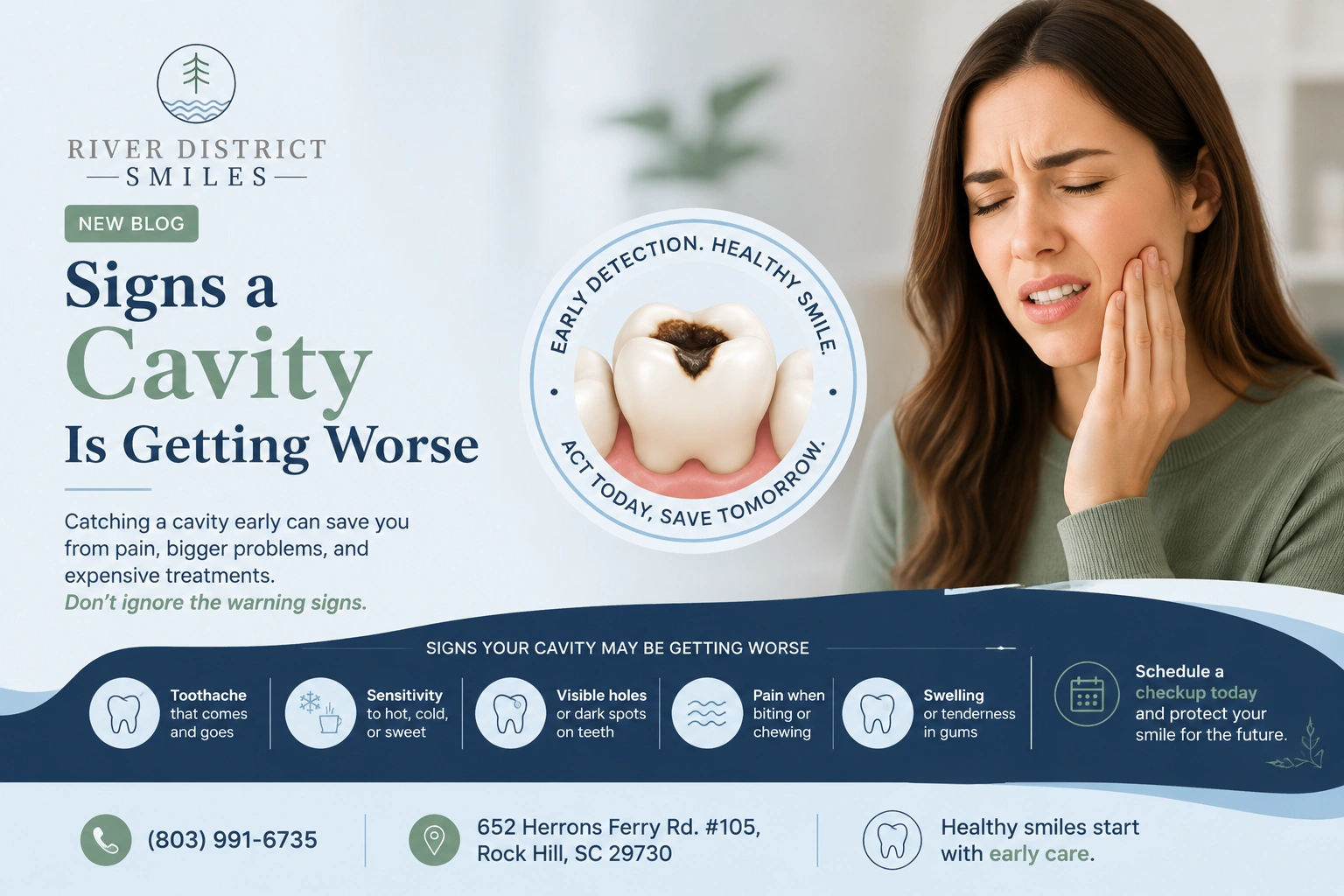
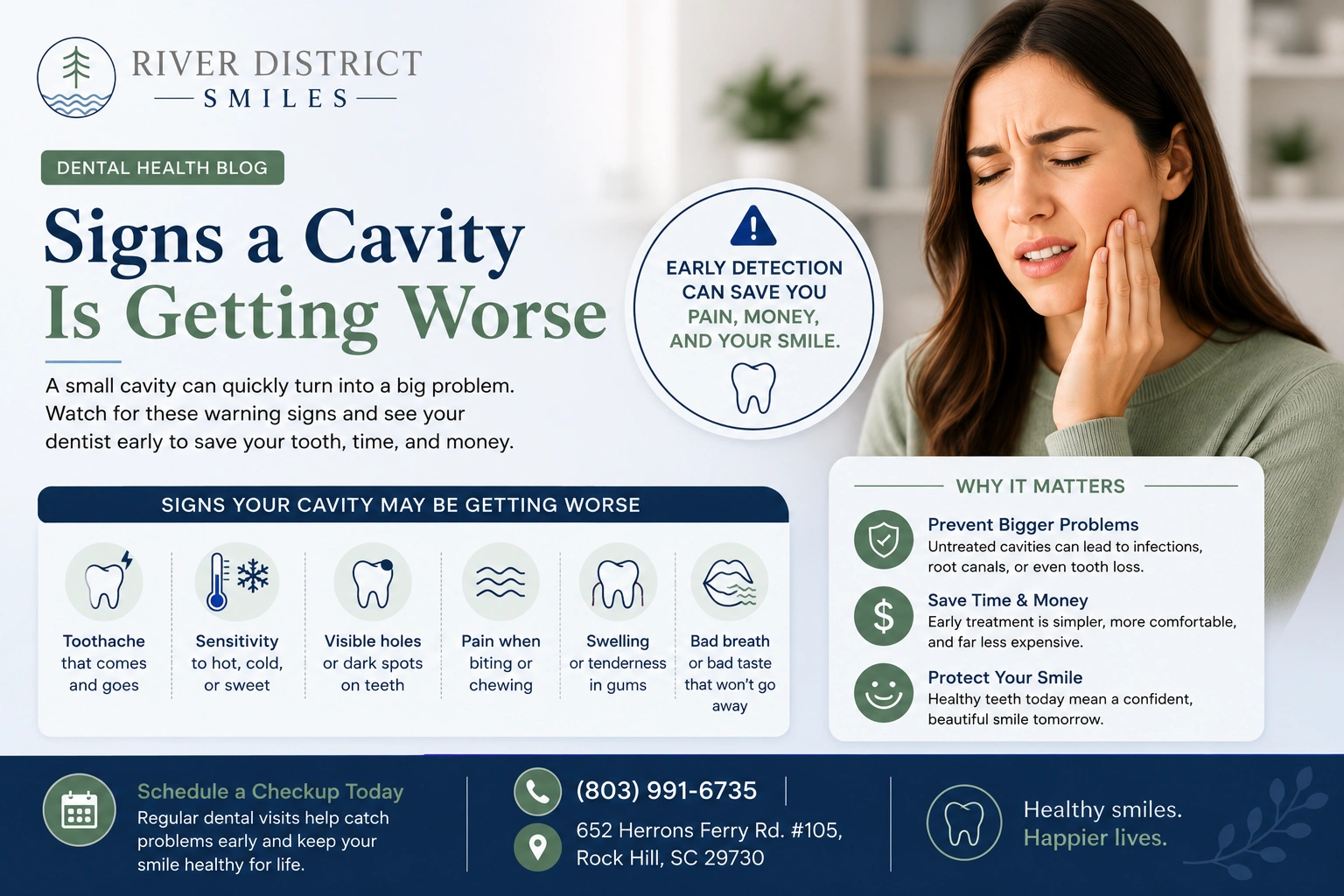
Key signs that a cavity is getting worse
- Increased tooth sensitivity
- Pain or discomfort when eating or drinking hot, cold, sweet, or acidic foods
- Sensitivity that lasts longer or becomes sharper than before
- Visible dark spots or holes
- Small pits may grow larger
- Brown, black, or white spots can indicate enamel breakdown
- Pain when biting or chewing
- May be intermittent at first
- Could signal that decay is reaching deeper layers or causing cracks
- Rough or jagged edges on the tooth
- The enamel or filling may break down, leaving sharp edges
- Swelling or tenderness around the tooth or gums
- Indicates irritation or possible infection if the cavity has reached the nerve or pulp
- Bad breath or unpleasant taste
- Decay can trap food and bacteria, causing persistent bad breath

Teeth Grinding Solutions and Esthetic Services: A Winning Combination
Teeth grinding, medically known as bruxism, is a common dental issue that can have far-reaching consequences. While addressing the functional…

Why it matters
If untreated, a cavity can:
- Reach the inner pulp, causing nerve inflammation or infection
- Require a root canal or extraction instead of a simple filling
- Lead to abscesses, swelling, and more serious health risks
Early intervention usually allows a simple filling, preserving more tooth structure and preventing more extensive treatment later.
What to do if you notice these signs
- Schedule a dental exam promptly – a dentist can detect hidden decay with X-rays and assess severity
- Maintain daily oral hygiene – brushing twice a day and flossing reduces further decay
- Avoid sugary or acidic foods that aggravate sensitivity until the tooth is treated
- Monitor changes – keep track of any new pain, discoloration, or changes in bite
Bottom line
A cavity getting worse often shows up as increased sensitivity, visible changes, pain when chewing, or rough edges. Even if symptoms are mild or intermittent, early detection allows for simpler treatment and helps prevent larger, more expensive dental procedures.
At River District Smiles, we focus on identifying decay early so patients understand the exact condition of their teeth and the most effective, conservative treatment.
Worried Your Cavity Is Getting Worse?
Get gentle, professional dental care before the pain spreads. Call now to schedule your cavity exam.