


Not that long ago, dental crowns had a pretty simple reputation.
They were the thing you got when a tooth cracked. Or when a filling got too big. Or when a tooth had become weakened enough that your dentist said, “Alright, this tooth needs a crown to stay strong.”
Crowns were functional. Practical. Necessary.
But here’s what has changed, and it is one of the most interesting shifts in modern dentistry:
Dental crowns are no longer just a fix.
They have become part of smile design.
Today, crowns are not only about protecting damaged teeth. They can also help create a smile that looks natural, balanced, and confident. The same restorative approach that helps strengthen a tooth can now contribute to improved shape, symmetry, appearance, and long-term comfort.
So if you still think of crowns as bulky caps from the past, it may be time for a reset.
Modern dental crowns have evolved into an important tool in both cosmetic and restorative dentistry.
How Do Dental Crowns Improve Overall Smile Design?
Smile design is not just about whitening teeth or straightening them.
It is about harmony.
Your smile is a combination of:
- Tooth shape
- Tooth length
- Color consistency
- Symmetry
- Bite alignment
- How your teeth fit your face
Crowns can play an important role in improving several of these factors.
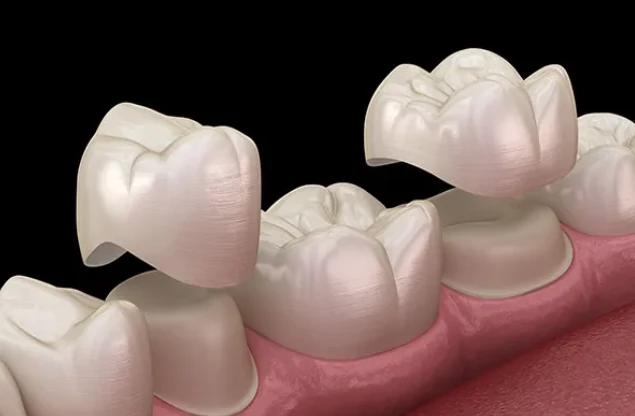
A crown covers the visible portion of a tooth, giving the dentist an opportunity not only to restore damaged structure but also to improve the tooth’s appearance.
Restoring Balance
If one tooth is shorter, worn down, or misshapen, a crown can help bring it back into proportion with the surrounding teeth.
Small differences in tooth length or shape can influence the overall appearance of a smile. Restoring proper proportions can help create a more balanced result.
Improving Symmetry
A smile often looks more balanced when the teeth appear appropriately proportioned and aligned.
Crowns can help correct certain irregularities in shape, size, or position when restorative treatment is already appropriate for the tooth.
Enhancing Tooth Color
A crown can be designed to match surrounding teeth or improve the appearance of a tooth with discoloration that does not respond predictably to whitening.
Modern restorative materials allow dentists to consider shade, translucency, and how light reflects from the tooth.
The goal is not simply to make a tooth brighter. It is to make the restoration look like it belongs naturally within the smile.
Supporting Better Bite Function
Smile design is not purely cosmetic.
A crown can also help restore the shape and height of a damaged or worn tooth, which may improve how the upper and lower teeth meet.
That can affect chewing comfort, bite balance, and the long-term stability of the restoration.
In some situations, a crown can be the difference between a tooth that merely looks acceptable and one that fits more naturally into the overall smile.
That is why crowns may also be included in broader smile makeover plans when both restorative and cosmetic improvements are needed.
Are Dental Crowns Used for Cosmetic Purposes or Only for Damaged Teeth?
Both.
Crowns still serve their traditional role as protective restorations for damaged or weakened teeth. Modern dentistry has also expanded how crowns can contribute to cosmetic treatment planning.
Crowns are commonly recommended for functional reasons such as:
- Cracked or broken teeth
- Large cavities that weaken tooth structure
- Teeth that have lost substantial natural structure
- Severe enamel wear from grinding or clenching
- Large or failing older fillings
- Teeth that need additional structural protection
Crowns may also be considered cosmetically when patients want to improve:
- Tooth shape
- Tooth size
- Smile uniformity
- Discoloration that does not respond well to whitening
- Certain minor alignment or proportion concerns
Some patients may consider crowns as part of a smile makeover when bonding or veneers are not the most appropriate option.
Cosmetic crown treatment can be especially useful when a tooth already needs structural protection.
Instead of addressing strength and appearance as two completely separate concerns, the restoration can be planned with both goals in mind.
The tooth is not simply repaired.
Its shape, proportions, shade, and relationship with the surrounding smile can also be considered.
What Makes Modern Dental Crowns Different From Traditional Crowns?
If you picture dental crowns as obvious or unnatural-looking restorations from decades ago, modern options may surprise you.
Traditional crowns served an important purpose, but today’s restorative materials and digital technology allow for considerably more detailed planning.
Modern crowns have improved in areas ranging from materials to fit and cosmetic customization.
Stronger, More Natural-Looking Materials
Modern crowns are often made from materials such as porcelain or zirconia.
These materials can provide the strength needed for everyday function while also being designed to resemble natural enamel.
A well-planned crown can account for:
- Shade
- Translucency
- Surface texture
- Contour
- Light reflection
- The appearance of neighboring teeth
This allows the restoration to blend more naturally rather than standing out as obvious dental work.
Digital Scanning and Precision Fit
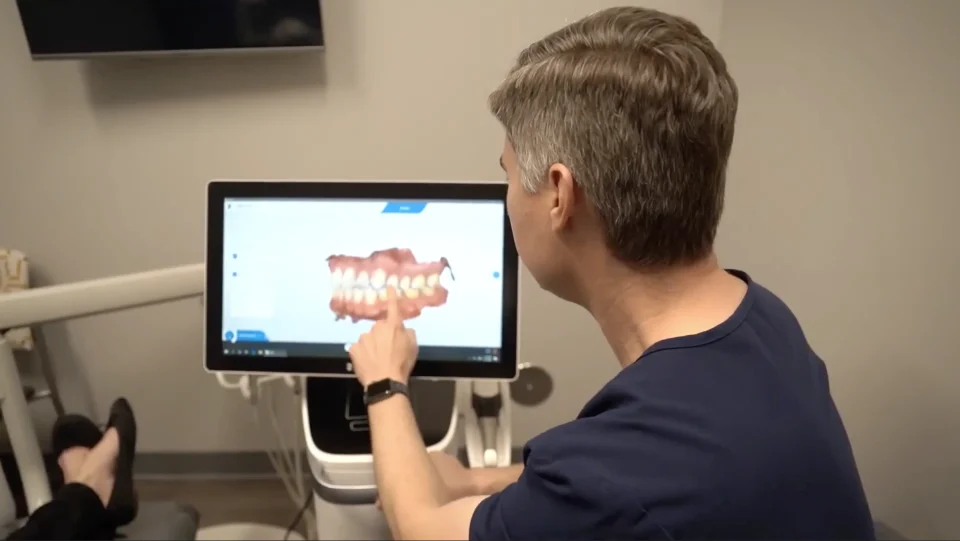
Digital dental technology has changed how many crowns are planned and designed.
Instead of relying exclusively on traditional impression materials, digital scanning can create a detailed representation of the prepared tooth and surrounding bite.
Digital planning may contribute to:
- Accurate fit
- Improved comfort
- Detailed bite evaluation
- More precise restoration design
- Fewer adjustments in appropriate cases
The goal is to create a restoration that fits both the tooth and the way the patient’s teeth come together.
More Conservative Tooth Preparation
Modern restorative techniques emphasize preserving healthy natural tooth structure whenever possible.
A crown still requires the tooth to be prepared so the restoration can fit correctly.
However, the amount of preparation depends on the condition of the tooth, the restorative material selected, and the amount of structural protection required.
The objective is to remove what is necessary while preserving as much healthy tooth as reasonably possible.
Improved Durability
Today’s dental crowns are designed to withstand normal chewing forces while resisting wear and fracture.
Durability depends on several factors, including:
- Crown material
- Tooth location
- Bite forces
- Grinding or clenching
- Oral hygiene
- Remaining natural tooth structure
- How well the crown fits
- Whether the patient uses the teeth to chew hard objects
No dental restoration is indestructible.
Even strong crowns can chip, loosen, or wear over time, particularly when exposed to excessive force.
Better Cosmetic Customization
Modern crown design can be highly individualized.
Shade matching is only one part of the process.
A dentist may also consider:
- Tooth width
- Tooth length
- Edge shape
- Surface texture
- Natural grooves
- Translucency
- Gumline position
- Neighboring teeth
- Overall facial proportions
Crowns are not intended to be one-size-fits-all restorations.
Each one can be planned around the tooth being restored and the smile surrounding it.
Modern crowns are not simply stronger than older restorative options.
They can also be planned with greater attention to appearance, function, fit, and long-term integration with the smile.
Can Dental Crowns Be Customized to Match the Appearance of Natural Teeth?
Yes, and this is where crowns become an important part of modern smile design.
Ideally, a crown should not immediately look like a crown.
It should look like a natural part of your smile.
Modern customization can account for:
- Tooth shade
- Surface texture
- Translucency
- Shape and contour
- Natural grooves and characteristics
- The appearance of neighboring teeth
A natural-looking smile does not necessarily mean making every tooth perfectly identical.
Natural teeth have subtle variations.
They differ slightly in shade, shape, translucency, texture, and proportion. Those small characteristics are part of what makes a smile look authentic.
Perfectly uniform teeth can sometimes appear artificial.
The goal of modern crown design is usually not absolute perfection. It is natural-looking balance.
Dentists and dental laboratories can work together to create crowns that integrate with the patient’s existing smile rather than creating a restoration that draws attention to itself.
When planning a crown, the dentist may look beyond the damaged tooth itself.
The surrounding teeth, gumline, bite, facial features, and overall smile can all influence the final design.
Customization can be especially important for:
- Front-tooth restorations
- Smile makeover cases
- Patients with distinctive natural tooth coloration
- Multiple crowns being planned together
- Teeth that are highly visible when smiling
- Restorations next to natural teeth
When done carefully, the goal is for the crown to become part of the smile rather than the first thing someone notices.
How Do Crowns Fit Into a Smile Makeover?
A smile makeover does not necessarily mean placing restorations on every visible tooth.
Treatment should be based on what each individual tooth actually needs.
For some patients, a smile plan may combine several different approaches, such as:
- Teeth whitening
- Dental bonding
- Veneers
- Dental crowns
- Clear aligner treatment
- Replacement of missing teeth
Crowns may be included when certain teeth need both cosmetic improvement and structural protection.
For example, a worn or heavily restored tooth may not be a good candidate for a cosmetic treatment that only covers part of its surface.
If the tooth already requires broader restoration, a crown may allow the dentist to improve both its strength and appearance at the same time.
This is one reason modern smile design is highly individualized.
Not every tooth needs the same treatment.
Are Crowns Better Than Veneers for Smile Design?
Neither option is automatically better.
Crowns and veneers are designed for different situations.
A veneer generally covers the visible front surface of a tooth and is primarily used for cosmetic changes.
A crown covers much more of the tooth and provides greater structural protection.
A Veneer May Be Considered When:
- The tooth is structurally healthy
- The main concern is cosmetic
- The patient wants to change tooth shape or color
- There is sufficient healthy enamel for bonding
- Full coverage is unnecessary
A Crown May Be Considered When:
- The tooth is cracked or significantly weakened
- A large filling is present
- Considerable natural tooth structure has been lost
- The tooth is heavily worn
- Structural protection is needed in addition to cosmetic improvement
Using a crown on a healthy tooth purely because it can change the appearance may involve more tooth preparation than necessary.
At the same time, using a veneer on a tooth that genuinely needs full structural protection may not adequately address the underlying problem.
The appropriate choice depends on both the condition of the tooth and the patient’s cosmetic goals.
Do Crowns Always Have to Look Perfectly White?
No.
The goal of a natural-looking crown is not necessarily to make it as white as possible.
If a single crown is being placed among natural teeth, making it dramatically brighter than the neighboring teeth could cause the restoration to stand out.
Instead, the shade can be selected to complement the surrounding smile.
For patients who are considering teeth whitening as well as a crown, treatment sequence matters.
Dental crowns do not whiten in the same way natural enamel does.
If you want a brighter overall smile, whitening may sometimes be planned before the final crown shade is selected.
That allows the restoration to be matched to the new shade of the natural teeth.
Your dentist can help determine the appropriate sequence based on your treatment plan.
Can Crowns Correct Worn or Uneven Teeth?
Crowns may be able to restore teeth that have lost significant height, shape, or structure through wear.
Teeth can become worn because of:
- Grinding
- Clenching
- Acid erosion
- Bite problems
- Long-term use
- Previous dental damage
When wear becomes significant, it can affect both appearance and function.
Teeth may look shorter, uneven, flattened, or chipped.
In appropriate cases, crowns can rebuild lost tooth structure and help restore more natural proportions.
However, the cause of the wear should also be addressed.
If someone continues grinding heavily after receiving new crowns, the same forces can place the restorations at risk.
A comprehensive treatment plan may therefore include evaluation of the bite, discussion of grinding or clenching, and a night guard when appropriate.
Do Dental Crowns Last Forever?
No dental restoration should be expected to last forever.
Crowns can remain functional for many years, but their longevity depends on the tooth, material, bite, oral hygiene, and daily habits.
Factors that can affect crown lifespan include:
- Tooth decay around the crown margin
- Gum disease
- Grinding or clenching
- Chewing ice or hard objects
- Changes in the bite
- Trauma
- Wear of the restorative material
- Damage to the supporting tooth
- Poor oral hygiene
Regular dental examinations allow the dentist to check the crown and surrounding tooth for signs of problems.
Patients should continue brushing and cleaning between crowned teeth just as they would natural teeth.
A crown protects the visible tooth structure, but the tooth underneath still requires ongoing care.
Crowns Have Become a Design Tool, Not Just a Repair Tool
Dental crowns are one of the most useful restorative tools in modern dentistry.
People often think of them only as a solution for badly damaged teeth, but their role has expanded.
Crowns now sit at the intersection of:
- Restoration
- Cosmetic enhancement
- Smile balance
- Bite function
- Long-term protection
They can protect weakened teeth.
They can also help shape a smile.
For the right patient and the right tooth, those goals can work together.
Modern restorative dentistry does not always require choosing between strength and appearance.
A thoughtfully planned crown can address both.
The important part is making sure a crown is recommended because it makes sense for the health and structure of the tooth, not simply because a cosmetic change is desired.
Redesign Your Smile With Confidence at River District Smiles
If you have been told you need a crown, or you are curious about how crowns may improve your smile’s appearance as well as its function, understanding your options can help you make a more informed decision.
Crowns That Restore Strength and Enhance Your Smile
At River District Smiles, dental crowns can be planned as more than simple repairs.
Each restoration can be designed around the tooth’s condition, your bite, neighboring teeth, and the overall appearance of your smile.
Whether you need a crown to protect a weakened tooth or a crown is being considered as part of a broader smile makeover, the goal is to create a result that looks natural, functions comfortably, and supports your oral health.
Schedule a consultation with River District Smiles to learn whether a dental crown is appropriate for your tooth and how modern restorative treatment can help strengthen and enhance your smile.