


If you have a chipped front tooth, an old dark crown, or a missing tooth, you may not know whether you need “cosmetic dentistry” or “restorative dentistry.”
Sometimes the answer is both.
That is because dentistry does not divide neatly into treatments that make teeth look better and treatments that make teeth work better.
A crown can strengthen a badly damaged tooth and improve its appearance.
Bonding can repair a fracture and make the tooth look normal again.
A dental implant can restore chewing function and fill an obvious gap in your smile.
The short answer is that restorative dentistry primarily repairs or replaces teeth so they can function predictably, while cosmetic dentistry primarily changes the appearance of otherwise healthy or restorable teeth. But there is significant overlap between the two.
The useful question is usually not:
“Is this cosmetic or restorative?”
It is:
“What problem are we trying to solve, and how much treatment does that problem actually require?”
River District Smiles provides preventive, cosmetic, restorative, and implant care in the same Rock Hill practice, with treatment recommendations based on the patient’s dental health, priorities, and goals rather than using the same solution for everyone.
What Is Restorative Dentistry?
Restorative dentistry focuses on repairing or replacing teeth that have been damaged, decayed, weakened, or lost.
The goal is usually to restore some combination of:
- Tooth structure
- Strength
- Chewing ability
- Comfort
- Bite function
- Protection from further damage
Common restorative treatments include:
- Fillings
- Crowns
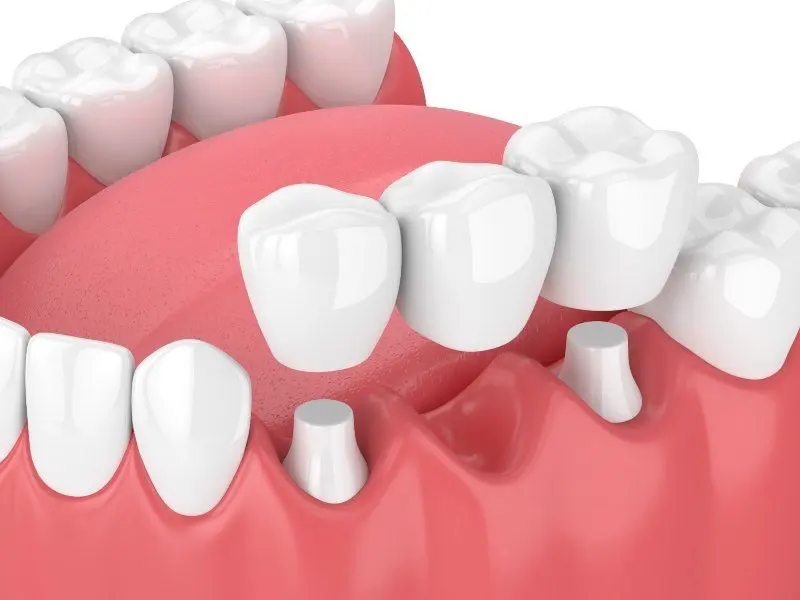
- Bridges
- Dental implants
- Dentures
- Repairs to broken teeth
River District Smiles specifically describes crowns, bridges, fillings, dental implants, dentures, and full-mouth reconstruction as restorative options for damaged, decayed, or missing teeth.
A filling for a cavity is a straightforward example.
The tooth has lost structure because of decay.
The dentist removes or manages the diseased portion and restores the tooth with an appropriate material.
The ADA notes that filling materials are selected according to factors such as the location and size of the cavity, chewing forces, appearance, expected durability, insurance, and out-of-pocket cost.
That is restorative dentistry in its simplest form:
Something is damaged, and we are rebuilding it.
What Is Cosmetic Dentistry?
Cosmetic dentistry primarily focuses on changing how the teeth or smile look.
A patient may want to improve:
- Tooth color
- Shape
- Size
- Symmetry
- Small gaps
- Minor chips
- Worn edges
- Overall smile proportions
Common cosmetic treatments include:
- Professional teeth whitening
- Dental bonding
- Tooth reshaping or contouring
- Porcelain veneers
- Smile makeovers
River District Smiles offers whitening, veneers, bonding, contouring, and customized smile-makeover treatment for concerns such as discoloration, chips, gaps, uneven shape, and worn edges.
For example, imagine that all of your front teeth are healthy, comfortable, and structurally sound.
You simply wish they were several shades lighter.
Professional whitening would primarily be cosmetic.
We are not repairing a diseased tooth.
We are changing an appearance characteristic you would like to improve.
So Where Does the Confusion Come From?
The same dental procedure can sometimes belong in either category.
Or both.
A crown illustrates this perfectly.
The ADA says a crown can strengthen a tooth with a large filling, protect a weak tooth, restore a broken tooth, cover an implant, and improve the appearance of a discolored or badly shaped tooth.
That means one patient might receive a crown because a molar has lost too much structure to safely hold another filling.
That is primarily restorative.
Another patient might have a badly damaged front tooth that also looks dark and uneven.
The crown is restoring strength and changing appearance.
That is both restorative and cosmetic.
River District Smiles makes the same distinction on its crown page: crowns can improve shape, size, proportion, color, and appearance, but a full crown should not automatically be the first choice for a healthy tooth with only a minor cosmetic concern.
The treatment does not determine the category by itself.
The reason for the treatment matters.
A Useful Comparison
| Cosmetic dentistry | Restorative dentistry | |
| Primary goal | Improve appearance | Repair damage or replace missing structure |
| Usually medically necessary? | Often optional | More often related to health or function |
| Examples | Whitening, cosmetic bonding, veneers, contouring | Fillings, crowns, bridges, implants, dentures |
| Can I improve my appearance? | Yes | Often |
| Can I improve function? | Sometimes | Usually |
| Insurance coverage | Often limited for purely cosmetic procedures | More likely to receive benefits when medically necessary, depending on the plan |
| Tooth preparation | Can range from none to significant | Depends on the amount of damage and restoration needed |
| Main decision | Is the appearance change worth the cost and tradeoffs? | What is the most predictable way to repair or replace the damaged tooth? |
The categories are useful for understanding treatment.
They should not become artificial boundaries.
Dental Bonding: Cosmetic or Restorative?
It depends on why we are doing it.
Suppose you have two healthy front teeth and a small gap that bothers you.
We add tooth-colored resin to improve their proportions and close the space.
That is primarily cosmetic bonding.
Now suppose you fall and chip a corner off one front tooth.
We use essentially the same type of composite material to rebuild what was lost.
That is restorative bonding with a cosmetic result.
River District Smiles uses bonding for chipped and uneven teeth, small gaps, and other conservative refinements.
This distinction can even affect insurance.
River District Smiles notes that bonding used to repair a fracture may be treated differently by a dental benefit plan than bonding performed solely to change the shape of an otherwise healthy tooth.
Same material.
Different reason.
Potentially different coverage.
Veneers: Usually Cosmetic
Veneers are thin restorations placed over the front surface of teeth to change appearance.
They may improve:
- Color
- Shape
- Length
- Small gaps
- Chips
- Symmetry
The ADA describes veneers as custom coverings used for chipped, stained, crooked, misshapen, or gapped teeth. Unlike crowns, they primarily cover the front of the tooth rather than the entire tooth structure.
River District Smiles similarly uses veneers to improve discoloration, chips, gaps, worn edges, and tooth shape.
Veneers can provide some structural improvement to selected damaged front teeth, but they are generally considered cosmetic treatment.
And there is an important tradeoff:
Veneer treatment is usually not reversible once enamel has been removed.
That is why a veneer should not automatically be placed on every slightly chipped or uneven tooth.
Sometimes bonding provides enough improvement while preserving more natural enamel.
Crowns: Usually More Restorative
A crown covers substantially more of the tooth.
That makes it appropriate when the tooth needs protection, not simply a change in appearance.
A crown may make sense when:
- A large filling has weakened the tooth
- A significant portion has fractured
- There is not enough healthy structure for a smaller restoration
- The tooth is badly worn
- A tooth needs coverage after other treatment
- A dental implant needs its final visible restoration
The ADA describes crowns as a way to strengthen teeth with large fillings, protect weak teeth, restore broken teeth, support bridges, and cover implants.
River District Smiles uses CEREC technology for selected crown cases, which can sometimes allow a crown to be designed, milled, and placed during the same appointment. Not every case is best completed that way.
The cosmetic benefit is often significant.
Modern tooth-colored crowns can look very natural.
But if a healthy front tooth only needs a minor shape correction, removing enough structure for a full crown may be more treatment than necessary.
What About Dental Implants?
Dental implants are primarily restorative.
They replace missing teeth.
An implant post is placed in the jaw to function like an artificial root and can support a crown, bridge, denture, or full-arch restoration.
River District Smiles provides implant options for replacing one tooth, multiple teeth, or a full arch.
Function is an important reason for treatment.
A missing tooth can affect chewing, bite stability, and the way nearby teeth function.
But appearance can matter just as much especially with a missing front tooth.
A front dental implant therefore has both restorative and cosmetic goals:
Restore the missing tooth.
And:
Make that replacement look like it belongs there.
The treatment is still restorative because a tooth is genuinely missing.
The appearance is part of doing the restoration well.
A Filling Can Be Cosmetic Too
Even an ordinary filling has an appearance component.
Composite resin is tooth-colored and can be used in both front and back teeth.
The ADA notes that composite fillings provide a natural tooth-colored appearance while also offering durability for appropriate small- to medium-sized restorations.
If you have a front-tooth cavity, the job is clearly restorative.
But matching the filling to the surrounding enamel is cosmetic craftsmanship within restorative treatment.
Patients understandably care about both.
They want the decay treated.
They also do not want the repair to look like an obvious patch.
What If You Want to Replace Old Dental Work Because It Looks Bad?
This can sit directly between cosmetic and restorative dentistry.
Maybe you have:
- An old crown that is darker than neighboring teeth
- Bonding that has stained
- A visible metal filling
- A front crown with an obvious edge
- A bridge that no longer looks natural
If the restoration is still clinically healthy and functioning well, replacing it may primarily be cosmetic.
If it is also:
- Cracked
- Leaking
- Decayed around the edges
- Loose
- Structurally failing
- Causing bite problems
then replacement becomes restorative as well.
This is important because replacing functional dental work is not a completely risk-free cosmetic decision.
Every time we replace a restoration, we have to work with the tooth structure underneath it.
A good dentist should be able to explain whether the restoration needs replacement or whether you are electing to replace it primarily because you want it to look different.
What Should Come First: Health or Appearance?
Health.
That does not mean cosmetic concerns are unimportant.
It means cosmetic dentistry lasts longer when the foundation underneath it is healthy.
The ADA advises that issues such as decay and gum disease should be addressed before veneers are placed because covering an unhealthy tooth can allow the underlying problem to worsen.
River District Smiles makes the same point in its cosmetic dentistry approach: cosmetic planning begins with a healthy foundation rather than simply covering whatever the patient dislikes.
For example, imagine someone wants six veneers but also has untreated cavities and bleeding gums.
The sequence should not be:
Veneers first because those are the teeth visible in photographs.
The healthier sequence is generally:
- Diagnose dental problems.
- Stabilize decay and gum health.
- Understand the bite.
- Then plan the cosmetic changes.
The final result usually becomes more predictable because of it.
Can Restorative Dentistry Make Your Smile Look Better?
Absolutely.
Many restorative procedures have a major cosmetic benefit.
Think about:
- Rebuilding a fractured front tooth
- Replacing a missing tooth with an implant
- Replacing a failing dark crown
- Restoring severely worn teeth
- Replacing missing teeth with a bridge
- Repairing decay on a visible tooth
The treatment may be medically or functionally necessary.
That does not mean appearance has to be ignored.
River District Smiles describes its restorative approach as preserving healthy structure, restoring comfortable function, and creating restorations that can also blend appropriately with the smile.
Good restorative dentistry should consider:
Does the tooth work?
and, particularly in visible areas:
Does it look like a natural tooth?
Can Cosmetic Dentistry Improve Function?
Sometimes.
Suppose a chipped front tooth has a rough edge.
Bonding can improve how it looks while restoring its normal contour.
A veneer may rebuild a worn front surface.
Orthodontic or cosmetic planning may also improve tooth relationships in selected cases.
But patients should be careful when broad functional claims are used to justify treatment that is primarily cosmetic.
If your teeth are healthy and you want them whiter, whitening does not become medically necessary because a brighter smile may make you feel better.
That does not diminish the value of the treatment.
It simply keeps the decision honest.
You are choosing an appearance improvement because it matters to you.
Is Cosmetic Dentistry a Dental Specialty?
Not in the formal U.S. specialty-recognition system.
The National Commission currently recognizes 12 dental specialties, and “cosmetic dentistry” is not one of those recognized specialty categories.
General dentists may provide cosmetic services based on their education, training, continuing education, experience, and scope of practice. The ADA permits general dentists to advertise services they provide as long as they do not misleadingly imply specialization in a non-recognized specialty area.
For patients, that means the useful questions are less about a marketing title and more about:
- What treatment is being recommended?
- Why?
- How much of a healthy tooth will be altered?
- What training and experience does the dentist have with that procedure?
- What are the alternatives?
- What maintenance will the result require?
Is Restorative Dentistry a Separate Type of Dentist?
Restorative care is also provided extensively within general dentistry.
Some recognized dental specialties deal deeply with particular restorative problems—prosthodontics, for example, focuses on rehabilitation involving missing or deficient teeth and oral structures.
But everyday restorative procedures such as fillings and crowns are routinely part of general dental practice.
At River District Smiles, cosmetic, restorative, implant, preventive, and general dentistry are provided within one comprehensive practice.
That can be useful when a case crosses categories.
A dentist evaluating a broken front tooth can consider:
- Is bonding enough?
- Does the tooth need a crown?
- Would a veneer provide appropriate coverage?
- Is there deeper structural damage?
- Does the bite need to be considered?
The goal is not deciding which department the tooth belongs to.
It is choosing the most conservative predictable treatment.
How Does Insurance Treat Cosmetic vs. Restorative Work?
This is one of the biggest practical differences.
Dental insurance is generally more likely to contribute when treatment is considered medically necessary to treat:
- Decay
- Fracture
- Pain
- Loss of function
- Structural damage
- Certain missing-tooth problems
Coverage is usually less likely when healthy teeth are being treated solely to improve appearance.
River District Smiles gives a useful example: cosmetic bonding on a healthy tooth may be treated differently from bonding required to repair an accident-related fracture. Similarly, a cosmetic veneer may be excluded while a plan may contribute toward a crown needed after substantial structural damage.
The word restorative still does not guarantee insurance coverage.
Every plan has:
- Deductibles
- Annual maximums
- Exclusions
- Frequency limits
- Waiting periods
- Different percentages for different services
River District Smiles works with a variety of dental plans and says its team can help patients understand how available benefits may apply to recommended care.
Does That Mean Cosmetic Dentistry Always Costs More?
No.
A small cosmetic bonding procedure may cost far less than a restorative dental implant.
“Cosmetic” does not mean expensive.
“Restorative” does not mean inexpensive.
The cost is driven by what treatment is actually required.
Important factors include:
- Number of teeth
- Materials
- Complexity
- Laboratory work
- Need for surgery
- Amount of healthy tooth remaining
- Whether temporary restorations are needed
- Additional procedures such as grafting
- Insurance benefits
It makes little sense to compare “cosmetic dentistry prices” against “restorative dentistry prices” as two categories.
Compare actual treatments.
For example:
Bonding vs. veneer.
Filling vs. crown.
Bridge vs. implant.
Those comparisons tell you something useful.
Cosmetic Bonding vs. Restorative Crown: An Example
Imagine you chip your front tooth.
Situation A
Only a small corner of enamel is missing.
The tooth is healthy.
There is plenty of strong structure remaining.
A conservative bonding procedure might rebuild the missing section.
Situation B
Half of the tooth fractures.
There is a large old filling.
The remaining walls are thin.
A small bonding repair may not adequately protect what is left.
A crown might now be more predictable.
River District Smiles specifically warns that choosing a smaller filling only because it costs less can leave a significantly weakened tooth vulnerable to another fracture when broader protection is actually required.
Conservative dentistry does not mean always choosing the smallest treatment.
It means choosing the least extensive option that is still likely to work predictably.
Whitening vs. Veneers: Another Example
Suppose you dislike the color of otherwise healthy teeth.
Whitening is comparatively conservative because it changes color without removing tooth structure.
A veneer can change color much more dramatically and can also change shape, length, and symmetry.
But veneers generally require a greater commitment and may involve permanent enamel removal.
So if color is your only concern, jumping immediately to veneers may be unnecessary.
If you have severe discoloration plus worn edges, chips, and uneven shapes, veneers may solve several problems that whitening cannot.
Again, the right treatment comes from defining the problem first.
Bridge vs. Implant: Restorative Treatment With Cosmetic Considerations
When a tooth is missing, the primary issue is restorative.
The space can potentially be replaced with:
- A dental bridge
- A dental implant
- A removable option
- Another individualized approach
An implant replaces the missing tooth independently, while a traditional bridge uses neighboring teeth for support.
River District Smiles offers both bridge and implant options and does not assume every missing tooth should be treated in the same way.
Appearance still matters, especially in the front of the mouth.
But the decision also involves:
- Bone
- Condition of neighboring teeth
- Bite
- Surgery
- Maintenance
- Treatment time
- Cost
That is why restorative dentistry often involves much more than simply making the gap disappear.
What If You Want a Complete Smile Makeover?
Then both categories may become part of the same plan.
Imagine someone has:
- Several stained natural teeth
- One old crown
- A chipped incisor
- One missing back tooth
- Worn edges from years of grinding
Calling the entire treatment “cosmetic dentistry” misses some important issues.
The smile makeover may involve:
- Whitening healthy teeth
- Bonding a chip
- Replacing a failing crown
- Replacing the missing tooth
- Protecting against continued grinding
Some parts are cosmetic.
Some are restorative.
Some accomplish both.
River District Smiles describes its smile-makeover planning as combining treatments such as whitening, veneers, bonding, and contouring according to the patient’s individual concerns rather than using a fixed package.
A comprehensive plan should also identify any restorative needs before cosmetic work is finalized.
When Should You Choose the Most Conservative Cosmetic Option?
When the teeth are healthy and your desired change is small.
That might mean:
- Whitening instead of veneers for color alone
- Bonding instead of a veneer for one small chip
- Minor reshaping instead of covering an entire tooth
- Orthodontic movement instead of disguising a badly rotated healthy tooth with extensive restorative work
Healthy enamel is valuable.
Once removed, it does not regenerate.
That does not mean veneers or crowns are bad treatments.
It means they should have a reason.
River District Smiles’ crown guidance reflects this principle directly: when a tooth is healthy and only requires a minor appearance change, whitening, bonding, or veneers may preserve more natural structure than a full crown.
When Should Function Take Priority Over Cosmetics?
When the tooth is actively diseased, infected, fractured, unstable, or structurally compromised.
For example, a beautiful veneer is not the solution for a tooth that really needs infection treated.
Whitening is not the priority when a dark tooth has changed color after trauma and may have pulp damage.
Bonding is not enough if the tooth has fractured so extensively that it needs broader protection.
The cosmetic plan should sit on top of a sound diagnosis.
Not replace it.
Five Questions to Ask Before Treatment
Whether the treatment is being described as cosmetic, restorative, or both, ask:
- What problem are we treating?
- Does this tooth actually need treatment for health or function, or is this mainly an appearance choice?
- Is there a more conservative option that preserves more natural tooth structure?
- What are the maintenance and replacement expectations?
- What portion, if any, is likely to be covered by insurance?
And if several treatment choices exist, ask one more:
What happens if I do nothing right now?
For a purely cosmetic issue, the answer may be:
“Nothing medically significant. The tooth will simply continue looking the way it does.”
For a fractured or decayed tooth, the answer may be very different.
That distinction tells you a lot about the decision you are making.
The Bottom Line
Cosmetic dentistry and restorative dentistry are not competing philosophies.
They describe different primary goals.
Cosmetic dentistry primarily changes appearance.
Restorative dentistry primarily repairs damaged teeth or replaces missing ones.
But good dentistry often accomplishes both.
A front crown should be strong enough to function and natural enough to smile with.
A bonded fractured tooth should regain its shape as well as its appearance.
A dental implant should let you chew while also replacing the visible gap.
At River District Smiles, cosmetic, restorative, general, and implant treatment are planned together so the recommendation can account for health, function, appearance, and the amount of natural tooth structure involved.
If you only remember one thing, make it this:
Do not choose treatment based on whether somebody calls it “cosmetic” or “restorative.” Ask what problem the treatment solves and whether there is a simpler way to solve it.
Sometimes the right answer is whitening.
Sometimes it is bonding.
Sometimes the tooth genuinely needs a crown.
And sometimes the healthiest choice is to leave a perfectly sound tooth alone.
A good dental visit should leave you understanding which parts of the treatment are necessary for health, which parts are optional appearance improvements, what each option costs, and what you gain or give up by choosing one over another.