
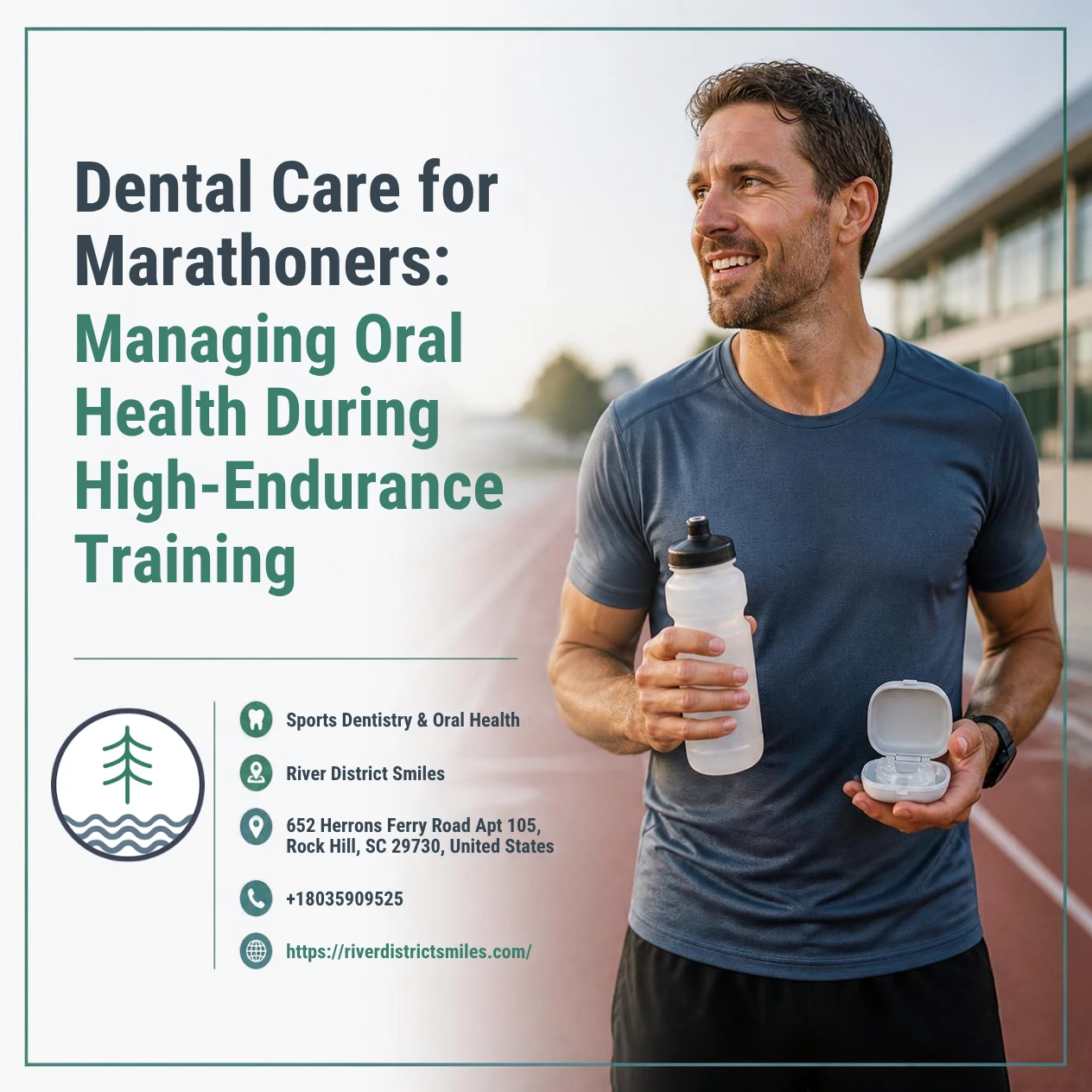


If you are training for a marathon, you probably spend a lot of time thinking about mileage, shoes, hydration, electrolytes, sleep, and what your stomach can tolerate at mile 20.
Your teeth may not make the list.
But marathon training creates an unusual combination for your mouth: hours of mouth breathing, reduced saliva, repeated carbohydrate intake, sports drinks, gels, chews, and frequent snacking.
None of those things means running is bad for your teeth.
It does mean that a fueling strategy designed to help your legs can unintentionally create a harder environment for your enamel and gums.
The short answer is this: marathoners do not need to avoid sports drinks, gels, or carbohydrates. You need to manage how often your teeth are exposed to them and give your mouth a chance to recover between exposures.
A few small habits can protect your teeth without interfering with your training plan.
Why Can Marathon Training Be Hard on Your Teeth?
Endurance runners face several oral-health pressures at the same time.
During long runs, you may:
- Breathe through your mouth for extended periods
- Produce less saliva
- Sip carbohydrate drinks repeatedly
- Take gels or chews every 20 to 45 minutes
- Eat more frequent carbohydrate-rich snacks throughout the day
- Drink acidic electrolyte products
- Finish a workout dehydrated
- Experience occasional exercise-related reflux
Individually, none of those behaviors guarantees a dental problem.
Together, however, they can increase the amount of time your teeth spend exposed to sugar and acid while saliva, one of your mouth’s main protective systems, is reduced.
Research involving endurance athletes has found changes in salivary flow during intense exercise. One study of triathletes found that saliva production fell as exercise intensity increased, while an older study of marathon runners also documented a decrease in salivary secretion immediately after a race.
That matters because saliva helps wash food away, neutralize acids, and provide minerals involved in maintaining enamel.
The Biggest Issue Is Usually Frequency, Not One Energy Gel
Runners often ask whether gels are “bad for your teeth.”
That is not quite the right way to think about it.
A gel taken once is different from consuming something sugary every 30 minutes for four hours.
Cavity-causing bacteria use fermentable carbohydrates and produce acids as a byproduct. Each new carbohydrate exposure can start another period of acid production.
Ultra-endurance research highlights this particular challenge: runners may consume sugars repeatedly in sticky or liquid forms during long events, often without any opportunity for normal oral hygiene.
From a dental perspective, the problem is not that marathoners eat carbohydrates.
Carbohydrates are often necessary for endurance performance.
The issue is that marathon fueling can expose the teeth to carbohydrates far more frequently than an ordinary meal pattern would.
The goal is therefore not to under-fuel your training to protect your teeth.
It is to fuel appropriately while reducing how long the residue sits around afterward.
What Should You Do After Taking a Gel?
For most runners, one of the easiest habits is also one of the most practical:
Follow your gel with plain water when possible.
You do not need to aggressively rinse your mouth at an aid station.
A few swallows of water can help clear some of the sticky carbohydrate from the teeth and reduce how long it remains concentrated in the mouth.
This works especially well if you already carry water separately from your carbohydrate or electrolyte drink.
A simple rhythm might look like this:
- Take the gel according to your nutrition plan.
- Drink some plain water.
- Continue running.
That adds very little effort and does not require changing your fueling schedule.
Sports Drinks Create a Different Issue: Acid
Sugar is only part of the equation.
Many sports drinks are acidic.
Acidic beverages can contribute to dental erosion, which is the chemical loss of tooth structure from acid rather than the bacteria involved in a traditional cavity.
The American Dental Association notes that frequent exposure to low-pH beverages, including many sports drinks, can increase the risk of erosive tooth wear, particularly when combined with reduced saliva and dehydration during strenuous activity.
The evidence specifically linking sports-drink consumption to erosion across athlete populations is not perfectly consistent. A 2026 systematic review found the evidence limited and variable.
Still, from a practical standpoint, the chemistry is straightforward:
Repeated exposure to an acidic drink gives enamel more acid challenges to recover from.
That is why sipping the same bottle every few minutes for three hours matters more than simply asking whether the drink contains sugar.
Are Sugar-Free Electrolytes Better?
They may reduce one problem without eliminating the other.
A sugar-free drink removes fermentable sugar, which is helpful from a cavity standpoint.
But if the beverage remains acidic, it can still contribute to enamel erosion.
In other words:
Sugar-free does not necessarily mean enamel-neutral.
You do not need to test the pH of everything in your running vest. Just keep plain water in the mix rather than letting a flavored electrolyte drink become the only liquid touching your teeth for several hours.
Why Dry Mouth Matters So Much for Runners
Many runners notice that their mouth feels sticky or unusually dry toward the end of a long run.
That is more than a comfort issue.
Saliva normally:
- Washes food residue away
- Helps neutralize acids
- Lubricates the mouth
- Supplies minerals involved in enamel repair
- Helps control the oral environment
When salivary flow drops, sugar and acid may stay in contact with the teeth longer.
Mouth breathing can make the dry feeling more noticeable, especially during harder efforts.
That is why hydration matters for oral health as well as performance.
It does not mean you need to constantly drink.
It means following your appropriate hydration plan and using plain water regularly rather than relying exclusively on sports beverages.
Should You Brush Your Teeth Right After a Long Run?
Not necessarily.
If your run involves acidic sports drinks, citrus products, or frequent acidic fueling, brushing immediately afterward may not be the best choice.
Acid can temporarily soften the surface of enamel.
The ADA recommends rinsing with water after acidic beverages rather than brushing immediately. Giving saliva time to neutralize the mouth before brushing reduces unnecessary mechanical wear on recently acid-exposed enamel.
A practical post-run routine is:
- Drink or rinse with plain water.
- Eat your recovery meal.
- Let your mouth recover.
- Brush later with fluoride toothpaste.
You do not need to run through the front door and immediately attack your teeth with a toothbrush.
What About Post-Run Smoothies?
Smoothies can be excellent recovery nutrition.
They can also create another long acid-and-carbohydrate exposure if you slowly sip one for the next two hours.
Fruit, juice, flavored yogurt, sports powders, and other ingredients can make some smoothies both acidic and carbohydrate-rich.
Again, the issue is usually how you consume it, not whether smoothies are forbidden.
If your recovery smoothie is part of a meal and you finish it within a reasonable period, that is different from carrying it around all morning and taking a sip every few minutes.
Afterward, drink some water.
What About Chews, Gummies, and Energy Bars?
Sticky foods deserve extra attention because they can remain in grooves and between teeth after you swallow.
Energy chews and gummies are designed to be easy to carry and consume while moving.
That is useful for running.
It is less useful when pieces remain stuck around molars for the next hour.
If chews are what your stomach tolerates best, keep using them.
Just follow them with water when possible and clean carefully between your teeth later in the day.
Energy bars present a similar issue. Some are dense, sticky, and carbohydrate-rich.
The question is not whether a product looks “healthy.”
From your teeth’s point of view, what matters is how much fermentable carbohydrate is present, how sticky it is, and how often your teeth encounter it.
Marathon Training Can Affect Your Teeth Even When You Have a Healthy Diet
This is one reason runners sometimes feel confused when a dentist finds new decay.
They may say:
“But I barely eat candy.”
That can be completely true.
A runner may have an otherwise nutritious diet while consuming:
- A pre-run banana
- Sports drink during training
- Three gels
- A recovery shake
- An energy bar
- Frequent snacks between larger meals
The total nutritional plan may be very reasonable for training.
From a dental standpoint, however, the mouth has experienced repeated carbohydrate exposure throughout much of the day.
This is why endurance athletes sometimes need a prevention strategy based on their eating frequency, not simply whether their food choices are considered healthy.
Does Marathon Running Actually Cause Cavities?
It would be too strong to say that marathon running itself causes cavities.
Athletes vary considerably in oral health, diet, saliva, fluoride exposure, genetics, hygiene, and training behavior.
In one endurance-athlete study, triathletes had a higher risk of dental erosion than inactive controls, while cavity prevalence itself was not significantly different between the groups. Among the athletes, however, longer weekly training time correlated with greater caries experience.
More recent research also shows a mixed picture. Ultra-endurance runners can maintain good oral health despite frequent sugar exposure when strong preventive habits are in place.
That is actually encouraging.
Training does not doom your teeth. Prevention matters.
A Practical Dental Routine for Marathon Training
You do not need a complicated athlete-specific oral-health program.
For most runners, this is a reasonable starting point.
Before your run
Brush with fluoride toothpaste if it fits naturally into your routine.
Do not feel that you need to brush immediately before every run solely because you are training.
More important is maintaining consistent twice-daily brushing overall.
During shorter easy runs
Plain water is generally the most tooth-friendly beverage.
If your training and nutrition plan does not require carbohydrate fueling, there is no dental reason to add it.
During long runs
Follow the fueling plan you and your sports nutrition professional consider appropriate.
When practical:
- Take gels with water.
- Alternate sports drink with plain water.
- Avoid swishing sugary or acidic drinks around your teeth.
- Do not hold the drink in your mouth before swallowing.
Immediately after
Drink or rinse with plain water.
If your mouth feels very dry, rehydrating also helps restore a more normal oral environment.
Later
Brush thoroughly with fluoride toothpaste.
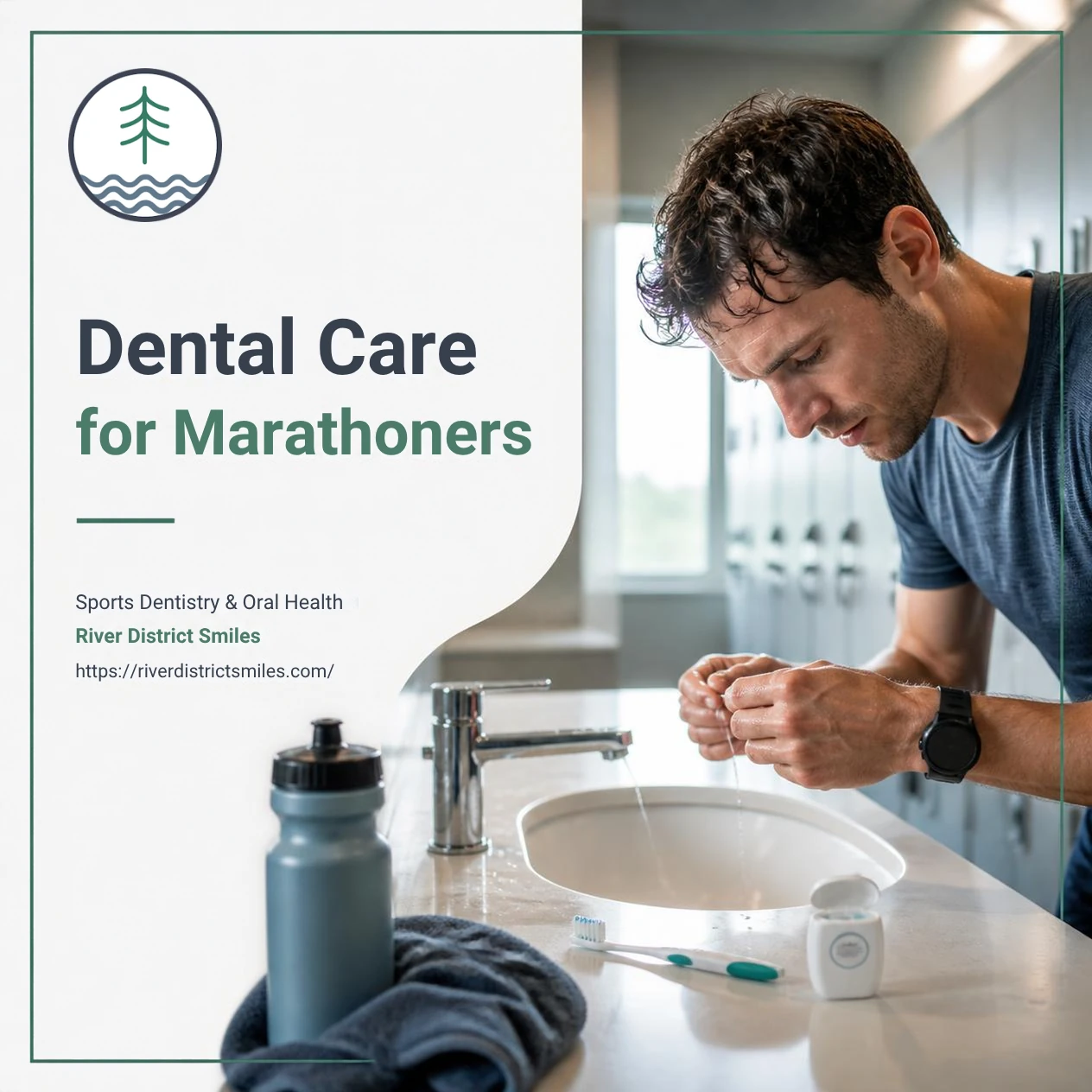
Clean between the teeth once daily with floss or another interdental cleaner.
The ADA continues to recommend twice-daily brushing with fluoride toothpaste and daily interdental cleaning as basic preventive care.
Would Sugar-Free Gum Help?
For some runners, sugar-free gum can be useful after training once they are no longer actively exercising.
Chewing stimulates saliva, which helps clear and neutralize acids.
The ADA includes sugar-free gum among strategies that can promote salivary flow after acid exposure.
That does not replace brushing.
Think of it as an optional tool when your mouth remains dry after a workout and brushing is not practical yet.
What About Reflux During Long Runs?
Some runners experience heartburn or reflux during harder or longer training sessions.
That matters because stomach acid is highly erosive to enamel.
If you experience reflux into your mouth, do not immediately brush.
Rinse with water instead and allow your mouth time to recover.
Frequent exercise-related reflux is also worth discussing with your medical provider rather than simply accepting it as part of marathon training.
From the dentist’s perspective, repeated acid exposure from reflux can sometimes create a characteristic pattern of enamel wear that is different from ordinary cavities.
Should Marathoners Get More Dental Cleanings?
Not automatically.
Training for a marathon does not mean everybody suddenly needs cleanings every three months.
Most patients should follow a preventive schedule based on their actual risk.
More frequent monitoring may make sense if you have:
- A history of frequent cavities
- Dry mouth
- Existing enamel erosion
- Gum disease
- Extensive dental restorations
- Heavy sports-drink consumption
- Significant sensitivity
- Recurrent reflux
- A very high-volume endurance training schedule
At River District Smiles, preventive visits are individualized rather than automatically putting every patient on the same schedule. Their general dentistry approach includes monitoring cavities, gums, existing restorations, enamel wear, and other changes over time.
When Should a Runner See a Dentist Before Race Day?
You do not want race week to be the first time you discover that a tooth has been quietly deteriorating for months.
Consider getting something checked before your event if you notice:
- Pain when biting
- New sensitivity that is getting worse
- A cracked or chipped tooth
- Swelling
- Bleeding gums that are not improving
- A loose filling or crown
- Persistent toothache
- A sore area that does not heal
Dental problems have a habit of becoming noticeable at inconvenient times.
One study of elite and professional athletes found that oral-health problems affected eating, training, and perceived sports performance in a meaningful subset of athletes.
That does not mean every small dental issue threatens your marathon.
It means a tooth that hurts every time you take a cold drink at mile 16 is one problem you would rather address during training than on race weekend.
River District Smiles also advises evaluation for persistent tooth pain, broken teeth, swelling, dental injury, lost restorations, or worsening sensitivity rather than waiting for those problems to become more complicated.
The Bottom Line for Marathoners
You do not need to choose between proper endurance fueling and healthy teeth.
Your body may genuinely need carbohydrates and electrolytes during longer training sessions and races.
The dental goal is simply to manage the exposure intelligently.
If you remember five things, make them these:
- Fuel for performance when you need to.
- Use plain water alongside gels and sports drinks when practical.
- Avoid sipping sugary or acidic drinks longer than necessary.
- Do not brush immediately after significant acid exposure.
- Stay consistent with fluoride toothpaste, interdental cleaning, and preventive dental visits.
Your marathon plan should support your entire body including your mouth.
If you are putting in serious training volume and suddenly noticing sensitivity, enamel changes, dry mouth, or more cavities than usual, the next step is not to abandon your fueling strategy.
It is to figure out which part of your routine is creating the risk and make the smallest change that protects your teeth without undermining your training.
A good dental visit should help you do exactly that.