


Missing teeth can affect far more than your smile. They can make eating uncomfortable, change the way you speak, and even impact your confidence. For many people, snap-in dentures provide an appealing middle ground between traditional removable dentures and full-mouth dental implants. They offer greater stability without requiring as many implants as a permanent fixed restoration.
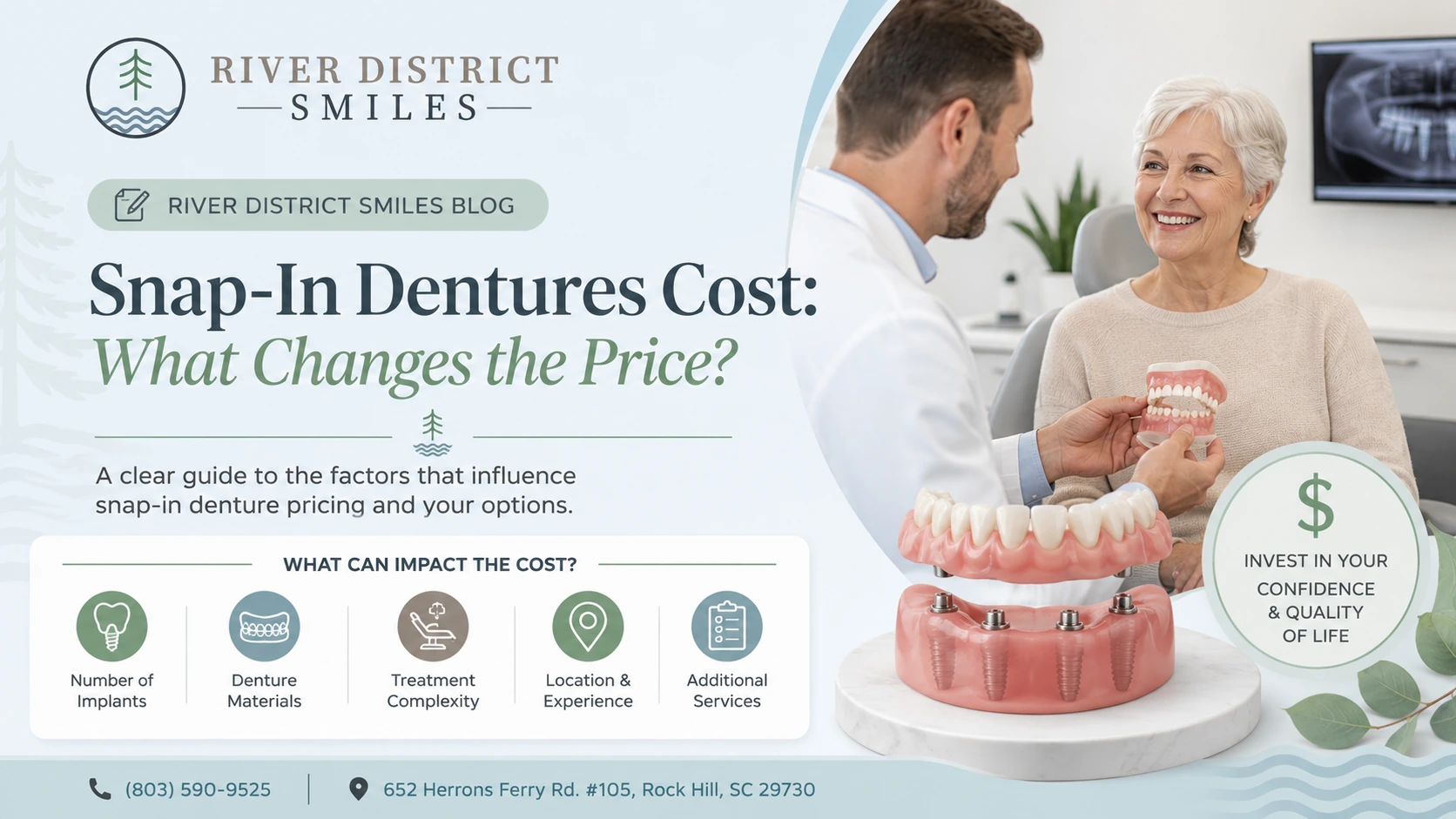
One of the first questions patients ask is, “How much do snap-in dentures cost?” The answer depends on your unique treatment plan. Snap-in dentures typically cost more than traditional dentures because they are supported by dental implants, but the total investment varies based on factors such as the number of implants needed, the materials used, your oral health, and whether additional procedures are required before treatment. Understanding these factors can help you make an informed decision based on long-term value rather than price alone.
Know Your Denture Costs
Understand what affects snap-in denture pricing. Call today to explore your options and get a personalized estimate.
Why Aren’t All Snap-In Dentures the Same Price?
If you’ve searched online, you’ve probably noticed that the cost of snap-in dentures can vary significantly. That isn’t because dental offices randomly choose their fees. Every patient has different oral health needs, treatment goals, and anatomical considerations.
Think of buying a vehicle. Two cars may both get you from point A to point B, but their features, durability, safety technology, and comfort can vary dramatically. Snap-in dentures work much the same way.
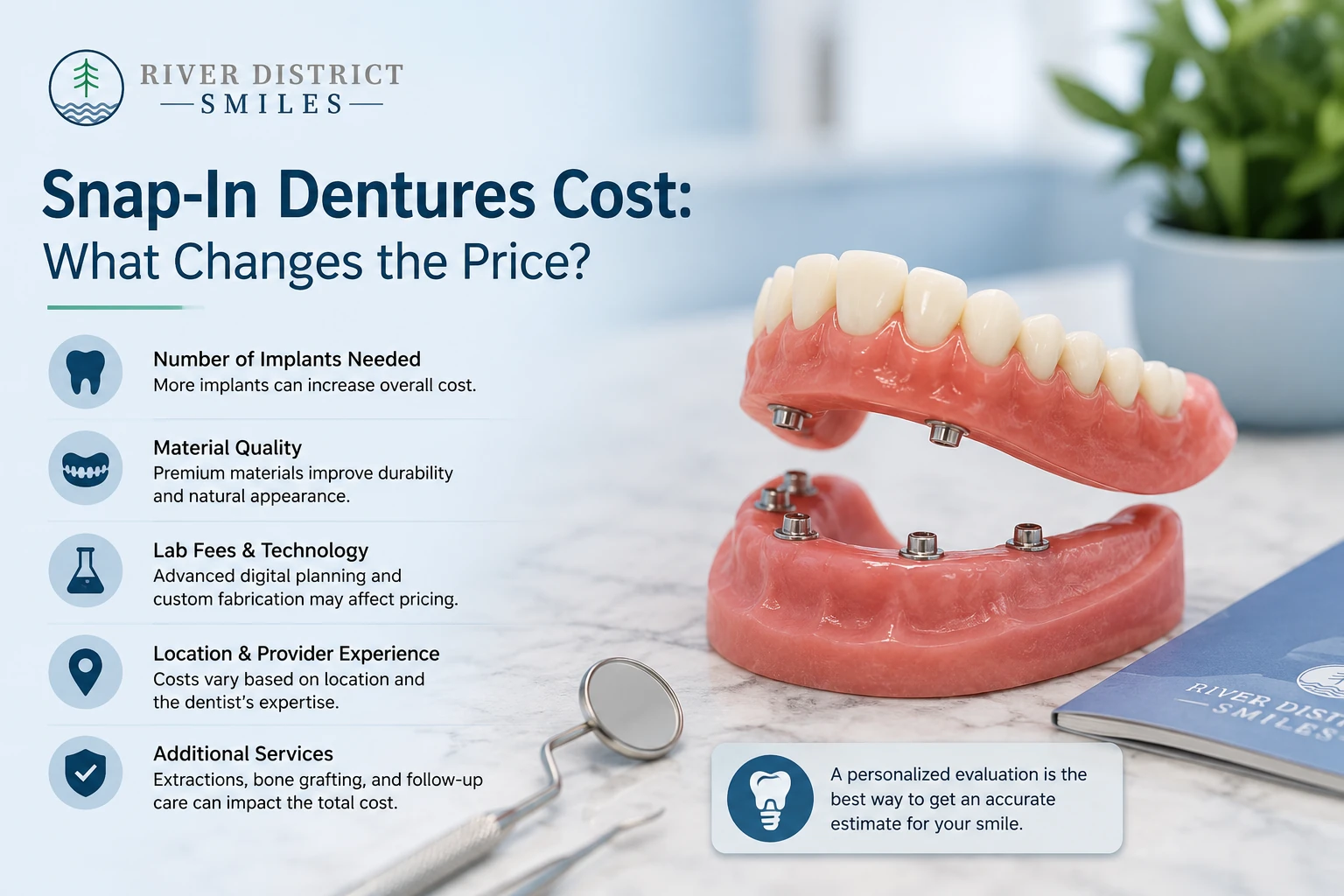
Several factors influence the overall cost, including:
- The number of dental implants required
- Whether you’re replacing an upper or lower denture
- The materials used to fabricate the denture
- The implant attachment system
- Preliminary dental procedures
- The experience of the dental team
- Technology used during treatment
- Geographic location
- Long-term maintenance needs
Understanding each of these factors provides a much clearer picture of where your investment goes.
How the Number of Dental Implants Affects the Cost
One of the biggest factors influencing the cost of snap-in dentures is the number of implants needed to support your denture.
Many lower snap-in dentures are supported by two implants, although some patients benefit from four implants for additional stability. Upper dentures often require more implants because the upper jaw has lower bone density and must withstand greater chewing forces.
Generally speaking:
- Two implants typically cost less than four.
- Four implants usually provide greater stability.
- More implants may improve long-term durability.
- The right number depends on your individual bone structure and treatment goals.
While choosing fewer implants may reduce the initial investment, it isn’t always the best long-term solution. A comprehensive evaluation helps determine the number of implants that will provide the best balance of function, comfort, and longevity.
How Bone Loss Can Increase Snap-In Denture Costs
One of the biggest surprises for many patients is learning they may need additional treatment before implants can be placed.
Dental implants require healthy bone for long-term stability. Unfortunately, after teeth are lost, the jawbone naturally begins to shrink over time. Patients who have worn traditional dentures for many years often experience significant bone loss.
Additional procedures may include:
- Bone grafting
- Ridge augmentation
- Sinus lift procedures
- Extraction of damaged or failing teeth
Although these procedures increase the upfront investment, they create a stronger foundation for successful implant placement. Skipping necessary preparation can increase the risk of implant complications and reduce long-term success.
The Materials Used Matter More Than You Think
Not every snap-in denture is made from the same materials.
Higher-quality materials often provide:
- Better stain resistance
- Greater durability
- Improved aesthetics
- More natural translucency
- Increased fracture resistance
Lower-cost materials may reduce the initial price but can wear faster, stain more easily, or require repairs and replacement sooner.
Many patients find that investing in stronger, more natural-looking materials provides better long-term value while helping their smile maintain its appearance for years.
How Attachment Systems Influence Pricing
Snap-in dentures connect to implants using specialized attachment systems, and the type of system selected can affect both performance and cost.
Ball Attachments
Ball attachments are among the simplest attachment systems and are often one of the more affordable options.
Benefits include:
- Easy maintenance
- Reliable performance
- Lower replacement costs
Locator Attachments
Locator attachments have become one of the most popular options because they provide excellent retention while remaining easy to remove for daily cleaning.
Advantages include:
- Stronger hold
- Comfortable fit
- Replaceable retention inserts
- Less movement while eating and speaking
Bar-Retained Systems
Bar-retained systems use a custom metal bar that connects multiple implants, allowing the denture to attach securely.
Benefits include:
- Excellent stability
- Better force distribution
- Increased durability
Because these systems require additional customization and laboratory work, they generally cost more than other attachment options.
Why Your Dentist’s Experience Can Affect the Cost
Some patients wonder why treatment fees vary between dental offices.
Experience plays an important role in the quality and predictability of implant treatment.
Successful implant dentistry requires careful planning, advanced diagnostics, precise surgical techniques, and meticulous restorative work. Every step contributes to the long-term outcome.
An experienced implant provider often offers:
- Comprehensive treatment planning
- Advanced diagnostic technology
- Precise implant placement
- Better long-term outcomes
- Reduced risk of complications
Choosing treatment based solely on the lowest advertised price can sometimes lead to higher costs later if additional repairs or corrective treatment become necessary.

Teeth Whitening vs. Veneers: Which Makes More Sense?
If you’re considering a brighter, more attractive smile, it’s common to wonder: “Should I just whiten my teeth, or are…
How Advanced Technology Improves Treatment
Modern implant dentistry has evolved significantly over the past decade.
Many dental practices now use advanced technology such as:
- Digital X-rays
- 3D CBCT imaging
- Digital treatment planning
- Computer-guided implant placement
- Digital impressions
These tools help improve precision, enhance patient comfort, and reduce surprises during treatment.
During your consultation, advanced imaging allows the dental team to evaluate bone density, identify important anatomical structures, and determine the most appropriate implant placement for your individual needs. This personalized planning helps improve the long-term success of your restoration.
Your Oral Health Can Affect the Treatment Plan
No two smiles are exactly alike.
Some patients require very little preparation before receiving implants, while others need treatment for existing dental concerns first.
Additional care may include:
- Gum disease treatment
- Tooth extractions
- Infection management
- Bite correction
- Replacement of failing dental work
Addressing these concerns before implant placement helps create the healthiest possible foundation for successful treatment.
Is It Worth Paying More for Better Stability?
Many patients who switch from traditional dentures describe the experience as life-changing.
Traditional dentures may:
- Shift while speaking
- Slip during meals
- Require denture adhesive
- Create sore spots
- Reduce confidence
Snap-in dentures offer significantly greater stability.
Patients often report feeling more comfortable eating foods they previously avoided, speaking more naturally, and smiling with greater confidence.
When viewed over many years of daily use, the additional investment often becomes much easier to justify.
Don’t Forget About Long-Term Maintenance Costs
The initial treatment is only one part of the overall investment.
Like any dental restoration, snap-in dentures require routine maintenance to continue performing their best.
Maintenance may include:
- Professional cleanings
- Replacement of attachment inserts
- Denture adjustments
- Periodic relines
- Repairs if accidental damage occurs
Fortunately, regular maintenance is usually far less expensive than replacing the entire restoration. Routine checkups also help extend the lifespan of both your implants and your denture.
Insurance and Financing Can Affect Your Overall Investment
Dental insurance coverage varies widely.
Some plans may contribute toward:
- Tooth extractions
- Dentures
- Diagnostic imaging
- Portions of implant treatment
Other plans may provide little or no implant coverage.
Many dental practices also offer financing options that allow patients to spread treatment costs into manageable monthly payments.
Rather than focusing only on the total fee, ask about insurance benefits, financing options, and phased treatment plans that may make care more affordable.
The Cheapest Option Isn’t Always the Best Value
One of the most common mistakes patients make is choosing treatment based solely on the lowest advertised price.
Lower-cost treatment may involve compromises in:
- Implant quality
- Denture materials
- Diagnostic planning
- Long-term support
- Follow-up care
A restoration that requires repeated repairs, relines, or early replacement may ultimately cost far more than treatment completed properly the first time.
The goal isn’t simply to spend less today. It’s to invest in a solution that delivers lasting comfort, function, and confidence for years to come.
A Better Smile Is an Investment in Everyday Life
Snap-in dentures do much more than replace missing teeth. They can improve many everyday experiences that people often take for granted.
Patients frequently notice benefits such as:
- Speaking more clearly during conversations
- Enjoying a wider variety of foods
- Smiling naturally in photographs
- Feeling more confident in social situations
- Worrying less about dentures shifting throughout the day
These improvements may not appear on a treatment estimate, but they often become the reasons patients say they wish they had pursued treatment sooner.
When evaluating the cost of snap-in dentures, it’s important to consider not only the procedure itself but also the comfort, confidence, and quality of life that a stable, secure smile can provide.
Frequently Asked Questions
How much do snap-in dentures usually cost?
The cost varies from patient to patient based on factors such as the number of implants required, the materials used, whether bone grafting or extractions are needed, and the complexity of the treatment. A consultation is the best way to receive an accurate estimate.
Are snap-in dentures covered by insurance?
Some dental insurance plans may cover portions of treatment, such as dentures, extractions, or diagnostic imaging. Implant coverage varies by provider, so it’s important to review your benefits with your dental office.
Why do upper snap-in dentures often cost more?
Upper dentures frequently require additional implants because the upper jaw has lower bone density and experiences different chewing forces. This can make treatment more complex than lower snap-in dentures.
How long do snap-in dentures last?
With proper care and regular dental visits, dental implants can last for many years. The denture itself and attachment components may eventually require adjustments, replacement inserts, or repairs as part of normal maintenance.
Are snap-in dentures worth the investment?
Many patients feel they are. Improved stability, greater chewing ability, enhanced comfort, and increased confidence often make snap-in dentures a worthwhile long-term investment compared to traditional removable dentures.
Let River District Smiles Help You Understand Every Dollar of Your Smile Investment
Choosing snap-in dentures is a personal decision, and understanding the cost starts with understanding your unique needs. At River District Smiles, our team takes the time to evaluate your oral health, explain your treatment options, discuss the factors that influence pricing, and answer your questions without pressure. We’ll help you create a personalized treatment plan that fits your smile goals and budget, so you can move forward with confidence knowing exactly what to expect.
Get Clear Answers on Pricing
No more guessing about snap-in denture costs. Schedule a consultation today for clear pricing based on your smile.