

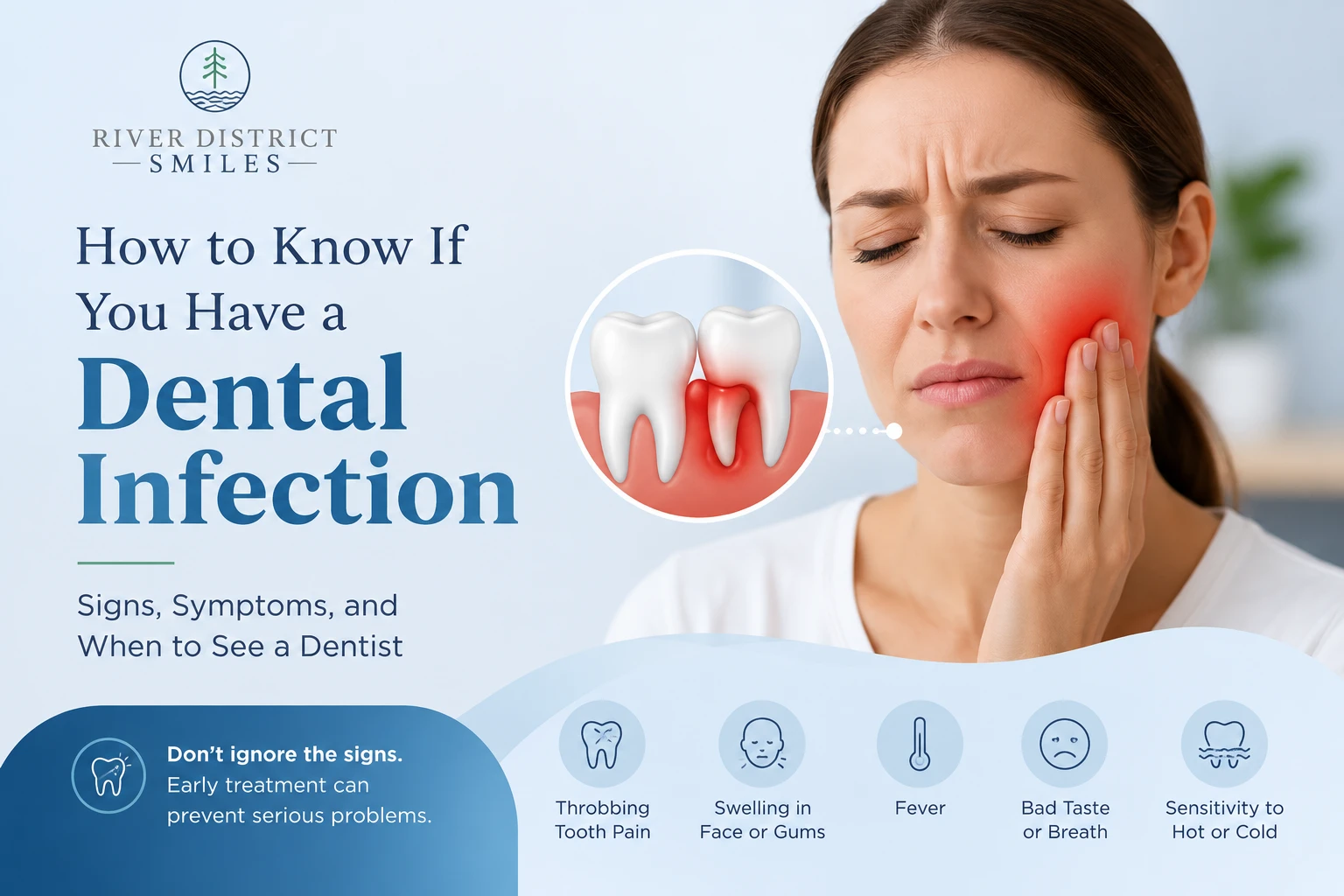


A dental infection can range from a small, manageable issue to a serious problem that requires urgent care. The short answer is: a dental infection often shows persistent pain, swelling, or other changes around a tooth or gum, and it usually requires prompt evaluation by a dentist.
Swollen Gums or Severe Tooth Pain?
Early treatment can prevent bigger dental problems. Call now for trusted care from an experienced dental team.
Common signs of a dental infection
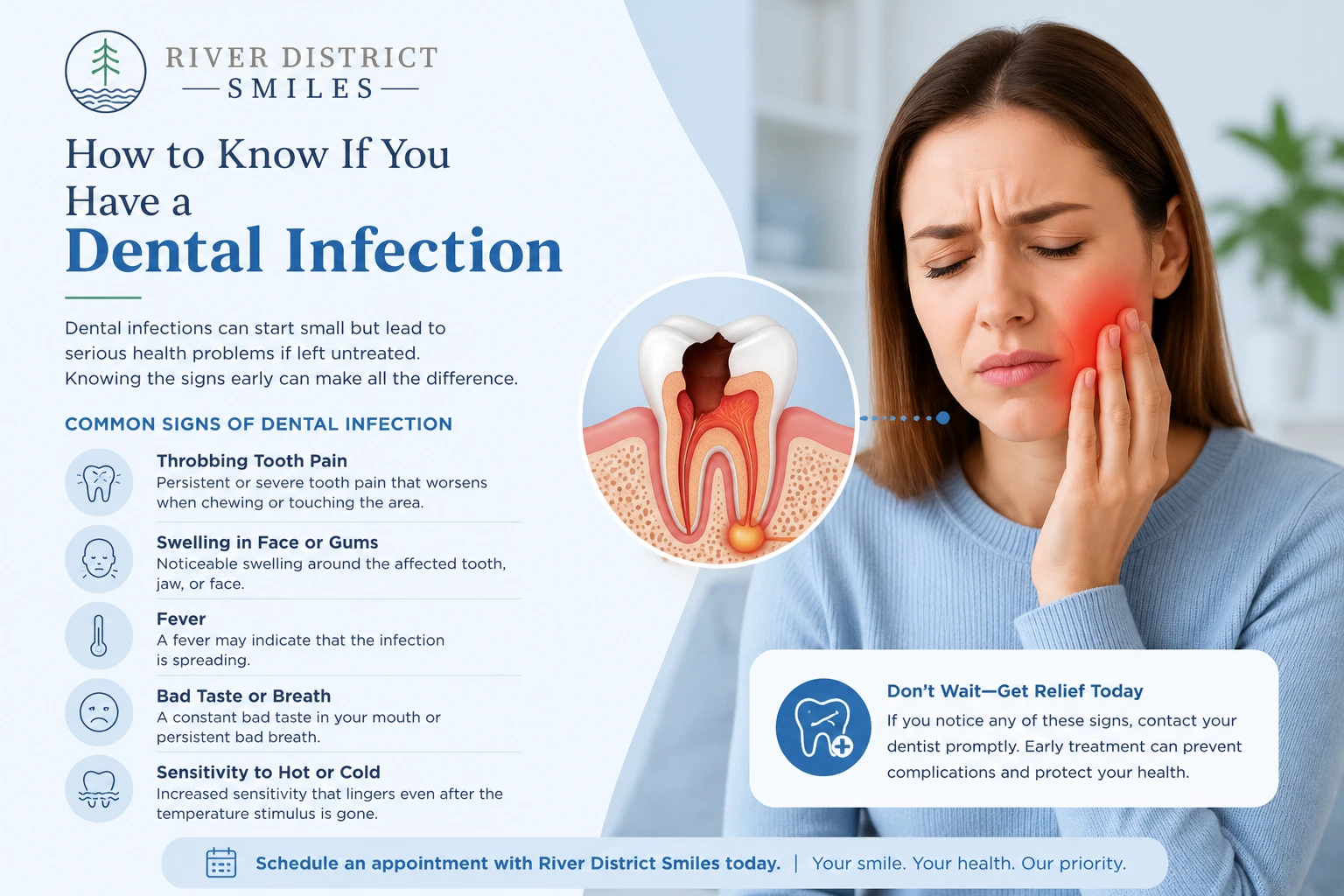
- Persistent or severe tooth pain
- Pain may be throbbing, sharp, or radiating to the jaw, ear, or head
- Often worsens when lying down
- Swelling
- Swelling in the gums, face, or jaw can indicate an abscess
- Redness or tenderness around the affected area is common
- Pus or discharge
- A pocket of pus may form near the tooth or gumline
- You may notice a bad taste in your mouth
- Sensitivity
- Teeth may become highly sensitive to pressure, hot, or cold
- Fever or general malaise
- Infection can trigger systemic symptoms like fever, fatigue, or swollen lymph nodes
- Bad breath or unusual taste
- Persistent bad breath or a foul taste may signal bacterial infection
- Tooth loosening
- Infection affecting the bone or supporting structures can loosen the tooth
Why prompt attention is important
Even a small dental infection can spread if untreated. Risks include:
- Tooth loss
- Abscess formation
- Spread of infection to the jaw, sinus, or other areas
- In rare cases, serious systemic infection
Early treatment usually involves a dentist:
- Draining any abscess if present
- Prescribing antibiotics if necessary
- Performing procedures like root canal therapy or extraction to remove the source

Chipped Tooth: When It’s Cosmetic and When It’s Urgent
A chipped tooth can create two very different situations. Sometimes, a tiny piece of enamel breaks from a front tooth.…

What to do if you suspect an infection
- Call a dentist promptly – infections can worsen quickly
- Do not ignore symptoms – pain or swelling may temporarily improve but the infection can persist
- Use over-the-counter pain relief cautiously – it may help with discomfort but does not treat the infection
- Avoid heat or ice directly on the area unless advised – sometimes swelling can worsen with heat
Bottom line
A dental infection often shows persistent pain, swelling, pus, or systemic symptoms like fever. Even if the symptoms come and go, an infection rarely resolves on its own. The next step is to see a dentist as soon as possible to identify the source, prevent complications, and get appropriate treatment.
At River District Smiles, we focus on diagnosing infections early so treatment is targeted, effective, and as minimally invasive as possible.
Get Relief From Dental Infection Today
If you notice signs of a dental infection, don't delay. Call now to schedule your exam and start treatment as soon as possible.