


Most people ask about the cost of a dental cleaning for one of two reasons: they are trying to stay on track with preventive care, or they have not been in a while and are worried the visit may turn into something more expensive.
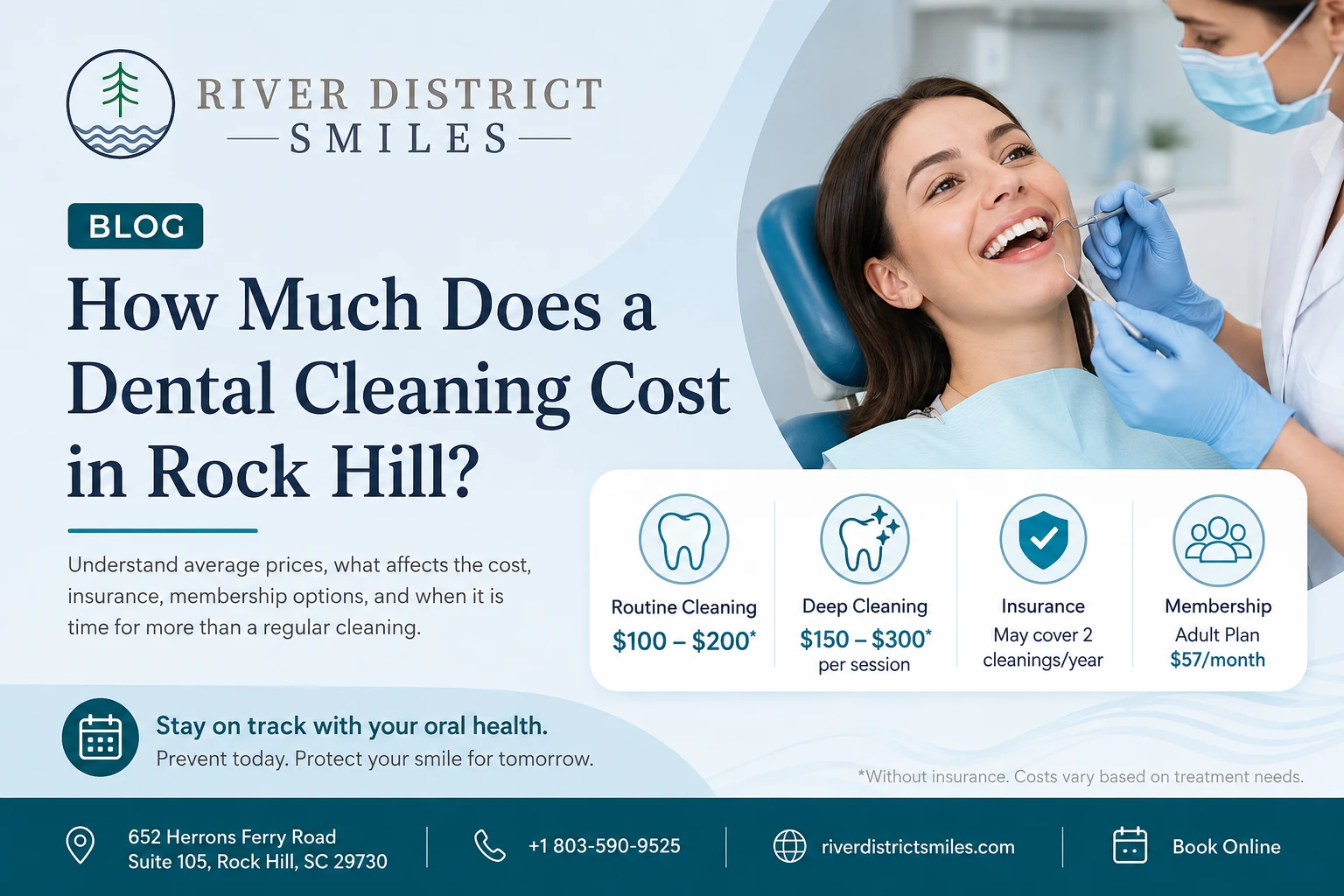
The direct answer is this: a routine dental cleaning without insurance commonly costs around $100 to $200, but the total visit can be higher if you also need an exam, X-rays, fluoride, or a different type of cleaning. GoodRx reports that the average U.S. cost for a dental cleaning without insurance is about $104, with some basic cleanings reaching $200 depending on the provider and location.
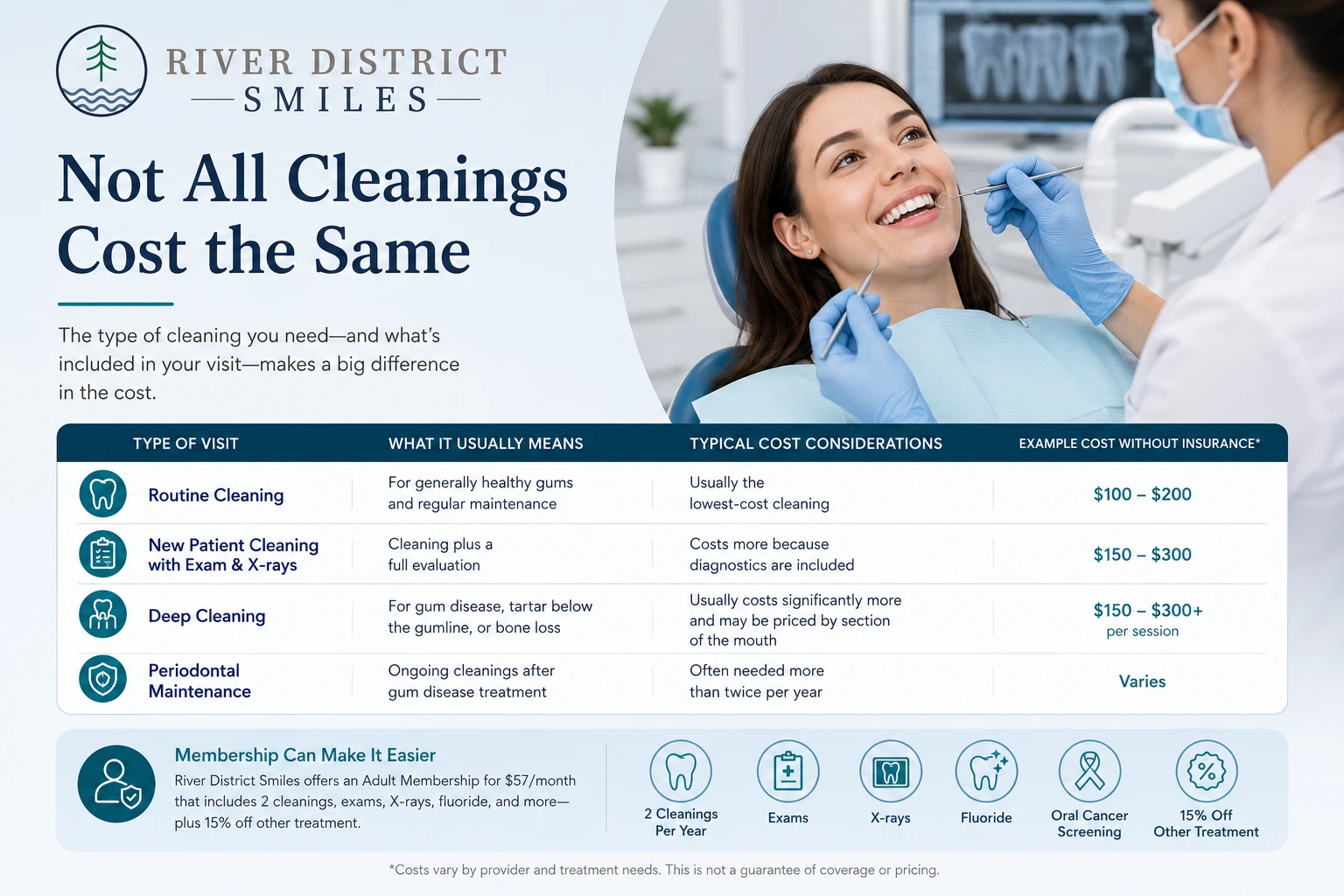
At River District Smiles in Rock Hill, patients without insurance may also have access to an in-house membership option. Their adult membership is listed at $57/month and includes two professional dental cleanings per year, doctor exams, needed X-rays, fluoride, oral cancer screening, periodontal evaluation, TMJ screening, and 15% off other treatment, with a lifetime activation fee.
Need a Dental Cleaning Without Surprise Costs?
Protect your smile with clear pricing and quality care. Call now to book your dental cleaning in Rock Hill.
What affects the cost of a dental cleaning?
A cleaning is not always the same from patient to patient. The price usually depends on what kind of cleaning you need and what is included at the visit.
| Type of visit | What it usually means | Typical cost considerations |
| Routine cleaning | For generally healthy gums and regular maintenance | Usually the lowest-cost cleaning |
| New patient cleaning with exam and X-rays | Cleaning plus a full evaluation | Costs more because diagnostics are included |
| Deep cleaning | For gum disease, tartar below the gumline, or bone loss | Usually costs significantly more and may be priced by section of the mouth |
| Periodontal maintenance | Ongoing cleanings after gum disease treatment | Often needed more than twice per year |
GoodRx notes that deep cleanings, also called scaling and root planing, can cost about $150 to $300 per session, and they may require more than one visit depending on the condition of the gums.
Why a “regular cleaning” may not be enough
This is where many patients get frustrated, and understandably so.
You may schedule a cleaning expecting a simple polish, but if there is gum disease, heavy tartar buildup, bleeding, or pocketing around the teeth, a routine cleaning may not fully treat the problem. In plain terms, a regular cleaning focuses above and slightly around the gumline. A deep cleaning is used when bacteria and tartar have moved deeper below the gums.
That does not mean you did anything wrong. It just means the dentist and hygienist need to treat the actual condition of your mouth, not just perform the cheapest or quickest version of a cleaning.
Does dental insurance cover cleanings?
Many dental insurance plans cover preventive cleanings, often twice per year, but the details depend on your plan. Some plans may cover the cleaning but not certain X-rays, fluoride, or additional periodontal care. Others may require you to stay in-network.
The best question to ask is not just, “Do I have cleanings covered?” It is:
“What exactly is included, and what would I owe if I need more than a routine cleaning?”
What if you do not have dental insurance?
Without insurance, you generally have three options:
- Pay per visit
- Use an in-house dental membership plan
- Look for a community clinic or lower-cost care option if budget is the main barrier
For patients who plan to keep up with routine care, a membership plan may be worth comparing because it can bundle cleanings, exams, and X-rays into a predictable monthly cost. River District Smiles lists child, adult, and periodontal membership options, including a periodontal plan for patients with gum disease who may need more frequent maintenance cleanings.
When should you schedule sooner rather than later?
A dental cleaning is usually not an emergency, but you should not put it off too long if you have:
- Bleeding gums when brushing or flossing
- Bad breath that does not improve
- Tartar buildup you can see or feel
- Loose teeth
- Gum recession
- Tooth sensitivity
- A history of gum disease
- More than a year since your last dental visit
If everything feels fine, a routine visit is still useful because cavities and gum disease can develop quietly before they become painful.
The bottom line
For most Rock Hill patients, a routine dental cleaning may fall somewhere around $100 to $200 without insurance, but the real cost depends on whether you need only a preventive cleaning or a more involved gum-health visit.
The next step is not guessing. It is finding out whether your mouth is in the routine-cleaning category or the gum-treatment category. A good dental visit should leave you understanding what you need, what it costs, and why — not feeling pressured into treatment you do not understand.
Wondering What a Dental Cleaning Costs in Rock Hill?
Get affordable, professional dental cleaning from a trusted local dental team. Call today to schedule your visit.