

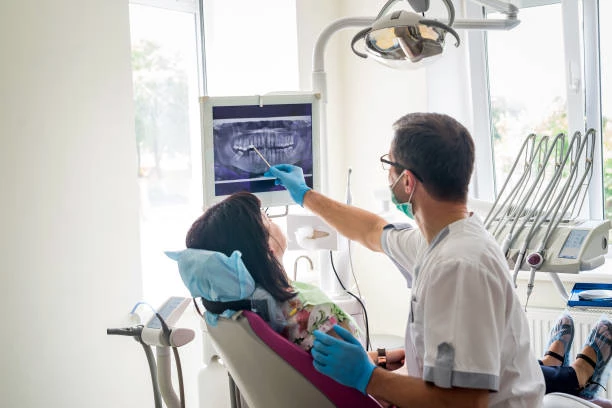


Smooth, Stress-Free Extractions to Restore Relief in Rock Hill SC
A tooth extraction may be necessary when severe decay, fracture, infection, advanced periodontal disease, trauma, or another condition leaves a tooth with a poor long-term outlook.
At River District Smiles, we provide tooth extraction care for patients in Rock Hill, SC, and surrounding communities. Before recommending removal, we evaluate the condition of the tooth, surrounding gums and bone, your symptoms, existing dental work, and whether a reasonable restorative option remains.
Our goal is not simply to remove a painful tooth. It is to understand why the tooth is causing problems, explain your options clearly, and recommend an appropriate treatment based on its long-term outlook.
When Is a Tooth Extraction Necessary?
Dentists generally prefer to preserve a natural tooth when doing so is appropriate and predictable.
However, some teeth become too damaged or compromised to maintain successfully.
Extraction may be considered because of:
- Extensive tooth decay
- A severe crack or fracture
- Dental infection involving a tooth with a poor restorative outlook
- Advanced periodontal disease
- Significant dental trauma
- Problematic wisdom teeth
- Severe tooth mobility
- Certain orthodontic treatment plans
- Insufficient healthy structure for another restoration
Having tooth pain does not automatically mean the tooth needs to be removed.
An examination is needed to determine the cause of the symptoms and whether the tooth can reasonably be restored.

Severe Tooth Decay
Small and moderate cavities can often be restored with fillings.
When significantly more natural tooth structure has been lost, a crown or another restorative approach may sometimes provide additional support.
Extraction may become appropriate when decay has progressed to the point that too little healthy structure remains for a predictable restoration.
This may occur when:
- Decay extends deeply below the gumline
- Several tooth walls have been destroyed
- The remaining tooth has fractured
- Existing restorations have failed
- The tooth cannot provide adequate support for further restorative treatment
The decision is based on how much healthy tooth remains, not simply on the size of the visible cavity.

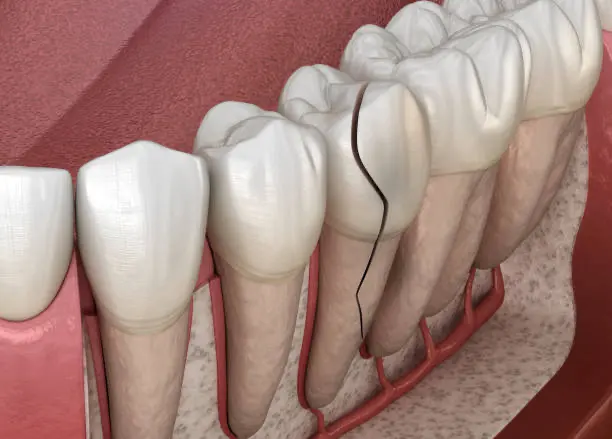
Cracked or Fractured Teeth
A crack does not automatically require extraction.
Some cracked or broken teeth can be restored with:
- Dental bonding
- A filling
- An onlay
- A crown
Extraction becomes more likely when a fracture extends into an unfavorable area, separates the tooth into sections, or leaves insufficient healthy structure for predictable restoration.
Symptoms of a cracked tooth may include:
- Sharp pain while biting
- Pain when releasing your bite
- Intermittent sensitivity
- Cold sensitivity
- A visible fracture
- A piece of tooth breaking away
Digital imaging and a clinical examination can help determine the extent of the damage.

Dental Infection
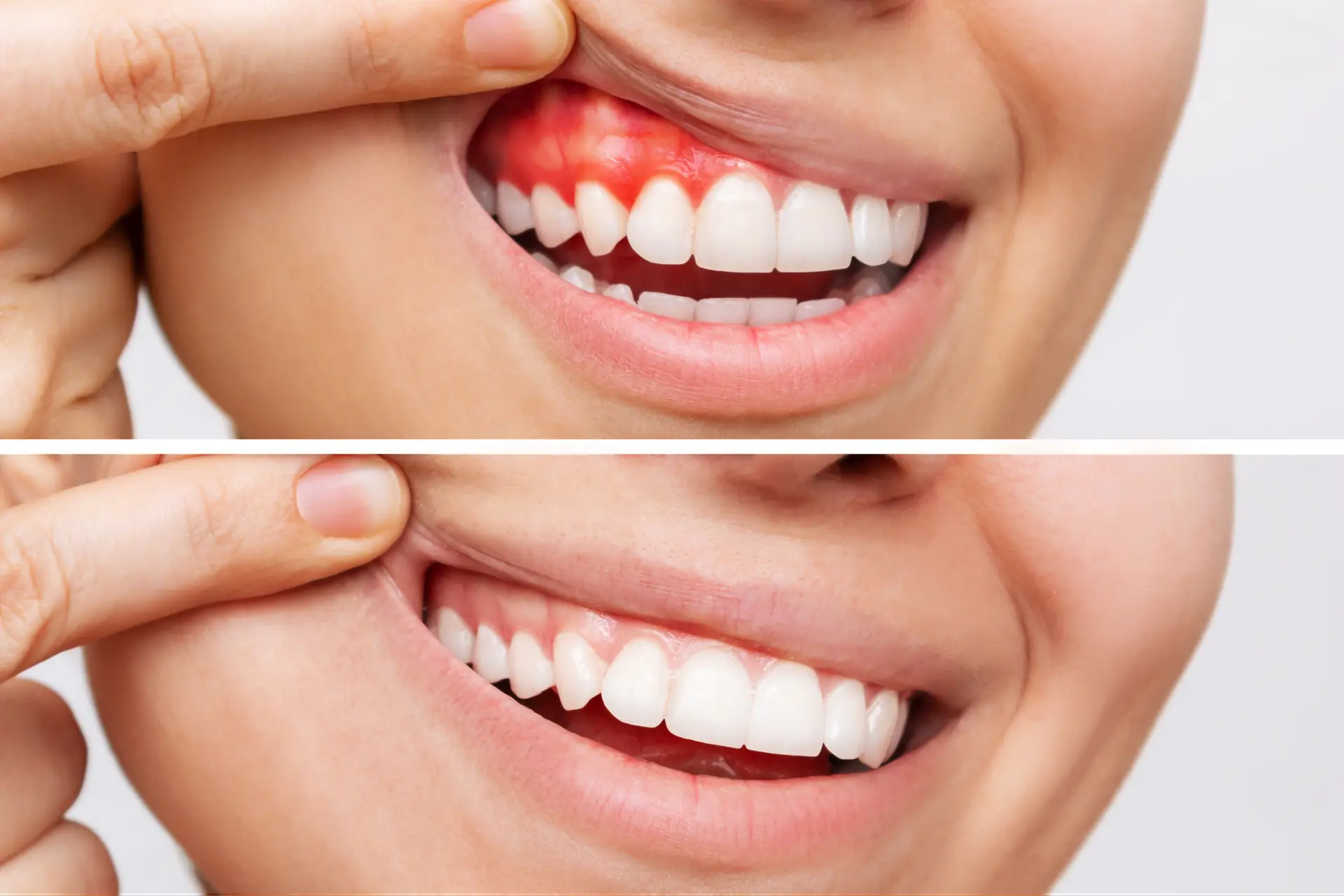
A dental infection deserves prompt evaluation, especially when it causes pain, swelling, drainage, or facial tenderness.
Possible symptoms include:
- Throbbing tooth pain
- Pain when chewing
- Gum swelling
- Facial swelling
- Drainage
- An unpleasant taste
- Fever associated with dental symptoms
- Tenderness around the affected tooth
Not every infected tooth needs to be extracted.
River District Smiles can evaluate the affected area and use diagnostic imaging when appropriate to determine what may be causing the infection and whether the tooth has a reasonable restorative outlook.
Depending on the diagnosis, available care through our practice may include restorative treatment, periodontal care, repair of damaged dental work, tooth extraction, medication when clinically indicated, or another appropriate option.
If your condition requires treatment outside the services available through River District Smiles, our team can explain the findings and discuss the appropriate next step.

Advanced Periodontal Disease
Periodontal disease affects the gums and supporting structures around the teeth.
Early and moderate periodontal problems can often be managed through appropriate treatment and ongoing maintenance.
Care may include:
- Professional dental cleaning
- Scaling and root planing
- Periodontal maintenance
- Improved home care
- More frequent monitoring
In advanced cases, substantial supporting bone may be lost.
A tooth may eventually become so mobile or poorly supported that maintaining it is no longer predictable.
Extraction may then be considered.
Removing one severely compromised tooth does not treat periodontal disease throughout the rest of the mouth. Ongoing gum care remains important for the remaining teeth.
Dental Trauma
Falls, sports accidents, vehicle collisions, and other injuries can significantly damage a tooth.
A traumatized tooth may become:
- Chipped
- Cracked
- Broken
- Loose
- Displaced
- Completely knocked out
Some injured teeth can be stabilized or restored.
Others may be damaged too severely to maintain.
Prompt evaluation is especially important after significant trauma because the visible damage may not show the full extent of the injury.
For serious facial trauma, suspected jaw fracture, uncontrolled bleeding, difficulty breathing, or loss of consciousness, seek emergency medical care.

Problematic Wisdom Teeth
Wisdom teeth do not automatically need to be removed.
Some erupt normally, remain healthy, and can be kept.
Extraction may be considered when a wisdom tooth causes or contributes to problems such as:
- Repeated gum inflammation
- Pain
- Infection
- Tooth decay
- Damage to a neighboring tooth
- Difficulty keeping the area clean
- Unfavorable positioning
- Certain cyst-related concerns
Impacted wisdom teeth should be evaluated individually.
The decision to remove them depends on their position, symptoms, surrounding structures, and long-term risk.

Orthodontic Reasons for Tooth Extraction
In selected orthodontic cases, tooth removal may be recommended to create space or help address a significant bite or crowding problem.
Extraction in this setting is generally part of a larger orthodontic treatment plan.
Removing a tooth by itself does not cause crowded teeth to straighten automatically.
The recommendation should come from careful evaluation of:
- Tooth position
- Jaw size
- Amount of crowding
- Bite relationships
- Overall orthodontic goals
Many orthodontic cases can also be treated without tooth removal.



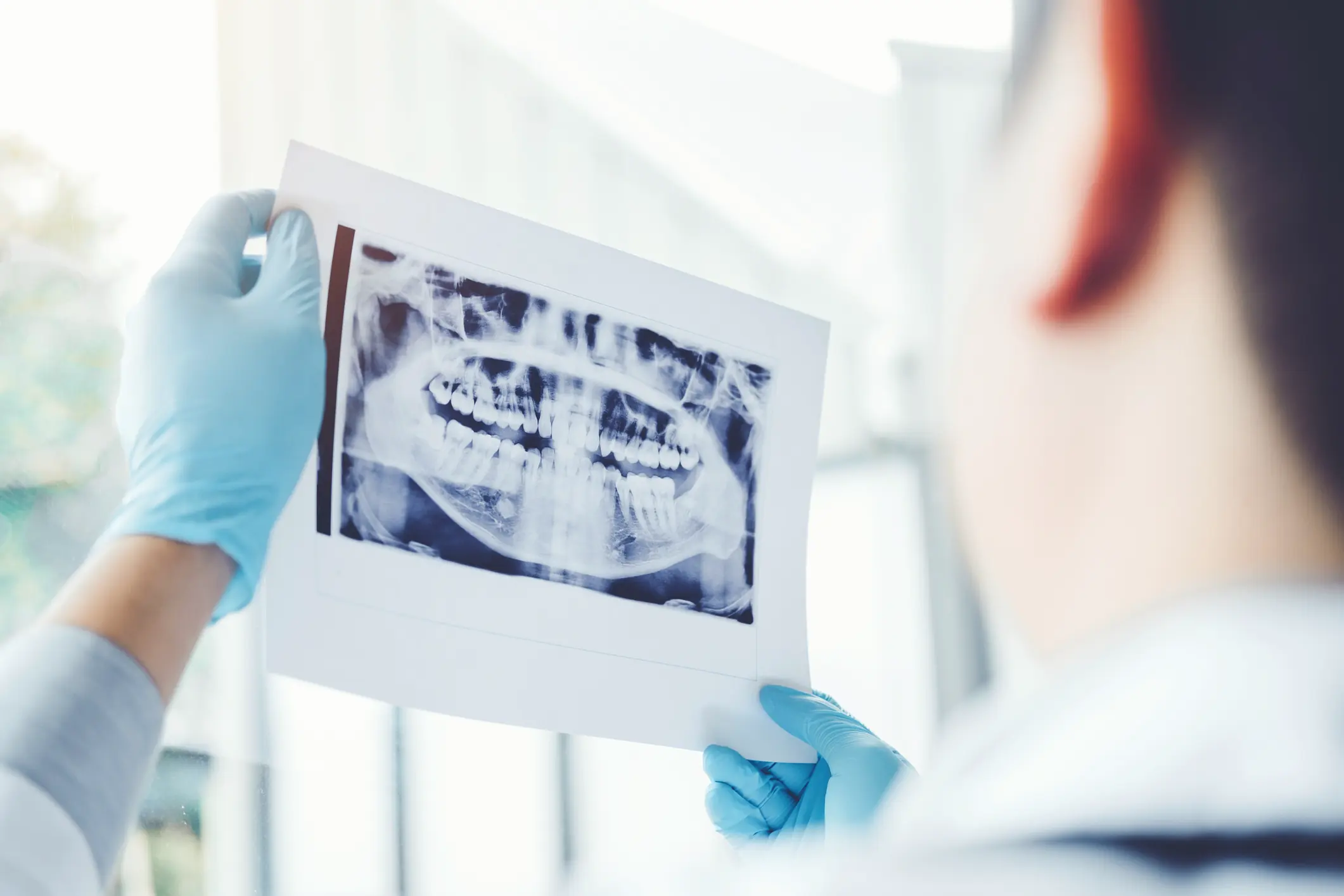

How Do We Decide Whether Extraction Is the Right Choice?
Every extraction decision should begin with diagnosis.
At River District Smiles, we may evaluate:
- Amount of healthy tooth structure
- Depth of decay
- Cracks or fractures
- Existing fillings or crowns
- Tooth mobility
- Gum health
- Bone support
- Infection
- Bite
- Symptoms
- Medical history
- Long-term treatment goals
Digital X-rays or other appropriate imaging may provide additional information about the tooth and surrounding structures.
If the tooth has a reasonable restorative outlook, we can discuss more conservative options.
If maintaining the tooth is unlikely to provide a predictable result, extraction may be the more appropriate choice.
What Are the Different Types of Tooth Extractions?
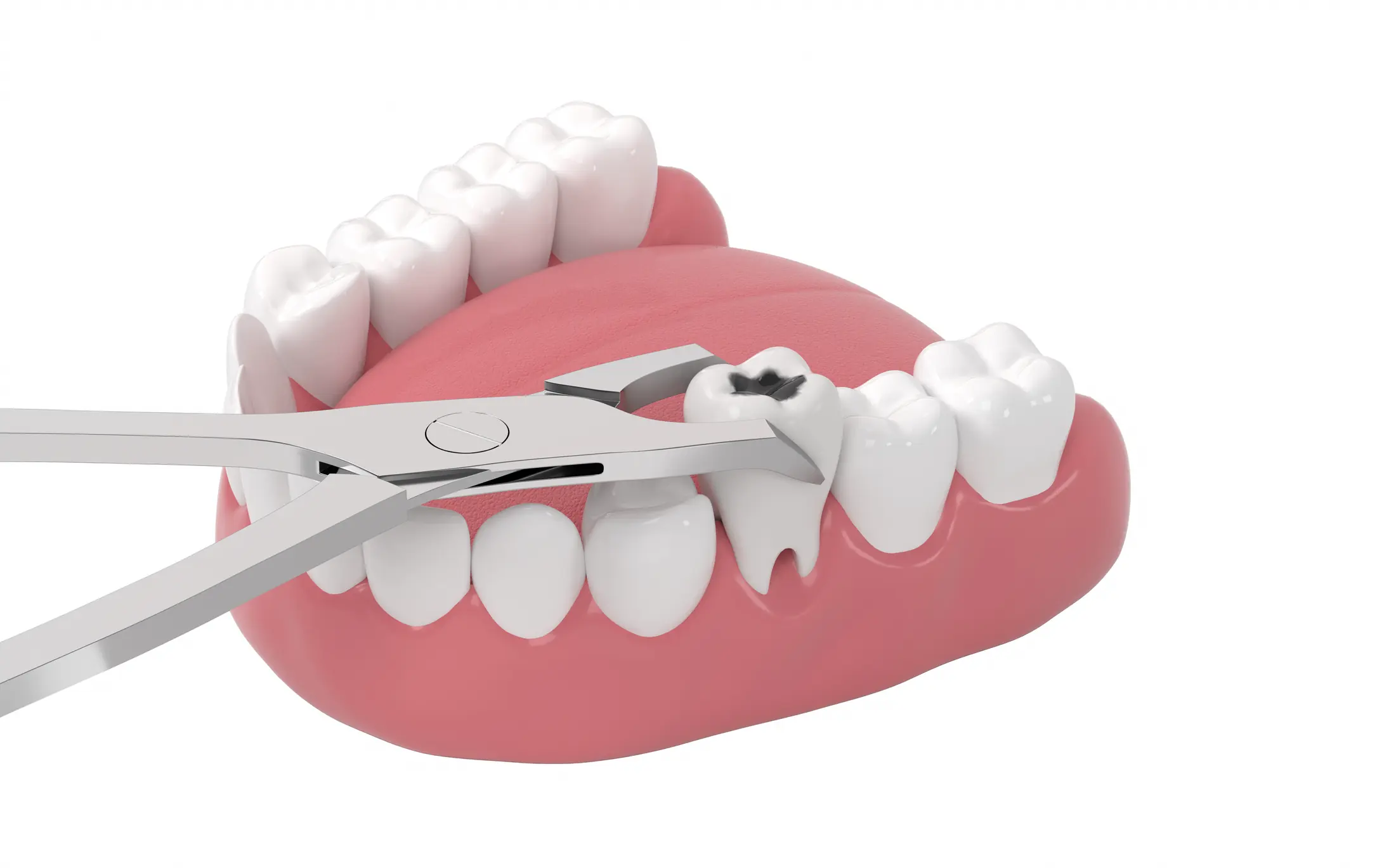
The extraction technique depends on the position and condition of the tooth.
Simple Tooth Extraction
A simple extraction may be possible when the tooth is visible above the gumline and can be accessed normally.
The area is numbed with local anesthesia.
The dentist carefully loosens the tooth and removes it from the socket.
The exact procedure varies according to the shape and condition of the tooth.
Surgical Tooth Extraction
A surgical approach may be necessary when:
- A tooth is broken near or below the gumline
- A tooth is impacted
- The tooth cannot be accessed normally
- Additional tissue or bone management is needed
- The tooth needs to be removed in sections
The procedure is planned according to the individual anatomy and condition of the tooth.
Wisdom Tooth Extraction
Wisdom teeth may require either a straightforward or surgical extraction depending on how they have erupted.
An impacted wisdom tooth may remain partially or completely beneath the gum or surrounding bone.
Imaging can help evaluate:
- Tooth position
- Nearby teeth
- Available space
- Surrounding bone
- Other important anatomical structures
Not every wisdom tooth has the same level of complexity.
Extraction of a Severely Damaged or Infected Tooth
When a tooth has been significantly compromised by decay, fracture, or infection, extraction may be considered if predictable restoration is no longer possible.
The purpose is to remove a tooth that cannot reasonably be maintained and allow the affected area to heal.
The dentist will also evaluate whether treatment for surrounding tissues or medication is appropriate based on the diagnosis.
What Happens During a Tooth Extraction Appointment?
Understanding the process can make the appointment feel more manageable.
Step 1: Examination and Imaging
The dentist examines the tooth and surrounding tissues.
Diagnostic imaging may be recommended to evaluate:
- Tooth position
- Supporting bone
- Fractures
- Existing restorations
- Nearby teeth
- Other anatomical considerations
We also review your symptoms, dental history, and relevant medical history.
Step 2: Treatment Discussion
Before treatment begins, we explain:
- Why extraction is being recommended
- Whether another option may be reasonable
- What type of extraction is anticipated
- What to expect during recovery
- Whether replacement may eventually be beneficial
This is an opportunity to ask questions before making a treatment decision.
Step 3: Local Anesthesia
Local anesthesia is used to numb the treatment area.
Patients may still notice pressure or movement during an extraction, but the goal is to prevent sharp procedural pain.
Additional comfort options may be discussed when appropriate based on the individual patient and planned procedure.
Step 4: Tooth Removal
The dentist carefully removes the tooth using a technique appropriate for its position and condition.
The procedure may be relatively straightforward or require additional steps in more complex situations.
Step 5: Site Evaluation
After removal, the extraction site is examined and managed as appropriate.
Sutures may be used in some cases.
Step 6: Gauze and Aftercare Instructions
Gauze may be placed to help control bleeding and support formation of a blood clot.
Before you leave, we explain how to care for the area at home and what symptoms should prompt a call to the office.
Is Tooth Extraction Painful?
Local anesthesia is used to numb the treatment area.
Patients commonly feel pressure or movement during the procedure rather than sharp pain.
After the anesthesia wears off, some soreness and swelling may occur.
The amount varies according to:
- Tooth location
- Extraction complexity
- Number of teeth removed
- Individual healing
- Existing inflammation
- Overall health
Contact the dental office if discomfort is severe, unexpectedly increasing, or accompanied by concerning symptoms.
What Should You Expect After an Extraction?
Healing is different for every patient.
During the first part of recovery, you may experience:
- Mild bleeding or oozing
- Soreness
- Swelling
- Tenderness around the site
- Temporary difficulty chewing on that side
These symptoms should generally trend toward improvement rather than worsening.
Follow the instructions provided for your individual procedure.
Tooth Extraction Aftercare
Protecting the extraction site is important during early healing.
Follow Gauze Instructions
Bite on gauze as directed to help control bleeding.
Replace it according to the instructions provided by the dental team.
Protect the Blood Clot
A blood clot forms inside the extraction socket and plays an important role in healing.
Avoid actions that may disturb it during the early recovery period.
Avoid Straws Initially
Suction may interfere with the developing clot.
Follow your dentist’s instructions about when it is appropriate to resume using straws.
Avoid Smoking and Vaping
Smoking and vaping can interfere with oral healing and increase the risk of complications.
Ask your dentist when it is appropriate to resume if you use tobacco or nicotine products.
Choose Softer Foods
Initially, foods such as yogurt, eggs, soup, mashed vegetables, and other softer options may be easier to manage.
Gradually return to your normal diet according to comfort and your dentist’s instructions.
Keep Your Mouth Clean
Continue appropriate oral hygiene while avoiding unnecessary irritation of the extraction site.
Your dental team will explain how and when to begin cleaning near the area.
Use Medication as Directed
Follow instructions for prescription or over-the-counter medication.
Do not exceed label or prescription directions.
What Is Dry Socket?
Dry socket can occur when the blood clot within an extraction site is lost or breaks down before healing has progressed sufficiently.
Possible signs include:
- Increasing pain several days after extraction
- Pain radiating toward the ear, jaw, or temple
- An unpleasant taste
- Bad breath
- An extraction site that appears unusually empty
Pain that becomes substantially worse rather than gradually improving should be evaluated.
Dry socket can usually be managed with appropriate dental care.
When Should You Call After an Extraction?
Contact River District Smiles if you experience:
- Bleeding that does not slow as expected
- Increasing swelling
- Severe or worsening pain
- Fever associated with dental symptoms
- Drainage
- An unpleasant taste with worsening symptoms
- Difficulty opening your mouth that is getting worse
- Questions about your medication or aftercare
Seek emergency medical attention for difficulty breathing, difficulty swallowing, rapidly spreading facial or neck swelling, serious facial trauma, or another potentially life-threatening condition.
How Long Does Tooth Extraction Recovery Take?
There is no exact recovery timeline that applies to everyone.
Initial soreness and swelling often improve during the first several days, but the gum tissue and socket continue healing after you begin feeling better.
Recovery can vary depending on:
- Type of extraction
- Tooth location
- Surgical complexity
- Health history
- Smoking or nicotine use
- Oral hygiene
- Aftercare
- Individual healing response
A surgical extraction may require a different recovery period from a straightforward extraction.
Follow your personalized instructions rather than relying on a fixed online timeline.
What Are the Benefits and Considerations of Tooth Extraction?
Extraction can be an appropriate treatment, but it also creates a missing-tooth space that may need additional planning.
Potential Benefits
When removal is clinically appropriate, extraction may:
- Remove a severely damaged tooth
- Eliminate a tooth with a poor restorative outlook
- Address a source of significant dental pain
- Allow infected or inflamed surrounding tissues to be managed
- Create space when included in an appropriate orthodontic plan
- Prepare an area for future tooth replacement when needed
Important Considerations
Extraction may also involve:
- A healing period
- Temporary diet changes
- Short-term tenderness or swelling
- A missing-tooth space
- Possible future tooth-replacement treatment
The benefits and limitations should be considered together before treatment.
Does Every Extracted Tooth Need to Be Replaced?
No.
Whether replacement is beneficial depends on which tooth was removed and how the missing space affects function.
Wisdom teeth generally do not require replacement.
For many other permanent teeth, replacement may be recommended to restore chewing, appearance, or support within the bite.
Your dentist can explain what may happen if the space is left untreated.
Dental Implant After Tooth Extraction
A dental implant is one option for replacing a missing permanent tooth.
The implant is placed into the jawbone and can support a custom crown.
Potential benefits include:
- Fixed tooth replacement
- Independent support
- No need to prepare neighboring healthy teeth solely for bridge support
- Natural-looking restorative options
Implant candidacy depends on:
- Bone
- Gum health
- Tooth location
- Medical history
- Smoking
- Bite
- Treatment goals
Some patients may be candidates for implant placement close to the time of extraction, while others may benefit from a period of healing first.
Dental Bridge After Extraction
A traditional dental bridge replaces a missing tooth using neighboring teeth for support.
A bridge may be appropriate when:
- Supporting teeth are healthy enough
- Neighboring teeth already require significant restoration
- Implant treatment is not preferred
- The patient wants a fixed tooth replacement
The dentist can explain how a bridge compares with an implant for your individual situation.
Partial Denture After Tooth Extraction
A removable partial denture can replace one or several missing teeth.
This may be an appropriate option when:
- Several teeth are missing
- A removable approach is preferred
- Implant treatment is not appropriate
- A lower initial-cost option is needed
Different replacement choices involve different maintenance requirements, costs, and treatment timelines.
Can a Dental Implant Be Placed Immediately After Extraction?
Sometimes.
Immediate implant placement may be possible in selected situations, but it should not be assumed for every extracted tooth.
Factors include:
- Bone quality and quantity
- Gum condition
- Tooth location
- Infection or inflammation
- Implant stability
- Overall treatment plan
In other cases, allowing the extraction site to heal before implant placement may be the more appropriate approach.
Do You Need Bone Grafting After an Extraction?
Not every extraction requires bone grafting.
A graft may be considered when maintaining or rebuilding bone volume is important for future restorative treatment, particularly when implant placement is being considered.
Whether grafting is appropriate depends on:
- Tooth location
- Existing bone
- Extraction-site anatomy
- Future treatment plans
The dentist can explain whether it offers a meaningful benefit in your case.
How Can You Reduce the Risk of Needing Future Extractions?
Not every extraction can be prevented.
Trauma, problematic wisdom teeth, and certain orthodontic situations may still require tooth removal.
However, many extractions related to decay and periodontal disease may be less likely with consistent preventive care.
Helpful habits include:
- Brush twice daily with fluoride toothpaste
- Clean between teeth every day
- Attend recommended dental examinations
- Have professional cleanings
- Treat cavities before they become extensive
- Repair damaged fillings or crowns
- Manage periodontal disease
- Protect teeth during sports
- Avoid chewing ice
- Avoid using teeth as tools
- Address grinding and clenching
Early evaluation often gives you more treatment options.
Why Choose River District Smiles for Tooth Extractions?
Individualized Evaluation
We do not assume a painful or damaged tooth automatically needs to be removed.
We first evaluate whether maintaining it is a reasonable option.
Digital Diagnostic Technology
Digital imaging may help us understand tooth position, surrounding bone, and other factors that influence treatment planning.
Clear Treatment Explanations
We explain why extraction may be recommended and discuss appropriate alternatives when available.
Restorative and Implant Options
When a permanent tooth needs to be replaced, we can discuss options such as dental implants, bridges, and removable tooth replacement when appropriate.
Patient-Focused Care
We take time to discuss the procedure, comfort considerations, aftercare, and expected recovery before treatment.
Appropriate Next-Step Guidance
If your condition requires treatment outside the services available through River District Smiles, we can explain our findings and discuss the appropriate next step.
Find Out Whether Tooth Extraction Is the Right Choice
A painful or damaged tooth does not automatically need to be removed.
The first question is whether the tooth has a reasonable long-term outlook.
Sometimes a filling, crown, periodontal treatment, or another restorative approach can help maintain it.
In other cases, decay, fracture, infection, periodontal damage, trauma, or another problem may leave the tooth too compromised for predictable restoration.
When extraction is appropriate, careful planning should include both the immediate removal and what happens afterward.
That may involve allowing the area to heal without replacement or planning a dental implant, bridge, or removable option depending on the location of the missing tooth.
Schedule a Tooth Extraction Evaluation in Rock Hill, SC
At River District Smiles, we provide tooth extraction and restorative dental care for patients in Rock Hill, SC, and surrounding communities.
If you have persistent tooth pain, swelling, a severely damaged tooth, dental infection, significant mobility, or another concern, our team can examine the area and determine whether the tooth can be maintained or whether removal may be appropriate.
We can explain the type of extraction anticipated, what to expect during recovery, and whether replacing the tooth may benefit your oral health.
If your condition requires care outside the services available through River District Smiles, we can explain our findings and discuss the appropriate next step.
Contact River District Smiles to schedule a tooth extraction evaluation in Rock Hill, SC.
Experience the River District Smiles Difference
Drs. Matthew and Emily Hubis welcome patients of all ages for personalized general and cosmetic dental care in Rock Hill, SC.
If you are worried that a painful, damaged, loose, or infected tooth may need to be removed, schedule an evaluation with River District Smiles to understand the condition of the tooth and your available treatment options.
What Are the Different Types of Tooth Extractions?
The extraction technique depends on the position and condition of the tooth.
Simple Tooth Extraction
A simple extraction may be possible when the tooth is visible above the gumline and can be accessed normally.
The area is numbed with local anesthesia.
The dentist carefully loosens the tooth and removes it from the socket.
The exact procedure varies according to the shape and condition of the tooth.
Surgical Tooth Extraction
A surgical approach may be necessary when:
- A tooth is broken near or below the gumline
- A tooth is impacted
- The tooth cannot be accessed normally
- Additional tissue or bone management is needed
- The tooth needs to be removed in sections
The procedure is planned according to the individual anatomy and condition of the tooth.
Wisdom Tooth Extraction
Wisdom teeth may require either a straightforward or surgical extraction depending on how they have erupted.
An impacted wisdom tooth may remain partially or completely beneath the gum or surrounding bone.
Imaging can help evaluate:
- Tooth position
- Nearby teeth
- Available space
- Surrounding bone
- Other important anatomical structures
Not every wisdom tooth has the same level of complexity.
Extraction of a Severely Damaged or Infected Tooth
When a tooth has been significantly compromised by decay, fracture, or infection, extraction may be considered if predictable restoration is no longer possible.
The purpose is to remove a tooth that cannot reasonably be maintained and allow the affected area to heal.
The dentist will also evaluate whether treatment for surrounding tissues or medication is appropriate based on the diagnosis.