



Putting off a dental appointment is easy. Life gets busy, nothing hurts yet, and it feels safe to wait. A month turns into a few, and before you know it, the problem you meant to handle is still sitting there.
What many patients don’t realize is that dental issues rarely stay the same. Teeth and gums change quietly, often without pain at first. By the time symptoms show up, the situation is usually more complicated.
Understanding what happens month by month makes it clear why delaying care often costs more, takes longer, and leads to bigger problems than expected.
What are the most common problems that get worse when dental treatment is delayed month by month?
Dental problems tend to grow, not pause, when treatment is delayed.
Issues that commonly worsen over time include:
- Small cavities
- Gum inflammation
- Tooth cracks
- Old or failing fillings
- Early infections
- Bite misalignment
- Enamel erosion
In the first month or two, changes may be subtle. A cavity gets slightly deeper. Gums bleed a little more when brushing. A crack becomes easier to feel with your tongue. These changes are easy to ignore because discomfort is minimal.
As months pass, bacteria continue to spread. Cavities move closer to the nerve. Gum inflammation becomes more persistent. Small problems stack up, creating larger ones. What started as a simple fix quietly becomes something more serious. Delaying treatment doesn’t freeze the problem. It gives it time to grow.
How can delaying a small cavity turn into a root canal or tooth extraction over time?
A cavity doesn’t stop once it forms. It progresses in stages.
Month by month progression often looks like this:
- Month 1–2: Enamel damage, no pain
- Month 3–4: Decay reaches dentin, sensitivity begins
- Month 5–6: Bacteria approach the nerve
- Month 7+: Infection, pain, or abscess
Early cavities are usually treated with simple fillings. That’s the easiest stage. Once decay reaches the dentin, it spreads faster. Sensitivity to hot or cold may appear, but pain can still be mild.
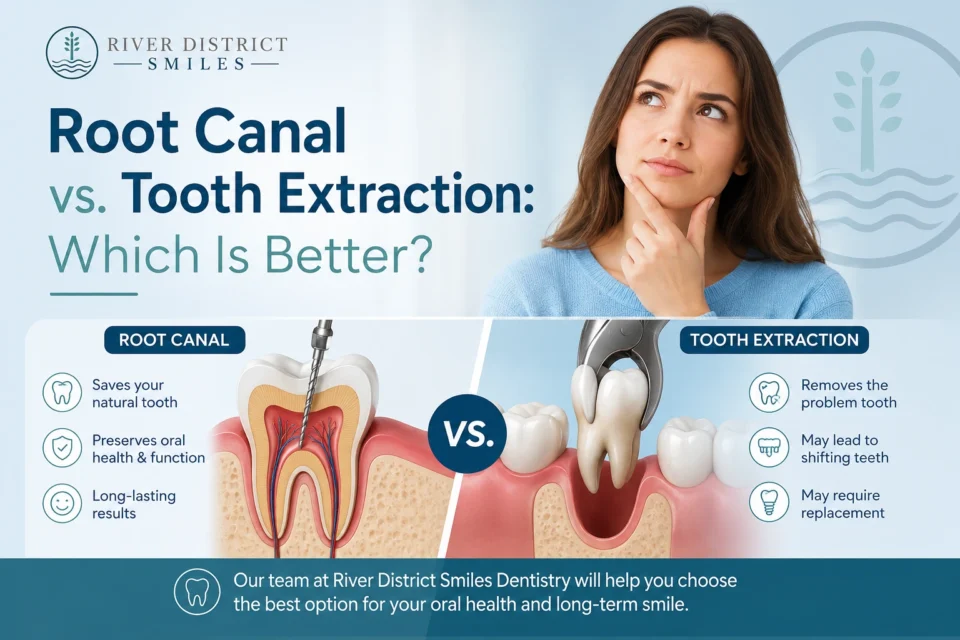
When decay reaches the pulp, the nerve becomes infected. At this point, a root canal is often the only way to save the tooth. If the infection spreads or the tooth structure weakens too much, extraction may be necessary. What could have been a short appointment becomes a major procedure, all because time was allowed to work against the tooth.
What month by month changes happen with gum disease when it is left untreated?
Gum disease is especially deceptive because early stages are often painless.
Typical progression includes:
- Month 1–2: Redness and bleeding
- Month 3–4: Persistent inflammation
- Month 5–6: Gum pockets deepen
- Month 7+: Bone loss begins
Gingivitis starts with mild irritation. Many people assume bleeding gums are normal. Without treatment, inflammation spreads below the gumline. Bacteria settle into pockets that brushing can’t reach.
As months pass, gums pull away from teeth. Bone supporting the teeth begins to deteriorate. This damage is permanent. While early gum disease is reversible, advanced stages are not. Delaying treatment allows silent damage to continue. By the time pain or tooth looseness appears, options become more limited and more complex.
How much more expensive can dental treatment become after waiting several months to get care?
Delaying treatment almost always increases cost.
Cost differences often look like this:
- Filling vs. root canal and crown
- Cleaning vs. deep periodontal treatment
- Simple extraction vs. surgical extraction
- Preventive care vs. restorative procedures
- Short visits vs. multiple appointments
- Basic treatment vs. tooth replacement
A small cavity treated early is one of the least expensive dental procedures. Once it becomes a root canal, costs increase significantly. If extraction is required, replacement options add even more expense.
Gum disease follows a similar pattern. Routine cleanings cost far less than periodontal therapy or tooth replacement. Waiting doesn’t save money. It delays payment while interest accumulates in the form of damage. Treating issues early protects both oral health and budget.
Address Problems Early, Not Urgently
At River District Smiles Dentistry, we believe dental care should feel manageable, not overwhelming. Our team focuses on catching problems early, when treatment is simpler and more comfortable.
We take the time to explain what’s happening and what options make sense for you. Delaying care often turns small issues into big ones, but it doesn’t have to be that way.
If you’ve been putting off an appointment, we’re here to help you take that next step with confidence. Your smile deserves attention before problems become emergencies.